Foram encontradas 60 questões.
3395597
Ano: 2024
Disciplina: Inglês (Língua Inglesa)
Banca: CETREDE
Orgão: Pref. Ubajara-CE
Disciplina: Inglês (Língua Inglesa)
Banca: CETREDE
Orgão: Pref. Ubajara-CE
Provas:
Text I: 'Quiet quitting' isn't really quitting
Clocking out at 5 p.m. on the dot, only doing your assigned
daily tasks, limiting chats with colleagues and not working
overtime. These are the distinctive features of "quiet quitting," a
term coined to describe how people are approaching their jobs
and professional lives differently to manage burnout.
The phrase, which isn't actually intended to lead to a
resignation, exploded into the popular lexicon in 2022 when a
TikTok video went viral. The creator, Zaid Khan, said in the video
"I recently learned about this term 'quiet quitting,' where you're not
outright quitting your job, but you're quitting the idea of going
above and beyond." Nonetheless, “quiet quitting” is a misnomer,
at least according to Karen K. Ho, a freelance business and
culture reporter. She said that the term doesn't account for the fact
that people are watching their grocery bills, fuel costs and housing
prices go up, often without so much as a salary increase. "You're
literally stagnating as a result of not earning more, not being
promoted – and that's why a lot of people are leaving jobs," she
completed.
While the words "quiet quitting" are loaded, evoking images
of a slacker or ne'er-do-well for some, others say that the
approach frees up time to spend with family and friends or to take
care of oneself. In short, it's a renewed commitment to life beyond
the workplace. On the other hand, the term “quiet quitting” has
also received criticism, even from those who generally favor the
idea behind it.
However, while the term "quiet quitting" may be a
new invention, the mentality behind it is not. The phrase "work to
rule," for example, describes a labor action in which employees
strictly perform the work laid out in their contract, without taking on
additional work. In 2020, the COVID-19 pandemic triggered a
major economic movement, The Great Resignation, which saw
people leaving their jobs or switching professions in droves, as
they re-evaluated their relationship with work during a lifechanging health crisis.
A May 2022 survey by RBC Insurance suggested that more
than one-third of recently retired Canadians aged 55-75 had
retired sooner than they planned. Another third decided to retire
sooner because of the pandemic. Moreover, Statistics Canada
reported that the third quarter of 2021 saw a 60% increase in job
vacancies compared to pre-pandemic levels in the country.
Both Quiet Quitting and The Great Resignation indicate a
marked cultural shift from the early and mid-2010s when "hustle
culture" paved the way to "grinding" and "girl-bossing" – two ideas
that prioritized work over everything else, with the belief that such
effort made employees more desirable to managers, therefore
helping them climb up the corporate ladder faster and
generating more income.
In addition, it is important to highlight that employees have
been re-evaluating how much time they spend commuting,
working overtime and generally investing in low-pay, low-reward
jobs. It seems they have realized that they work in systems where
they are constantly immersed in a hustle culture – which has been
repeatedly shown to be only beneficial for corporations and their
managers, through bonuses, through increased productivity,
through increased revenue and profits and the like.
Furthermore, some employees are advocating for policies,
benefits and working conditions that strengthen work-life balance.
But critics say it doesn't work as well as it should, with a glaring
loophole that allows employers to take advantage by vaguely
wording their policies.
Adapted from: https://www.cbc.ca/news/business/quiet-quitting-workerdisengagement-1.6560226
Last Updated: August 25, 2022
Provas
Questão presente nas seguintes provas

3395596
Ano: 2024
Disciplina: Inglês (Língua Inglesa)
Banca: CETREDE
Orgão: Pref. Ubajara-CE
Disciplina: Inglês (Língua Inglesa)
Banca: CETREDE
Orgão: Pref. Ubajara-CE
Provas:
Text I: 'Quiet quitting' isn't really quitting
Clocking out at 5 p.m. on the dot, only doing your assigned
daily tasks, limiting chats with colleagues and not working
overtime. These are the distinctive features of "quiet quitting," a
term coined to describe how people are approaching their jobs
and professional lives differently to manage burnout.
The phrase, which isn't actually intended to lead to a
resignation, exploded into the popular lexicon in 2022 when a
TikTok video went viral. The creator, Zaid Khan, said in the video
"I recently learned about this term 'quiet quitting,' where you're not
outright quitting your job, but you're quitting the idea of going
above and beyond." Nonetheless, “quiet quitting” is a misnomer,
at least according to Karen K. Ho, a freelance business and
culture reporter. She said that the term doesn't account for the fact
that people are watching their grocery bills, fuel costs and housing
prices go up, often without so much as a salary increase. "You're
literally stagnating as a result of not earning more, not being
promoted – and that's why a lot of people are leaving jobs," she
completed.
While the words "quiet quitting" are loaded, evoking images
of a slacker or ne'er-do-well for some, others say that the
approach frees up time to spend with family and friends or to take
care of oneself. In short, it's a renewed commitment to life beyond
the workplace. On the other hand, the term “quiet quitting” has
also received criticism, even from those who generally favor the
idea behind it.
However, while the term "quiet quitting" may be a
new invention, the mentality behind it is not. The phrase "work to
rule," for example, describes a labor action in which employees
strictly perform the work laid out in their contract, without taking on
additional work. In 2020, the COVID-19 pandemic triggered a
major economic movement, The Great Resignation, which saw
people leaving their jobs or switching professions in droves, as
they re-evaluated their relationship with work during a lifechanging health crisis.
A May 2022 survey by RBC Insurance suggested that more
than one-third of recently retired Canadians aged 55-75 had
retired sooner than they planned. Another third decided to retire
sooner because of the pandemic. Moreover, Statistics Canada
reported that the third quarter of 2021 saw a 60% increase in job
vacancies compared to pre-pandemic levels in the country.
Both Quiet Quitting and The Great Resignation indicate a
marked cultural shift from the early and mid-2010s when "hustle
culture" paved the way to "grinding" and "girl-bossing" – two ideas
that prioritized work over everything else, with the belief that such
effort made employees more desirable to managers, therefore
helping them climb up the corporate ladder faster and
generating more income.
In addition, it is important to highlight that employees have
been re-evaluating how much time they spend commuting,
working overtime and generally investing in low-pay, low-reward
jobs. It seems they have realized that they work in systems where
they are constantly immersed in a hustle culture – which has been
repeatedly shown to be only beneficial for corporations and their
managers, through bonuses, through increased productivity,
through increased revenue and profits and the like.
Furthermore, some employees are advocating for policies,
benefits and working conditions that strengthen work-life balance.
But critics say it doesn't work as well as it should, with a glaring
loophole that allows employers to take advantage by vaguely
wording their policies.
Adapted from: https://www.cbc.ca/news/business/quiet-quitting-workerdisengagement-1.6560226
Last Updated: August 25, 2022
Provas
Questão presente nas seguintes provas
3395595
Ano: 2024
Disciplina: Inglês (Língua Inglesa)
Banca: CETREDE
Orgão: Pref. Ubajara-CE
Disciplina: Inglês (Língua Inglesa)
Banca: CETREDE
Orgão: Pref. Ubajara-CE
Provas:
Text I: 'Quiet quitting' isn't really quitting
Clocking out at 5 p.m. on the dot, only doing your assigned
daily tasks, limiting chats with colleagues and not working
overtime. These are the distinctive features of "quiet quitting," a
term coined to describe how people are approaching their jobs
and professional lives differently to manage burnout.
The phrase, which isn't actually intended to lead to a
resignation, exploded into the popular lexicon in 2022 when a
TikTok video went viral. The creator, Zaid Khan, said in the video
"I recently learned about this term 'quiet quitting,' where you're not
outright quitting your job, but you're quitting the idea of going
above and beyond." Nonetheless, “quiet quitting” is a misnomer,
at least according to Karen K. Ho, a freelance business and
culture reporter. She said that the term doesn't account for the fact
that people are watching their grocery bills, fuel costs and housing
prices go up, often without so much as a salary increase. "You're
literally stagnating as a result of not earning more, not being
promoted – and that's why a lot of people are leaving jobs," she
completed.
While the words "quiet quitting" are loaded, evoking images
of a slacker or ne'er-do-well for some, others say that the
approach frees up time to spend with family and friends or to take
care of oneself. In short, it's a renewed commitment to life beyond
the workplace. On the other hand, the term “quiet quitting” has
also received criticism, even from those who generally favor the
idea behind it.
However, while the term "quiet quitting" may be a
new invention, the mentality behind it is not. The phrase "work to
rule," for example, describes a labor action in which employees
strictly perform the work laid out in their contract, without taking on
additional work. In 2020, the COVID-19 pandemic triggered a
major economic movement, The Great Resignation, which saw
people leaving their jobs or switching professions in droves, as
they re-evaluated their relationship with work during a lifechanging health crisis.
A May 2022 survey by RBC Insurance suggested that more
than one-third of recently retired Canadians aged 55-75 had
retired sooner than they planned. Another third decided to retire
sooner because of the pandemic. Moreover, Statistics Canada
reported that the third quarter of 2021 saw a 60% increase in job
vacancies compared to pre-pandemic levels in the country.
Both Quiet Quitting and The Great Resignation indicate a
marked cultural shift from the early and mid-2010s when "hustle
culture" paved the way to "grinding" and "girl-bossing" – two ideas
that prioritized work over everything else, with the belief that such
effort made employees more desirable to managers, therefore
helping them climb up the corporate ladder faster and
generating more income.
In addition, it is important to highlight that employees have
been re-evaluating how much time they spend commuting,
working overtime and generally investing in low-pay, low-reward
jobs. It seems they have realized that they work in systems where
they are constantly immersed in a hustle culture – which has been
repeatedly shown to be only beneficial for corporations and their
managers, through bonuses, through increased productivity,
through increased revenue and profits and the like.
Furthermore, some employees are advocating for policies,
benefits and working conditions that strengthen work-life balance.
But critics say it doesn't work as well as it should, with a glaring
loophole that allows employers to take advantage by vaguely
wording their policies.
Adapted from: https://www.cbc.ca/news/business/quiet-quitting-workerdisengagement-1.6560226
Last Updated: August 25, 2022
( ) By referring to “quiet quitting” as a misnomer, Karen K. Ho means that the ups and downs of everyday life do not make viral trends on TikTok.
( ) According to Zaid Khan, the idea behind “quiet quitting” is to lead people to completely quit their jobs.
( ) In a nutshell, “quiet quitting” is a renewed commitment to life beyond the workplace.
The statements are, in the order presented, respectively:
Provas
Questão presente nas seguintes provas
Na figura a seguir, está representada a reta r do 1ºgrau: y = mx + 6.
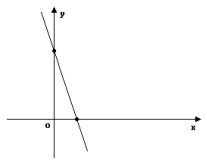
Se o ponto M(-m – 4, -m – 4) pertence a reta r, então o valor de m é
Provas
Questão presente nas seguintes provas
Se o determinante da matriz A =  é igual a
10, então o determinante da matriz B =
é igual a
10, então o determinante da matriz B = é igual a
é igual a
10, então o determinante da matriz B = é igual aProvas
Questão presente nas seguintes provas
Sobre o produto das matrizes A =  e B =
e B = 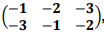 determine, se existir, e assinale a alternativa
CORRETA.
determine, se existir, e assinale a alternativa
CORRETA.
e B = determine, se existir, e assinale a alternativa
CORRETA.Provas
Questão presente nas seguintes provas
Seja f uma função real dada pela lei f(x) = 2x + a, sendo
a uma constante real. Sabendo que f
−1
(8) = 6, o valor de f(3)
Provas
Questão presente nas seguintes provas
Um terreno de forma quadrada foi trocado por outro de
forma retangular. A largura e o comprimento do terreno
retangular são, respectivamente, 4 metros maiores e 2
metros menores que as dimensões correspondentes do
terreno quadrado. Sabe-se que a área do terreno retangular
mede 432 metros quadrados. O perímetro do terreno
retangular é de
Provas
Questão presente nas seguintes provas
Leia a tirinha:
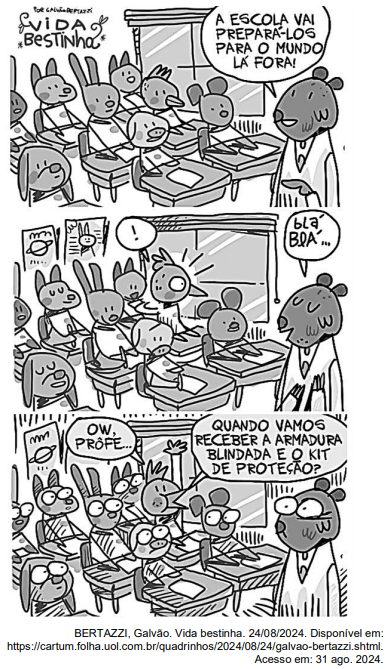
É possível inferir, nessa tirinha, que o(s)(a)
Provas
Questão presente nas seguintes provas
Furacão elimina [BEIJA-FLOR] polinizadores
da Revista Pesquisa FAPESP
Dois tipos de helicônias – plantas da família das bananeiras com
vistosas flores de cor vermelha e laranja – da ilha de Dominica,
no Caribe, tinham apenas um polinizador, o beija-flor caribe-degarganta-púrpura (Eulampis jugularis). Em setembro de 2017,
porém, o furacão Maria – além de danificar edifícios e provocar
cortes de energia elétrica e a morte de 33 moradores da região –
eliminou três quartos da população dessa ave e causou uma
mudança no ciclo de reprodução das plantas, de acordo com
estudo de um grupo internacional que inclui os ecólogos
brasileiros Fernando Gonçalves, em estágio de pós-doutorado na
Universidade de Zurique, na Suíça, e Mauro Galetti, da
Universidade Estadual Paulista (Unesp). Depois do furacão, a
equipe documentou outras quatro espécies de aves visitando as
flores. Isso levou a rever os temores de extinção. “Não é tão
simples assim, o fenômeno quebra a relação de coadaptação e
outros indivíduos podem dominar a polinização e ocupar o papel
das espécies que diminuíram”, disse Gonçalves à Agência Bori.
“A trajetória evolutiva flutua, não é tão restrita quanto
pensávamos.” Agora, o grupo pretende avaliar os impactos de
fenômenos naturais sobre o comportamento evolutivo de outras
espécies. “Estamos monitorando outros furacões na região para
voltar lá e entender suas consequências” (New Phytologist, 11 de
julho; Agência Bori, 12 de julho).
Este texto foi originalmente publicado por Pesquisa FAPESP de acordo com a
licença Creative Commons CC-BY-NC-ND. Disponível em:
https://revistapesquisa.fapesp.br/furacao-elimina-beija-flores-polinizadores/.
Acesso em: 02 set. 2024.
Provas
Questão presente nas seguintes provas
Cadernos
Caderno Container