TEXT I –
Teaching English to girls and black students: problems faced even before the pandemic
The crisis of the new coronavirus made access to education difficult for black and poor students. In English teaching, it is necessary to consider issues that have already distanced this group from learning the language, such as: difficulty in accessing technology, lack of monitoring by a family member, black girls and housework and representativeness in English teaching.
Newsroom11 / Nov. 2021
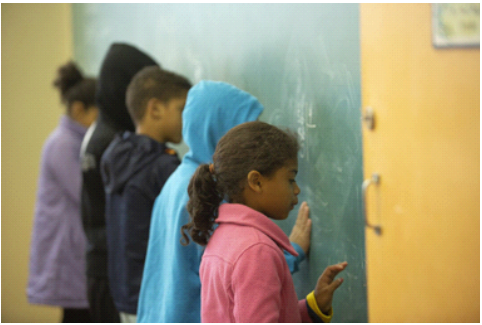
If inequality was already a reality in Brazilian education, in 2020, due to the Covid-19 pandemic — with closed schools and the adoption of remote education — the situation worsened even more. The report by the United Nations Children's Fund (UNICEF), “Scenarios of School Exclusion in Brazil”, points out that, at the end of 2020, more than 5 million Brazilian students aged 6 to 17 were without access to schools.
Of this total, more than 40% were represented by children aged 6 to 10 years, an age group in which education was almost universal in the country before the crisis of the new coronavirus. In this scenario, young people from poor, black, brown and indigenous families were the most affected.
Another data, presented by PNAD Covid, a survey by the Brazilian Institute of Geography and Statistics (IBGE), points out the supply of materials for attending classes from home: among white students in elementary school, 89% received school activities in the pandemic, among black and brown students this percentage drops to 77%.
It is a worrying context and, based on this information, we can make a cut about the exclusion of black children and teenagers and even girls in education, more specifically in English teaching. What factors further hindered these students' access to knowledge of the language? What were the problems already faced in language learning before the pandemic?
Adapted from: https://www.inglesnasescolas.org/en/headline/teaching-english-to-girls-and-black-students-problems-faced-even-before-the-pandemic/. Accessed on January 24 , 2022. th
Answer questions 26 to 28 according to TEXT I.
In the sentence “What factors further hindered these students' access to knowledge of the language?” (in bold) the word “hindered” can be replaced by
