Disciplina: Inglês (Língua Inglesa)
Banca: FLEM
Orgão: Pref. Riachão Jacuípe-BA
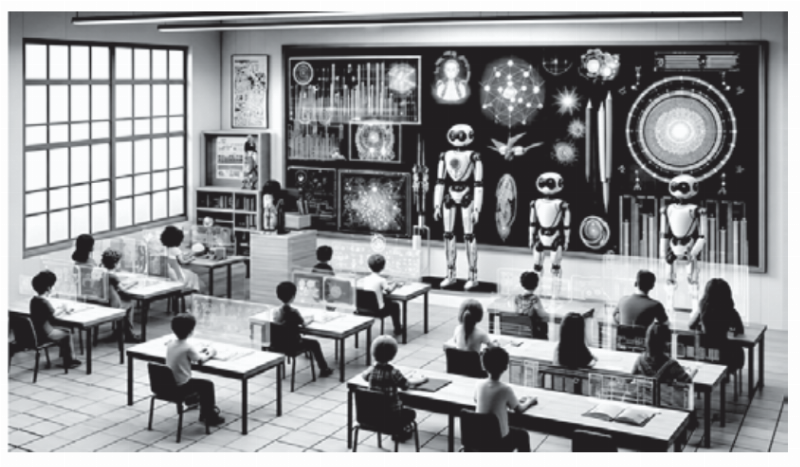
Generative AI and the Changing Role of English Teachers
Generative artificial intelligence can produce
texts, explanations, exercises, translations, and
feedback within seconds. In English language
education, these tools may expand opportunities
for learners to practise reading and writing, explore
different ways of expressing ideas, and receive
support beyond classroom hours. Their educational
value, however, does not result automatically from
their technical capacity.
AI-generated content may contain inaccurate
information, reproduce social or cultural biases, and
present invented references as if they were reliable.
It may also reflect linguistic patterns that are more
strongly represented in its training data, while giving
less visibility to other varieties, identities, and cultural
perspectives. For this reason, outputs produced by AI
need to be examined critically rather than accepted
as neutral or authoritative.
The use of AI also raises questions about privacy,
authorship, assessment, and learner autonomy. When
students submit automatically generated texts without
understanding or revising them, the final product
may conceal what they can actually communicate
in English. Assessment practices therefore need
to consider not only the submitted text but also the
decisions, revisions, explanations, and language-
learning processes that led to it.
In this context, the teacher’s role is not reduced
to selecting technological resources. Teachers need to
determine whether a tool is pedagogically appropriate,
protect students’ data, design meaningful activities,
and help learners question the information they
receive. A human-centred approach treats AI as a
resource under critical and pedagogical supervision,
not as a substitute for professional judgement or
human agency.
Adaptado de: MIAO, Fengchun; HOLMES, Wayne. Guidance for generative AI in education and research. Paris: UNESCO, 2023; MIAO, Fengchun; CUKUROVA, Mutlu. AI competency framework for teachers. Paris: UNESCO, 2024. Acesso em: 3 ago. 2026.