Foram encontradas 1.482 questões.
O Access 2010BR tem sete tipos de objetos em cada banco de dados, sendo três caracterizados a seguir.
I. É a base, serve para armazenar e exibir dados.
II. Automatiza ações repetitivas para executar tarefas especificadas.
III. Permite a exibição dos dados em um layout personalizado para visualização, inserção ou edição de dados.
Esses objetos são denominados, respectivamente:
Provas
Questão presente nas seguintes provas

Observe a charge a seguir.

Na charge, a frase comum do traficante e do policial mostra uma variação coloquial, caracterizada especificamente na charge pelo uso de
Provas
Questão presente nas seguintes provas
Read text below and answer questions NSCE22-000-01 to NSCE22-000-15:
Will technology make teachers obsolete?
by Wade Deacon High School Senior Debating Society
June 3, 2013
June 3, 2013

Education, education, education. We are a nation obsessed with our academia, our schools, libraries and universities. Yet all that is changing. A new type of schooling is taking over, and that is online learning. We are bombarded with technology everywhere we turn, and sure enough the 21st-century has trickled down into our educational institutions.
More and more establishments are signing up for Internet enlightenment, and its effects are felt beyond just the UK. All across the world, students from all walks of life are closing their exercise books and opening their laptops.
The ease of access that humans have nowadays to virtual outlets is astonishing — online learning platforms, free Internet services in public buildings and even the revolutionary educational ‘pods’ becoming popular in Asia and Central America — and so many different pupils will find it quicker and indeed simpler to access these online resources when they want. For some, it may even seem easier to log onto the nearest Wi-Fi than attend school day in and day out.
Opening up the amount of learning resources and research facilities students can access over the Internet has created new possibilities for those pursuing studies all over the globe. Granting students the freedom and flexibility to learn about the subjects that interest them is an inspiring way to get students to really follow in-depth studies on areas important to them, either to satisfy an academic interest or to give them the building blocks they need for the careers they want in the future.
Particularly in countries with easy access to technology, the use of computers, podcasts and webcams really allows these young adults to gain a passion for learning.
Of course, there are sceptics who raise common problems concerning behaviour and self-discipline to learn. Many worry that, left to their own devices, teenagers in particular will not have the desire to spend their own time following up their education.
Lots of schools that have embraced the transition to a more media-based programme still keep timetables, school days and the school building. They appoint a member of staff to watch the children to make sure they are still getting their work done. This is where we find the crux of the whole matter: what is the ‘teaching profession’?
If a person’s job is to simply stand in a room and mind rowdy teens, are they really a member of said profession? Teaching is more than child-minding students; teaching is about giving your pupils a love for your subject, getting them enthused about their education and mentoring them through the course of their school years. Do we seriously think, even with the new advances in virtual learning, that all this will just crumble into obsolescence?
As long as there is education, there will have to be teachers. Students cannot be given full responsibility for their own learning, or else we’ll end up with half the population practically illiterate by age twenty. Education needs routine and order and discipline, yes, but more importantly education needs to be twinned with motivation.
Although some might say that virtual learning provides an easier way of teaching young people what they need to know to scrape the grades they need on their exams, the true heart and soul of the teaching profession will stay alive, at least for now, at least in this country.
(adapted from http://blog.britishcouncil.org/2013/06/03/teaching-and-technology/)
All the alternatives below are synonyms of "nowadays" excepct for
Provas
Questão presente nas seguintes provas
Analise o fragmento a seguir.
“Durante a produção e a pós-produção do áudio digital uma frequência de amostragem alta, de 24 bits por exemplo, fornece gama dinâmica, distorção de quantização e headroom.”
Assinale a alternativa que completa corretamente as lacunas do fragmento acima.
Provas
Questão presente nas seguintes provas
- Linguagens e Suportes MidiáticosProdução AudiovisualLuz, Iluminação e Luminotécnica em Audiovisual e Cinema
Leia o fragmento a seguir.
“Numa iluminação básica o spot ou refletor utilizado como serve para dar a forma básica do objeto ou pessoa. Por sua vez, o spot utilizado como atenua as sombras do objetivo, enquanto que um spot separa o objetivo do fundo.”
Assinale as alternativas cujos itens completam corretamente as lacunas do seguimento acima.
Provas
Questão presente nas seguintes provas
Sobre o zoom ótico e o zoom digital, assinale a afirmativa correta.
Provas
Questão presente nas seguintes provas
A figura a seguir apresenta o esquema de uma linha de distribuição de energia elétrica.
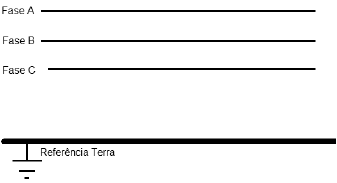
A matriz transformação inversa em que relaciona os componentes simétricos com os seus respectivos fasores é dada por:
!$ { \begin{vmatrix} \vec{I}_1\\ \vec{I}_2\\ \vec{I}_0 \end{vmatrix}} = { \large 1 \over 3} { \begin{vmatrix} 1\,\,\ltimes \ltimes^2\\1\,\,\ltimes^2\,\,\ltimes\\1\,\,\,1\,\,\,1\,\,\, \end{vmatrix}} x { \begin{vmatrix} 0\\ \vec{I}_B \\ - \vec{I}_B \end{vmatrix}} !$
Essa matriz apresenta condições de contorno para a análise de uma falta (curto-circuito) entre
Provas
Questão presente nas seguintes provas
Read text below and answer questions NSCE22-000-01 to NSCE22-000-15:
Will technology make teachers obsolete?
by Wade Deacon High School Senior Debating Society
June 3, 2013
June 3, 2013
Education, education, education. We are a nation obsessed with our academia, our schools, libraries and universities. Yet all that is changing. A new type of schooling is taking over, and that is online learning. We are bombarded with technology everywhere we turn, and sure enough the 21st-century has trickled down into our educational institutions.
More and more establishments are signing up for Internet enlightenment, and its effects are felt beyond just the UK. All across the world, students from all walks of life are closing their exercise books and opening their laptops.
The ease of access that humans have nowadays to virtual outlets is astonishing — online learning platforms, free Internet services in public buildings and even the revolutionary educational ‘pods’ becoming popular in Asia and Central America — and so many different pupils will find it quicker and indeed simpler to access these online resources when they want. For some, it may even seem easier to log onto the nearest Wi-Fi than attend school day in and day out.
Opening up the amount of learning resources and research facilities students can access over the Internet has created new possibilities for those pursuing studies all over the globe. Granting students the freedom and flexibility to learn about the subjects that interest them is an inspiring way to get students to really follow in-depth studies on areas important to them, either to satisfy an academic interest or to give them the building blocks they need for the careers they want in the future.
Particularly in countries with easy access to technology, the use of computers, podcasts and webcams really allows these young adults to gain a passion for learning.
Of course, there are sceptics who raise common problems concerning behaviour and self-discipline to learn. Many worry that, left to their own devices, teenagers in particular will not have the desire to spend their own time following up their education.
Lots of schools that have embraced the transition to a more media-based programme still keep timetables, school days and the school building. They appoint a member of staff to watch the children to make sure they are still getting their work done. This is where we find the crux of the whole matter: what is the ‘teaching profession’?
If a person’s job is to simply stand in a room and mind rowdy teens, are they really a member of said profession? Teaching is more than child-minding students; teaching is about giving your pupils a love for your subject, getting them enthused about their education and mentoring them through the course of their school years. Do we seriously think, even with the new advances in virtual learning, that all this will just crumble into obsolescence?
As long as there is education, there will have to be teachers. Students cannot be given full responsibility for their own learning, or else we’ll end up with half the population practically illiterate by age twenty. Education needs routine and order and discipline, yes, but more importantly education needs to be twinned with motivation.
Although some might say that virtual learning provides an easier way of teaching young people what they need to know to scrape the grades they need on their exams, the true heart and soul of the teaching profession will stay alive, at least for now, at least in this country.
(adapted from http://blog.britishcouncil.org/2013/06/03/teaching-and-technology/)
The setence "either to satisfy an academic interest or to give them bulding blocks" presents a(n):
Provas
Questão presente nas seguintes provas
A eliminação de documentos oficiais ou públicos só deverá ocorrer quando houver
Provas
Questão presente nas seguintes provas
Você recebeu um programa para veiculação cujo conteúdo está dividido em três blocos. A ficha técnica da atração contém o timecode de entrada e saída de cada segmento. O primeiro vai de 01:00:05:00 a 01:13:03:18. O segundo começa em 01:13:13:00 e se encerra em 01:26:52:11. O terceiro e último bloco se inicia em 01:27:02:00 e termina em 01:34:10:18.
O tempo total de produção do programa é de
Provas
Questão presente nas seguintes provas
Cadernos
Caderno Container