Foram encontradas 80 questões.
Analise a figura abaixo.
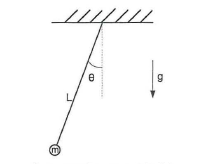
A figura acima mostra um pêndulo oscilando em movimento harmônico simples. Sua equação de posição angular em função do tempo é dada por: !$ θ(t)=(\pi/30)sen(ωt) !$ radianos. Sabe-se que !$ L=2,5m !$ é o comprimento do pêndulo, e !$ g=10m/s^2 !$ é a aceleração da gravidade local. Qual a velocidade linear, em m/s, da massa m=2,0kg, quando passa pelo ponto mais baixo de sua trajetória?
Dado: considere !$ \pi = 3 !$
Provas
Questão presente nas seguintes provas

O lugar geométrico dos pontos P do plano de mesma potência em relação a duas circunferências não concêntricas é chamado eixo radical. Seja !$ C_1 !$ circunferência de equação !$ x^2 + y^2 = 64 !$ e !$ C_2 !$ a circunferência de equação !$ (xx + 24)^2 + y^2 = 16 !$. Sejam !$ a !$ e !$ b !$ as distâncias do eixo radical a cada uma das circunferências, assinale a opção que apresenta o valor de !$ |a - b| !$.
Provas
Questão presente nas seguintes provas
Switzerland's invisible linguistic borders
There are lour official Swiss languages: German, French, Italian and Romansh, an indigenous language with limited status that's similar to Latin and spoken today by only a handful of Swiss. A fifth language, English, is increasingly used to bridge the linguistic divide. In a recent survey by Pro Linguis, three quarters of those queried said they use English at least three times per week.
In polyglot Switzerland, even linguistic divisions are divided. People in the German-speaking cantons speak Swiss-German at home but learn standard German in school. The Italian spoken in the Ticino canton is peppered with words borrowed lrom German and French.
Language may not be destiny, but it does determine much more than the words we speak. Language drives culture, and culture drives lile. In that sense, the Rõstigraben is as much a cultural border as a linguistic one. Life on either side of the divide unlolds at a different pace, Bianchi explained. "[In my opinion] French speakers are more laid-back. A glass of white wine for lunch on a workday is still rather usual. German speakers have little sense of humour, and follow rules beyond the rigidity of the Japanese."
The cultural divide between Italian-speaking Switzerland and the rest 01 the country - a divide marked by the so-called Polentagraben - is even sharper. Italianspeakers are a distinct minority, accounting for only 8% of the population and living mostly in the far southern canton of Ticino. "When I first moved here, people told me, 'Ticino is just like Italy except everything works', and I think that's true," said Paulo Goncalves, a Brazilian academic who has been living in Ticino lor the past decade.
Coming Irom a nation with one official spoken language, Goncalves marvels at how the Swiss juggle four. "It is quite remarkable how they manage to get along," he said, recalling going to a conference attended by people who spoke French, German, Italian and English. "You had presentations being given in four different languages in the same conference hall."
Living in such a multilingual environment "really reshapes how I see the world and imagine the possibilities," Goncalves said. "I am a signilicantly different person than I was 10 years ago."
Switzerland's languages are not evenly distributed. Of the country's 26 cantons, most - 17 - are German speaking, while four are French and one Italian. (Three cantons are bilingual and one, Grisons, trilingual.) A majority of Swiss, 63%, speak German as their lirst language.
(Abridged Irom http://www.bbc.com)
According to the text, which option is correct?
Provas
Questão presente nas seguintes provas
Doctor works to save youth from violence before they
reach his ER
reach his ER
As an emergency physician at Kings County Hospital Center [in Brooklyn], Dr. Rob Gore has faced many traumatic situations that he'd rather forge!. But some moments stick with him. "Probably the worst thing that I've ever had to do is tell a 15-year-old's mother that her son was killed," Gore said. "If I can't keep somebody alive, I've failed." [...]
"Conflict's not avoidable. But violent conflict is," Gore said. "Seeing a lot of the traumas that take place at work, or in the neighborhood, you realize, 'I don't want this to happen anymore. What do we do about it?"
For Gore, one answer is the "Kings Against Violence Initiative" - known as KAVI - which he started in 2009. Today, the nonprofit has anti-violence programs in the hospital, schools and broader community, serving more than 250 young people.
Victims of violence are more likely to be reinjured, so the first place Gore wanted to work was in the hospital, with an intervention program in which "hospital responders" assist victims of violence and their family - a model pioneered at other hospitais. The idea is that reaching out right after someone has been injured reduces the likelihood of violent retaliation and provides a chance for the victim to address some of the circumstances that may have led to theirinjury.
Gore started this program at his hospital with a handful of volunteers from KAVI. Today, the effort is a partnership beTween KAVI and a few other nonprofits, with teams on call 24/7.
Yet Gore wanted to prevent people from being violently injured in the first place. So, in 2011, he and his group began working with a handful of at-risk students at a nearby high school. By the end of the year, more than 50 students were involved. Today, KAVI holds weekly workshops for male and female students in three schools, teaching mediation and conflict resolution. The group also provides free mental health counseling for students who need one-on-one support.
"Violence is everywhere they. turn - home, school, neighborhood, police," Gore said. "You want to make sure they can learn how to process, deal with it and overcome it."
While Gore still regularly at!ends workshops, most are now led by peer facilitators - recent graduates and college students, some of whom are former KAVI members - who serve as mentors to the students. School administrators say the program has been a success: lowering violence, raising grades and sending many graduates on to college.
"This is really about the community in which we live" he said. "This is my home. And I'm going to do whatever is possible to make sure people can actually thrive."
(Adapted and abridged Irom http://www.cnn.com)
What does the pronoun "it" refer to in the excerpt "'Violence is everywhere they turn - home, school, neighborhood, police,' Gore said. 'Vou want to make sure they can learn how to process, deal with it [...]'" (7'hparagraph)?
Provas
Questão presente nas seguintes provas
Para pessoas de opinião
Você me dirá que uma das coisas que mais preza é sua opinião. Prezá-Ia é considerado virtude. "- Fulano? É uma pessoa de opinião". É preciso força e decisão para "ter opinião". Não é fácil.
Você me dirá, ainda, do que é capaz de fazer para defender a própria opinião. Ter opinião é tão importante que há até um direito dos mais sagrados, o direito à opinião, ultimamente, aliás, bastante afetado, pois vivemos tempos de ampliação do delito de opinião. Ter opinião, em vez de ser considerado um estágio preliminar da convicção, passa a ser ameaçador.
Mas sem contrariar a força com que você defende as próprias opiniões e, sobretudo, defendendo o seu inalienável direito de tê-Ias, eu lhe proporei pensar sobre se a opinião é uma instância realmente profunda ou se é, tão-somente, uma das primeiras reações que se tem diante dos acontecimentos.
Será a opinião uma reação profunda ou superficial? Ouso afirmar que, quase sempre, é das mais superficiais.
Opinião é reação, e expressa um sentimento ou julgamento. Ao reagir, o sentimento realiza uma síntese do que e como somos. Esta síntese aparece na forma pela qual reagimos. A primeira reação é reveladora do sentimento com que julgamos a vida, o mundo, as pessoas. Quase sempre a opinião surge nessa etapa inicial, patamar superficial do nosso ser. Somos um repositório de primeiras impressões!
Pode-se, efetivamente, garantir que nossas opiniões são fruto de meditação? Ou de conhecimento sedimentado? Positivamente, não. Quem responder sinceramente, vai concluir que tem muito mais opiniões do que coisas que sabe ou conhece. Qualquer conhecimento profundo não leva à opinião; leva à análise, à convicção, à dúvida ou à evidência, e nenhuma dessas quatro instâncias tem a ver com a opinião.
Quem se reparar com cuidado, verificará o quanto é levado a opinar, vale dizer, reagir, sentir, julgar, diante dos variados temas. Somos um aluvião de opiniões. Defendemo-nos de analisar, tendo opinião; preservamo-nos do perigoso e trabalhoso mister de pensar, tendo logo uma opinião.
É mais fácil ter opinião do que dúvida. Opinião traz adeptos e dividendos pessoais de prestigio, respeitabilidade, aura de coragem ou heroísmo.
As opiniões são uma espécie de fabricação em série de ide ias sempre iguais, saídas do modelo pelo qual vemos o mundo, e nos faz enfocar a realidade segundo um eterno subjetivismo. Por isso a opinião quase nunca é o reflexo das variadas componentes do real. É eco a repetir a experiência anterior, diante de cada caso novo. A opinião nos defende da complexidade do real, logo, é maneira de impedir a criatividade do homem.
Na origem latina, opinar tem um sentido ambíguo. É muito mais conjecturar do que afirmar. A palavra chega a ter, nos seus vários sentidos, o de disfarçar. A origem do termo é mais fiel ao seu significado do que a tradução que hoje se lhe dá.
Opinar não significa saber nem conhecer. Opinar significa ter uma opinião a respeito de algo, isto é, uma impressão sujeita a retificações, a correções, a mudanças permanentes. O sentido essencial de opinar é conjecturar, ou seja, supor uma realidade para poder discuti-Ia e, assim, melhor conhecê-Ia.
No entanto, nos ofendemos se contrariam a nossa opinião; vivemos em busca do respeito à "nossa opinião". E, mais grave e frequente, vivemos a sofrer por causa da opinião ou de opiniões dos outros sem saber que a opinião de alguém é o resultado das manifestações (reações) mais superficiais e fáceis do seu espírito.
A opinião é instância superficial, exercício de dúvida e de conhecimento disfarçado em certeza ou afirmação, uma conjetura em forma de assertiva. É mais a expressão de um sentimento do que a conciliação deste com o conhecimento e a verdade. A partir do momento em que sabemos de tudo isso, temos obrigatoriamente que deixar de dar tanta importância à opinião alheia e à própria. É preciso, sempre, submetê-Ias ao crivo da permanência, do tempo, da análise, do conhecimento, da vivência, da experimentação em situações diferentes, em estados de espírito diversos, para, só então, considerá-Ia significativa, válida, profunda.
Qual de nós está disposto a aceitar que a própria opinião, embora válida e respeitável, é uma forma superficial de manifestação? Quem está disposto a se dar ao trabalho de atribuir à opinião sua verdadeira função, que é nobilíssima: a de ser trânsito, passagem, via, para a Convicção, para a Análise, para Dúvida e para a Evidência - os quatro elementos que compõem a verdade?
Esta é a minha opinião ...
TÁVOLA, Artur da. Alguém que já não fui. Rio de Janeiro: Nova Fronteira, 1985.
Leia a frase abaixo:
"Você me dirá, ainda, do que é capaz para defender a própria opinião." (2°§)
Marque a opção em que o comentário sobre os recursos de coesão empregados na frase acima está correto.
Provas
Questão presente nas seguintes provas
Doctor works to save youth from violence before they
reach his ER
reach his ER
As an emergency physician at Kings County Hospital Center [in Brooklyn], Dr. Rob Gore has faced many traumatic situations that he'd rather forge!. But some moments stick with him. "Probably the worst thing that I've ever had to do is tell a 15-year-old's mother that her son was killed," Gore said. "If I can't keep somebody alive, I've failed." [...]
"Conflict's not avoidable. But violent conflict is," Gore said. "Seeing a lot of the traumas that take place at work, or in the neighborhood, you realize, 'I don't want this to happen anymore. What do we do about it?"
For Gore, one answer is the "Kings Against Violence Initiative" - known as KAVI - which he started in 2009. Today, the nonprofit has anti-violence programs in the hospital, schools and broader community, serving more than 250 young people.
Victims of violence are more likely to be reinjured, so the first place Gore wanted to work was in the hospital, with an intervention program in which "hospital responders" assist victims of violence and their family - a model pioneered at other hospitais. The idea is that reaching out right after someone has been injured reduces the likelihood of violent retaliation and provides a chance for the victim to address some of the circumstances that may have led to theirinjury.
Gore started this program at his hospital with a handful of volunteers from KAVI. Today, the effort is a partnership beTween KAVI and a few other nonprofits, with teams on call 24/7.
Yet Gore wanted to prevent people from being violently injured in the first place. So, in 2011, he and his group began working with a handful of at-risk students at a nearby high school. By the end of the year, more than 50 students were involved. Today, KAVI holds weekly workshops for male and female students in three schools, teaching mediation and conflict resolution. The group also provides free mental health counseling for students who need one-on-one support.
"Violence is everywhere they. turn - home, school, neighborhood, police," Gore said. "You want to make sure they can learn how to process, deal with it and overcome it."
While Gore still regularly at!ends workshops, most are now led by peer facilitators - recent graduates and college students, some of whom are former KAVI members - who serve as mentors to the students. School administrators say the program has been a success: lowering violence, raising grades and sending many graduates on to college.
"This is really about the community in which we live" he said. "This is my home. And I'm going to do whatever is possible to make sure people can actually thrive."
(Adapted and abridged Irom http://www.cnn.com)
According to the text, which option is correct?
Provas
Questão presente nas seguintes provas
Analise a figura abaixo.
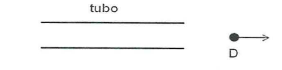
A figura acima mostra um tubo de 1,0 m de comprimento, aberto nas extremidades e em repouso. Considere que o terceiro harmônico é produzido no tubo e parte do som que escapa é captado no detector D, que se afasta em linha reta. Qual é a razão, !$ v_D/v_S !$, entre a velocidade do detector, !$ v_D !$, e a velocidade do som, !$ V_S, !$ para que a frequência do som captado seja igual à frequência fundamental do tubo?
Provas
Questão presente nas seguintes provas
Seja a função real !$ f:[2,4] \rightarrow \mathbb R !$, definida por !$ f(x) = 0,5x^2-4x+10 !$ e o retângulo !$ ABOC !$, com !$ A(t,f(t)) !$, !$ B(0,f(t)) !$, !$ O(0,0) !$ e !$ C(t,0) !$, onde !$ t \in [2,4] !$. Assinale a opção que corresponde ao menor valor da área do retângulo !$ ABOC !$.
Provas
Questão presente nas seguintes provas
Pedro está pensando em enviar uma carta para a sua mãe, no interior do Pará, para comunicar o falecimento do seu pai no Rio de Janeiro. A probabilidade de que Pedro escreva a carta é de 0,8. A probabilidade de que o correio não perca a carta é de 0,9. A probabilidade de que o carteiro entregue a carta é de 0,9. Sabendo-se que a mãe de Pedro não recebeu a carta, qual é a probabilidade condicional de que Pedro não a tenha escrito?
Provas
Questão presente nas seguintes provas
Observe a figura abaixo.
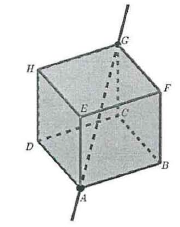
O cubo ABCDEFGH, de aresta de 3 cm, é rotacionado em torno de sua diagonal AG, gerando um sólido de revolução de volume V. Dessa forma, pode-se afirmar que o valor de V, em cm³, é tal que:
Provas
Questão presente nas seguintes provas
Cadernos
Caderno Container