Foram encontradas 55 questões.
Uma reação semelhante à que acontece no interior do airbag é usada na culinária. Graças à utilização de fermentos à base de bicarbonato de amônio, por exemplo. Quando aquecido a 60° C, o bicarbonato de amônio passa pela decomposição. São produtos da reação de decomposição do amônio:
Provas
Questão presente nas seguintes provas

Common Side Effects of Chemo and Radiation on kids
Chemo and radiation cause similar side effects.
Chemo's side effects depend on the type of drug used, the dosage, and a child's overall health. These effects are more likely to affect the whole body. Radiation's side effects, on the other hand, tend to affect the area being treated. But they do still depend on the dose of radiation given, the location on the body, and whether the radiation was internal or external. Some of them are: fatigue, flu-like symptoms, pain, gastrointestinal problems, skin and weight changes, hair loss, kidney and bladder problems, anemia, blood clotting problems, neutropenia, infection. Besides that both chemo and radiation — specifically to the head and neck — can lead to mouth sores, sensitive gums, an irritated throat, and an increased risk of tooth decay.
Kids with neutropenia need to take special precautions against germs. Like all kids, they should wash their hands well and often, especially before eating, after using the bathroom, and after touching animals. They also need to avoid crowded indoor places or visiting with friends or family members who have contagious illnesses such as a cold, the flu, or chickenpox.
Cells that help blood to clot, called platelets, are another type of blood cell that can be affected during cancer treatment, especially chemo. Low platelets, orthrombocytopenia, can lead to bleeding. This may cause small red spots on the skin, bloody or black bowel movements, vomit, or bleeding from the nose, gums, or line site (the area where fluids and medicines are given to people with cancer). Kids with a low platelet count have to take it easy to reduce the risk of bleeding. That means avoiding rough play and contact sports (like football), and brushing with a soft toothbrush and flossing very gently. In very serious cases of thrombocytopenia, a child might need a blood transfusion.
Most side effects start to go away after cancer treatment ends and the healthy cells have a chance to grow again. Sometimes, though, cancer treatment can cause changes to a growing body. These long-term side effects can include permanent damage to the heart, lungs, brain, nerves, kidneys, thyroid gland, or reproductive organs. In some cases, kids and teens who’ve had some types of chemotherapy have a higher risk of developing a second type of cancer later in life. Cancer treatment has come a long way. But it can be hard for kids and teens to cope with the sometimes painful or uncomfortable side effects of treatment. Fortunately, doctors have many ways to make treatments easier to manage.
(Available: https://kidshealth.org. Adapted.)
According to text content, it is consistent to state that cancer treatment:
Provas
Questão presente nas seguintes provas
1387193
Ano: 2019
Disciplina: Literatura Brasileira e Estrangeira
Banca: Consulplan
Orgão: FADIP
Disciplina: Literatura Brasileira e Estrangeira
Banca: Consulplan
Orgão: FADIP
Provas:
O menor poema da língua é do modernista Oswald de Andrade, formado pelo título e uma palavra:
AMOR
Humor
Acerca da linguagem modernista pode-se afirmar que:
Provas
Questão presente nas seguintes provas
Analise as informações com relação aos conjuntos dos números naturais, inteiros e racionais.
I. N c Z.
II. Z c Q.
III. N c Q.
Está(ão) correta(s) a(s) afirmativa(s)
Provas
Questão presente nas seguintes provas
“O primeiro _____________ foi descoberto em 1929 por Alexander Fleming, que o extraiu de um(a) _____________ do gênero Penicillium, sendo chamado de penicilina. Dez anos depois, a penicilina foi industrializada e passou a ser produzida em alta escala.” Assinale a alternativa que completa correta e sequencialmente a afirmativa anterior.
Provas
Questão presente nas seguintes provas
Common Side Effects of Chemo and Radiation on kids
Chemo and radiation cause similar side effects.
Chemo's side effects depend on the type of drug used, the dosage, and a child's overall health. These effects are more likely to affect the whole body. Radiation's side effects, on the other hand, tend to affect the area being treated. But they do still depend on the dose of radiation given, the location on the body, and whether the radiation was internal or external. Some of them are: fatigue, flu-like symptoms, pain, gastrointestinal problems, skin and weight changes, hair loss, kidney and bladder problems, anemia, blood clotting problems, neutropenia, infection. Besides that both chemo and radiation — specifically to the head and neck — can lead to mouth sores, sensitive gums, an irritated throat, and an increased risk of tooth decay.
Kids with neutropenia need to take special precautions against germs. Like all kids, they should wash their hands well and often, especially before eating, after using the bathroom, and after touching animals. They also need to avoid crowded indoor places or visiting with friends or family members who have contagious illnesses such as a cold, the flu, or chickenpox.
Cells that help blood to clot, called platelets, are another type of blood cell that can be affected during cancer treatment, especially chemo. Low platelets, orthrombocytopenia, can lead to bleeding. This may cause small red spots on the skin, bloody or black bowel movements, vomit, or bleeding from the nose, gums, or line site (the area where fluids and medicines are given to people with cancer). Kids with a low platelet count have to take it easy to reduce the risk of bleeding. That means avoiding rough play and contact sports (like football), and brushing with a soft toothbrush and flossing very gently. In very serious cases of thrombocytopenia, a child might need a blood transfusion.
Most side effects start to go away after cancer treatment ends and the healthy cells have a chance to grow again. Sometimes, though, cancer treatment can cause changes to a growing body. These long-term side effects can include permanent damage to the heart, lungs, brain, nerves, kidneys, thyroid gland, or reproductive organs. In some cases, kids and teens who’ve had some types of chemotherapy have a higher risk of developing a second type of cancer later in life. Cancer treatment has come a long way. But it can be hard for kids and teens to cope with the sometimes painful or uncomfortable side effects of treatment. Fortunately, doctors have many ways to make treatments easier to manage.
(Available: https://kidshealth.org. Adapted.)
Mark the item which might NOT be considered a cancer treatment side effect.
Provas
Questão presente nas seguintes provas
A acromegalia, uma doença que provoca o crescimento exagerado de algumas partes do corpo como as mãos e os pés, também pode causar mudanças no rosto do indivíduo com a projeção da mandíbula, o alargamento do nariz e, ainda, o espaçamento exagerado dos dentes. Isso ocorre após a puberdade, pois a produção do hormônio do crescimento diminui até essa fase. Porém, sua produção pode ser retomada pela decorrência de uma disfunção na seguinte glândula:
Provas
Questão presente nas seguintes provas
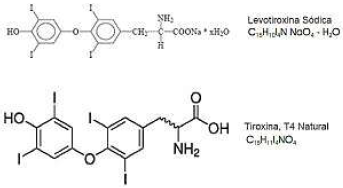
Assinale, a seguir, a quantidade correta de ligação sigma na estrutura da tiroxina.
Provas
Questão presente nas seguintes provas
Common Side Effects of Chemo and Radiation on kids
Chemo and radiation cause similar side effects.
Chemo's side effects depend on the type of drug used, the dosage, and a child's overall health. These effects are more likely to affect the whole body. Radiation's side effects, on the other hand, tend to affect the area being treated. But they do still depend on the dose of radiation given, the location on the body, and whether the radiation was internal or external. Some of them are: fatigue, flu-like symptoms, pain, gastrointestinal problems, skin and weight changes, hair loss, kidney and bladder problems, anemia, blood clotting problems, neutropenia, infection. Besides that both chemo and radiation — specifically to the head and neck — can lead to mouth sores, sensitive gums, an irritated throat, and an increased risk of tooth decay.
Kids with neutropenia need to take special precautions against germs. Like all kids, they should wash their hands well and often, especially before eating, after using the bathroom, and after touching animals. They also need to avoid crowded indoor places or visiting with friends or family members who have contagious illnesses such as a cold, the flu, or chickenpox.
Cells that help blood to clot, called platelets, are another type of blood cell that can be affected during cancer treatment, especially chemo. Low platelets, orthrombocytopenia, can lead to bleeding. This may cause small red spots on the skin, bloody or black bowel movements, vomit, or bleeding from the nose, gums, or line site (the area where fluids and medicines are given to people with cancer). Kids with a low platelet count have to take it easy to reduce the risk of bleeding. That means avoiding rough play and contact sports (like football), and brushing with a soft toothbrush and flossing very gently. In very serious cases of thrombocytopenia, a child might need a blood transfusion.
Most side effects start to go away after cancer treatment ends and the healthy cells have a chance to grow again. Sometimes, though, cancer treatment can cause changes to a growing body. These long-term side effects can include permanent damage to the heart, lungs, brain, nerves, kidneys, thyroid gland, or reproductive organs. In some cases, kids and teens who’ve had some types of chemotherapy have a higher risk of developing a second type of cancer later in life. Cancer treatment has come a long way. But it can be hard for kids and teens to cope with the sometimes painful or uncomfortable side effects of treatment. Fortunately, doctors have many ways to make treatments easier to manage.
(Available: https://kidshealth.org. Adapted.)
The word “this” refers back to:
Provas
Questão presente nas seguintes provas
1382830
Ano: 2019
Disciplina: Atualidades e Conhecimentos Gerais
Banca: Consulplan
Orgão: FADIP
Disciplina: Atualidades e Conhecimentos Gerais
Banca: Consulplan
Orgão: FADIP
Provas:
A obra de Monteiro Lobato cai em domínio público e já terá novas edições. Os direitos autorias são válidos por 70 anos após a morte do autor, o que resulta na diversificação das edições. Desde o dia 1º de janeiro de 2019, a obra de Monteiro Lobato está em domínio público, ou seja, os direitos autorais não mais pertencem exclusivamente aos descendentes. Isso acontece porque a proteção aos direitos é válida por 70 anos e termina a partir do primeiro dia do ano seguinte – como Lobato morreu em 1948, aos 66 anos, os direitos terminaram agora.
Assim, é permitida a publicação da obra por qualquer editora, o que já resultou em um plano diversificado de edições. Acusações de racismo, aliás, vêm figurando em diversas discussões sobre o texto de Lobato, especialmente o direcionado ao público infantil.
(Disponível em: https://exame.abril.com.br/estilo-de-vida/obra-demonteiro-
lobato-cai-em-dominio-publico-e-ja-tera-novas-edicoes/.)
Dentre as diversas obras desse ícone da literatura brasileira, podemos destacar:
Provas
Questão presente nas seguintes provas
Cadernos
Caderno Container