Foram encontradas 50 questões.
Examine a figura abaixo.

Uma força de 500N é exercida sobre o ponto A, como visto na figura acima. Determine o módulo do valor do momento da força em relação ao ponto B e assinale a opção correta.
Dados: Sen 30º = 0,5 e Cos 30º = 0,85.
Provas

Sabendo que os pneus de um automóvel que se movem a 60 km/h têm 1,2 m de diâmetro, determine a velocidade angular desses pneus em relação aos respectivos eixos e assinale a opção correta.
Provas
Com relação ao papel dos algoritmos na computação e às medianas e estatísticas de ordem n, de acordo com Cormen (2012), assinale a seguir a opção INCORRETA.
Provas
De acordo com Cormen (2012), o quicksort, como a ordenação por intercalação, aplica o paradigma de divisão e conquista. Assim, assinale a opção que apresenta o processo de três etapas do método de divisão e conquista para ordenar um subarranjo típico A[p .. r].
Provas
Examine a figura abaixo.
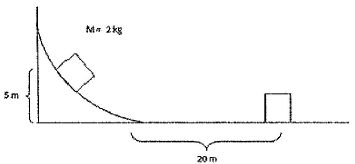
A figura acima representa um bloco de 2 kg que desliza para baixo, sobre uma rampa curva sem atrito, partindo do repouso, de uma altura de 5 m. O bloco, então, desliza sobre uma superfície rugosa por 20 m até atingir o repouso. Assim, a velocidade do bloco na base da rampa e a energia dissipada por atrito são, respectivamente:
Dado: 9=10m/s2
Provas
Suponha que a Marinha do Brasil utilize um sistema de navegação baseado em vetores para controle de drones submarinos. Considere o subespaço W de R3 gerado pelos vetores V1 = (1,0,2 ) e V2 = (0, 1,-1) e assinale a opção que apresenta um vetor que NÃO pertence a W.
Provas
Com relação à reação: BR2 + 5HClO + H2O → 2HBrO3 + 5HCl, assinale a opção correta.
Provas
Conforme Farrer (2017), com relação à estrutura de dados, assinale a opção INCORRETA.
Provas
Uma partícula carregada positivamente está livre para se mover em uma região de campo elétrico não nulo E. Com relação aos conceitos de campo elétrico, assinale a opção correta.
Provas
Read the text below and answer question.
TEXT II
TITLE: Asteroid probe snaps rare images of Martian Moon
March 13,2025 3:29 PM
By Agence France-Press
Paris -
On the way to investigate the scene of a historic asteroid collision, a European spacecraft swung by Mars and captured rare images of the red planet's mysterious small moon Deimos, the European Space Agency said Thursday.
Europe's HERA mission is aiming to find out how much of an impact a NASA spacecraft made when it deliberately smashed into an asteroid in 2022 in the first test of our planetary defenses.
But HERA will not reach the asteroid - which is 11 million kilometers from Earth in the asteroid belt between Mars and Jupiter - until late 2026.
On the long voyage there, the spacecraft swung around Mars on Wednesday.
The spacecraft used the planet's gravity to get a “kick” that also changed its direction and saved fuel, mission analyst Pablo Munoz told a press conference.
For an hour, HERA flew as close as 5,600 kilometers from the Martian surface, at a speed of 33,480 kilometers an hour.
It used the opportunity to test some of its scientific instruments, snapping around 600 pictures, including rare ones of Deimos.
The lumpy, 12.5-kilometer-wide moon is the smaller and less well-known of the two moons of Mars.
Exactly how Deimos and the bigger Phobos were formed remains a matter of debate.
Some scientists believe they were once asteroids that were captured in the gravity of Mars, while others think they could have been shot from a massive impact on the surface.
The new images add “another piece of the puzzle” to efforts to determine their origin, Marcel Popescu of the Astronomical Institute of the Romanian Academy said.
There are hopes that data from HERA's "HyperScout" and thermal infrared imagers - which observe colors beyond the limits of the human eye - will shed light on this mystery by discovering more about the moon's composition.
Those infrared imagers are why the red planet appears blue in some of the photos.
Next, HERA will turn its focus back to asteroid Dimorphos. When NASA's DART mission smashed into Dimorphos in 2022, it shortened the 160-meter-wide asteroid's orbit around its big brother Didymos by 33 minutes.
Although Dimorphos itself posed no threat to Earth, HERA intends to discover whether this technique could be an effective way for Earth to defend itself against possibly existence-threatening asteroids in the future.
Space agencies have been working to ramp up Earth's planetary defences, monitoring for potential threats so they can be dealt with as soon as possible.
Earlier this year, a newly discovered asteroid capable of destroying a city was briefly given a more than 3% chance of hitting Earth in 2032.
However further observations sent the chances of a direct hit back down to nearly zero.
Richard Moissl, head of the ESA's planetary defense office, said that asteroid, 2024 YR, followed a pattern that will become more common.
As we get better at scanning the skies, “we will discover asteroids at a higher rate," he said.
The ESA is developing a secondary planetary defense mission to observe the 350-meter-wide asteroid Apophis, which will fly just 32,000 kilometers from Earth on April 13, 2029.
If approved by the ESA's ministerial council, the Ramses mission will launch in 2028, reaching the asteroid two months before it approaches Earth.
According to the text, HERA's main objective was:
Provas
Caderno Container