Magna Concursos

Foram encontradas 60 questões.

1159756 Ano: 2007
Disciplina: Engenharia Mecânica
Banca: UFPR
Orgão: Polícia Científica-PR

Uma bomba centrífuga em uma determinada instalação de recalque de água operava, quando nova, com vazão de 30 m3/h e altura de 12 mca. Depois de algum tempo verificou-se que a mesma bomba passou a operar com vazão de 21 m3/h e altura de 18 mca. Sobre as possíveis causas desse problema, considere os itens abaixo:

1. Redução do nível do reservatório de sucção.

2. Redução do nível do reservatório de recalque.

3. Incrustação nas tubulações.

4. Vazamento no flange de saída da bomba.

São possíveis causas desse problema:


Provas

Questão presente nas seguintes provas
1159755 Ano: 2007
Disciplina: Engenharia Mecânica
Banca: UFPR
Orgão: Polícia Científica-PR

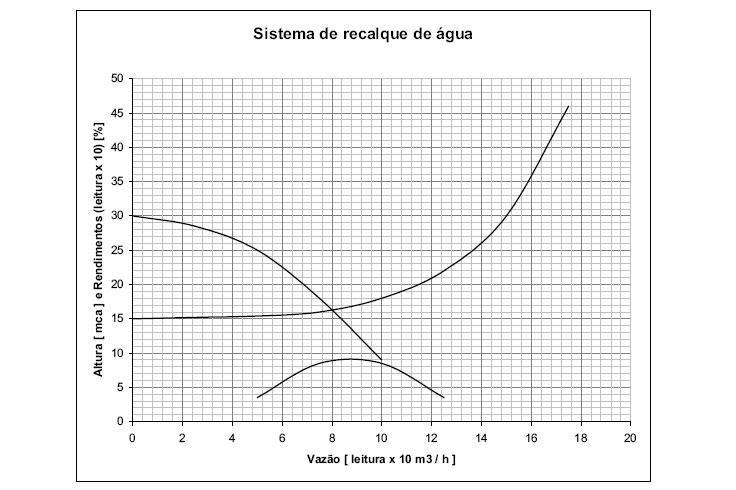
Um sistema de recalque de água opera de acordo com as curvas abaixo. Sabe-se que, no ponto de funcionamento da bomba, o NPSHr = 2,4 mca e o NPSHd = 6,2 mca. Assinale a alternativa que corresponde aproximadamente à potência absorvida no eixo da bomba e ao comportamento da bomba quanto à cavitação.
Enunciado 1159755-1


Provas

Questão presente nas seguintes provas
1159753 Ano: 2007
Disciplina: Engenharia Mecânica
Banca: UFPR
Orgão: Polícia Científica-PR

Considere o escoamento de água, em regime permanente e turbulento, numa tubulação constituída de tubos de aço galvanizado de 100 milímetros de diâmetro interno, coeficiente de atrito de 0,02 e comprimento de 100 metros. O desnível entre o ponto inicial e final dessa tubulação é de 20 metros. A água escoa com velocidade de 2 m/s e a aceleração da gravidade deve ser considerada igual a 10 m/s2. Utilizando a expressão de Darcy-Weisbach, qual é a perda de carga devido a esse escoamento nessa tubulação?


Provas

Questão presente nas seguintes provas
1159750 Ano: 2007
Disciplina: Engenharia Mecânica
Banca: UFPR
Orgão: Polícia Científica-PR

O físico alemão Clausius, em 1850, provou por uma desigualdade que, aplicando apenas a primeira lei da termodinâmica, não se podia explicar o balanço térmico dos sistemas. A segunda lei da termodinâmica estabelece uma nova propriedade que pode mostrar se o sistema está ou não em completo equilíbrio e daí indicar se a mudança de estado do sistema será ou não possível. Essa propriedade Clausius chamou de:


Provas

Questão presente nas seguintes provas

Sobre a ação penal, considere as seguintes afirmativas:

1. No caso de morte do ofendido ou quando declarado ausente por decisão judicial, o direito de oferecer queixa ou prosseguir na ação perece.

2. Nos crimes de ação pública, esta será promovida por denúncia do Ministério Público, mas dependerá, quando a lei o exigir, de requisição do Ministro da Justiça.

3. Nos crimes de ação penal pública condicionada, a representação será irretratável, depois de oferecida a denúncia.

4. Qualquer pessoa do povo poderá provocar a iniciativa do Ministério Público, nos casos em que caiba a ação pública.

Assinale a alternativa correta.


Provas

Questão presente nas seguintes provas
Rio de Janeiro (Reuters) – Brazil’s hugely popular television soap-operas usually deal with tear-filled romance. But the violence engulfing the country has upstaged the melodrama and taken one “telenovela” to the top of the ratings.
“Vidas Opostas” (Opposite Lives) is a hit with residents of Rio de Janeiro, where it is set, and around the country, despite complaints that people are weary of the real-life bloodshed and gory newscasts.
“We are showing things as they are in Rio – slums, drug traffickers, corrupt cops, rotten politicians, and common people caught in the middle of all that”, director Alexandre Avancini said.
The prime-time telenovela on the Rede Record network, shot partly in a real slum, has beat leading network Globo in the ratings several times when pitted against big league soccer games – an undeniable sign of popularity in Brazil.
A love-story is not missing. “Vidas Opostas” is the story of a young millionaire heir who loves a girl who lives in a slum, or favela. The favela is controlled by a drug gang that is in the middle of a turf with a rival group, which has the backing of a corrupt cop, a typical scenario in many of Rio’s 600-plus shanty towns.
(http://www.gulf-times.com)
Consider the following statements about Opposite Lives:
1. It shows violence as it is in a big city.
2. It includes a love-story.
3. It ignores real-life murders, killing and violence.
4. It is the first time Record network has Avancini as a director.
5. It has as a scenario Rio’s more than 600 favelas.
According to the text, the reasons Opposite Lives is a hit are:
 

Provas

Questão presente nas seguintes provas
Rio de Janeiro (Reuters) – Brazil’s hugely popular television soap-operas usually deal with tear-filled romance. But the violence engulfing the country has upstaged the melodrama and taken one “telenovela” to the top of the ratings.
“Vidas Opostas” (Opposite Lives) is a hit with residents of Rio de Janeiro, where it is set, and around the country, despite complaints that people are weary of the real-life bloodshed and gory newscasts.
“We are showing things as they are in Rio – slums, drug traffickers, corrupt cops, rotten politicians, and common people caught in the middle of all that”, director Alexandre Avancini said.
The prime-time telenovela on the Rede Record network, shot partly in a real slum, has beat leading network Globo in the ratings several times when pitted against big league soccer games – an undeniable sign of popularity in Brazil.
A love-story is not missing. “Vidas Opostas” is the story of a young millionaire heir who loves a girl who lives in a slum, or favela. The favela is controlled by a drug gang that is in the middle of a turf with a rival group, which has the backing of a corrupt cop, a typical scenario in many of Rio’s 600-plus shanty towns.
(http://www.gulf-times.com)
According to the text, an undeniable sign of popularity in Brazil is:
 

Provas

Questão presente nas seguintes provas
Rio de Janeiro (Reuters) – Brazil’s hugely popular television soap-operas usually deal with tear-filled romance. But the violence engulfing the country has upstaged the melodrama and taken one “telenovela” to the top of the ratings.
“Vidas Opostas” (Opposite Lives) is a hit with residents of Rio de Janeiro, where it is set, and around the country, despite complaints that people are weary of the real-life bloodshed and gory newscasts.
“We are showing things as they are in Rio – slums, drug traffickers, corrupt cops, rotten politicians, and common people caught in the middle of all that”, director Alexandre Avancini said.
The prime-time telenovela on the Rede Record network, shot partly in a real slum, has beat leading network Globo in the ratings several times when pitted against big league soccer games – an undeniable sign of popularity in Brazil.
A love-story is not missing. “Vidas Opostas” is the story of a young millionaire heir who loves a girl who lives in a slum, or favela. The favela is controlled by a drug gang that is in the middle of a turf with a rival group, which has the backing of a corrupt cop, a typical scenario in many of Rio’s 600-plus shanty towns.
(http://www.gulf-times.com)
According to the text:
 

Provas

Questão presente nas seguintes provas
Rio de Janeiro (Reuters) – Brazil’s hugely popular television soap-operas usually deal with tear-filled romance. But the violence engulfing the country has upstaged the melodrama and taken one “telenovela” to the top of the ratings.
“Vidas Opostas” (Opposite Lives) is a hit with residents of Rio de Janeiro, where it is set, and around the country, despite complaints that people are weary of the real-life bloodshed and gory newscasts.
“We are showing things as they are in Rio – slums, drug traffickers, corrupt cops, rotten politicians, and common people caught in the middle of all that”, director Alexandre Avancini said.
The prime-time telenovela on the Rede Record network, shot partly in a real slum, has beat leading network Globo in the ratings several times when pitted against big league soccer games – an undeniable sign of popularity in Brazil.
A love-story is not missing. “Vidas Opostas” is the story of a young millionaire heir who loves a girl who lives in a slum, or favela. The favela is controlled by a drug gang that is in the middle of a turf with a rival group, which has the backing of a corrupt cop, a typical scenario in many of Rio’s 600-plus shanty towns.
(http://www.gulf-times.com)
According to the text:
 

Provas

Questão presente nas seguintes provas

De acordo com o disposto no artigo 144 da Constituição da República Federativa do Brasil de 1988, a segurança pública, dever do Estado, direito e responsabilidade de todos, é exercida para a preservação da ordem pública e da incolumidade das pessoas e do patrimônio, através dos seguintes órgãos:


Provas

Questão presente nas seguintes provas