Foram encontradas 255 questões.
Disciplina: Educação Artística
Banca: VUNESP
Orgão: Pref. São José Campos-SP
O procedimento básico do método é ensinar uma coisa de cada vez, progressivamente. As crianças são submetidas a um intenso estímulo auditivo; ouvem muitas vezes a gravação que acompanha o livro de exercícios, até que conheçam perfeitamente o que vão tocar. (Fonterrada, 2008)
O excerto caracteriza o método de
Provas

Disciplina: Educação Artística
Banca: VUNESP
Orgão: Pref. São José Campos-SP
Provas
Provas
Disciplina: Educação Artística
Banca: VUNESP
Orgão: Pref. São José Campos-SP
“(…) pretendia saudar a máquina e o desenvolvimento industrial. Otimistas, (…) desenvolviam uma arte em sintonia com as cidades, com a vida cosmopolita e com a nova sociedade tecnológica.”
Segundo Costa, o manifesto do movimento foi publicado em 1909 e seu criador e propagador foi F. T. Marinetti.
Trata-se do
Provas
O gráfico indica o fator de compressibilidade à temperatura constante do gás hidrogênio de acordo com seu comportamento real na relação PˑV/nRˑT em função da pressão.
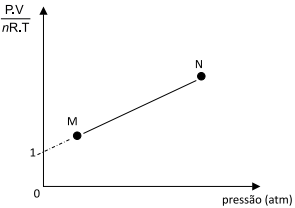
Caso o gás hidrogênio se comportasse como um gás ideal, a reta seria
Provas
A figura seguinte ilustra uma das tecnologias termossolares.
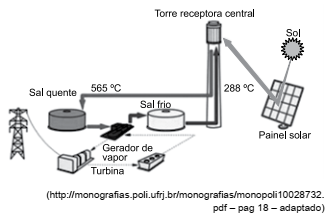
Nessas usinas termossolares, a sequência correta da transformação da energia é
Provas
Observe o experimento a seguir.
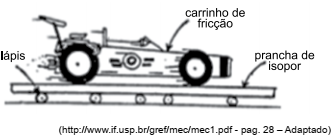
Considere que a massa do carrinho é maior do que a massa da prancha de isopor. Ao colocar o carrinho com as rodas friccionadas em cima da prancha, o vetor resultante do movimento da prancha será
Provas
Provas
Provas
Disciplina: Inglês (Língua Inglesa)
Banca: VUNESP
Orgão: Pref. São José Campos-SP
Leia o texto e responda à questão.
The birth of a nation
The most memorable writing in eighteenth-century America was done by the founding fathers, the men who led the American Revolution of 1775-1783 and wrote the constitution of 1989. But none of them were writers of fiction. Rather, they were practical philosophers, and their most typical product was the political pamphlet. They shared the European Enlightenment belief that human reason could understand both nature and man. Unlike the Puritans – who saw man as a sinful failure – the Enlightenment men were sure man could improve himself. They wanted to create a happy society based on justice and freedom.
The writings of Benjamin Franklin (1706 -1790) show the Enlightenment spirit in America at its best and most optimistic. His style is quite modern and, even today, his works are a joy to read. At the same time, there’s something “anti-literary” about Franklin. He had no liking for poetry and felt that writing should always have a practical purpose.
Almanacs, containing much useful information for farmers and sailors (about the next year’s weather, sea tides, etc.), were a popular form of practical literature. Together with the Bible and the newspaper, they were the most-widely read and often the only reading matter in most Colonial households. Franklin made his Almanac interesting by creating the character “Little Richard”. Each new edition continued a simple but realist story about Richard, his wife and family. He also included many “sayings” about saving money and working hard. Some of those are known to most Americans today:
Lost time is never found again.
God helps those who help themselves.
In 1757 Franklin collected together the best of his sayings and published The Way to Wealth. This little book became one of the best-sellers of the Western World and was translated into many languages.
(Peter High. Outline of American Literature . Essex, Longman. 1996. Adaptado)
Provas
Caderno Container