Foram encontradas 60 questões.
A propósito do poder disciplinar da Administração pública, é correto afirmar:
Provas
Questão presente nas seguintes provas

Em uma loja de bijuterias, todos os produtos são vendidos por um dentre os seguintes preços: R$ 5,00, R$ 7,00 ou R$ 10,00. Márcia gastou R$ 65,00 nessa loja, tendo adquirido pelo menos um produto de cada preço. Considerando apenas essas informações, o número mínimo e o número máximo de produtos que Márcia pode ter comprado são, respectivamente, iguais a
Provas
Questão presente nas seguintes provas
Atendendo ao pedido de um cliente, um perfumista preparou 200 mL da fragrância X. Para isso, ele misturou 20% da essência A, 25% da essência B e 55% de veículo. Ao conferir a fórmula da fragrância X que fora encomendada, porém, o perfumista verificou que havia se enganado, pois ela deveria conter 36% da essência A, 20% da essência B e 44% de veículo. A quantidade de essência A, em mL, que o perfumista deve acrescentar aos 200 mL já preparados, para que o perfume fique conforme a especificação da fórmula é igual a
Provas
Questão presente nas seguintes provas
Em uma disciplina de um curso superior, 7⁄9 dos alunos matriculados foram aprovados em novembro, logo após as provas finais. Todos os demais alunos fizeram em dezembro uma prova de recuperação. Como 3⁄5 desses alunos conseguiram aprovação após a prova de recuperação, o total de aprovados na disciplina ficou igual a 123. O total de alunos matriculados nessa disciplina é igual a
Provas
Questão presente nas seguintes provas
Em nosso calendário, há dois tipos de anos em relação à sua duração: os bissextos, que duram 366 dias, e os não bissextos, que duram 365 dias. O texto abaixo descreve as duas únicas situações em que um ano é bissexto.
- Todos os anos múltiplos de 400 são bissextos - exemplos: 1600, 2000, 2400, 2800;
- Todos os anos múltiplos de 4, mas não múltiplos de 100, também são bissextos - exemplos: 1996, 2004, 2008, 2012.
Disponível em: (<http://www.tecmundo.com.br/mega-curioso/20049-como-funciona-o-ano-bissexto-.htm>. Acesso em 16.12.12)
Sendo n o total de dias transcorridos no período que vai de 01 de janeiro de 1898 até 31 de dezembro de 2012, uma expressão numérica cujo valor é igual a n é
- Todos os anos múltiplos de 400 são bissextos - exemplos: 1600, 2000, 2400, 2800;
- Todos os anos múltiplos de 4, mas não múltiplos de 100, também são bissextos - exemplos: 1996, 2004, 2008, 2012.
Disponível em: (<http://www.tecmundo.com.br/mega-curioso/20049-como-funciona-o-ano-bissexto-.htm>. Acesso em 16.12.12)
Sendo n o total de dias transcorridos no período que vai de 01 de janeiro de 1898 até 31 de dezembro de 2012, uma expressão numérica cujo valor é igual a n é
Provas
Questão presente nas seguintes provas
Em um campeonato de futebol, as equipes ganham 5 pontos sempre que vencem um jogo, 2 pontos em caso de empate e 0 ponto nas derrotas. Faltando apenas ser realizada a última rodada do campeonato, as equipes Bota, Fogo e Mengo totalizam, respectivamente, 68, 67 e 66 pontos, enquanto que a quarta colocada possui menos de 60 pontos. Na última rodada, ocorrerão os jogos:
Fogo x Fla e Bota x Mengo
Sobre a situação descrita, considere as afirmações abaixo, feitas por três torcedores
I. Se houver uma equipe vencedora na partida Bota x Mengo, ela será, necessariamente, a campeã.
II. Para que a equipe Fogo seja a campeã, basta que ela vença a sua partida.
III. A equipe Bota é a única que, mesmo empatando, ainda poderá ser a campeã.
Está correto o que se afirma em
Fogo x Fla e Bota x Mengo
Sobre a situação descrita, considere as afirmações abaixo, feitas por três torcedores
I. Se houver uma equipe vencedora na partida Bota x Mengo, ela será, necessariamente, a campeã.
II. Para que a equipe Fogo seja a campeã, basta que ela vença a sua partida.
III. A equipe Bota é a única que, mesmo empatando, ainda poderá ser a campeã.
Está correto o que se afirma em
Provas
Questão presente nas seguintes provas
December 12, 2012
If It's for Sale, His Lines Sort It
By MARGALIT FOX
It was born on a beach six decades ago, the product of a pressing need, an intellectual spark and the sweep of a young man's
fingers through the sand.
The result adorns almost every product of contemporary life, including groceries, wayward luggage and, if you are a
traditionalist, the newspaper you are holding.
The man on the beach that day was a mechanical-engineer-in-training named N. Joseph Woodland. With that transformative
stroke of his fingers − yielding a set of literal lines in the sand − Mr. Woodland, who died on Sunday at 91, conceived the modern bar
code.
Mr. Woodland was a graduate student when he and a classmate, Bernard Silver, created a technology, based on a printed
series of wide and narrow striations, that encoded consumer-product information for optical scanning.
Their idea, developed in the late 1940s and patented 60 years ago this fall, turned out to be ahead of its time, and the two men
together made only $15,000 from it, when they sold their patent to Philco. But the curious round symbol they devised would ultimately
give rise to the universal product code, or U.P.C., as the staggeringly prevalent rectangular bar code (it graces tens of millions of
different items) is officially known.
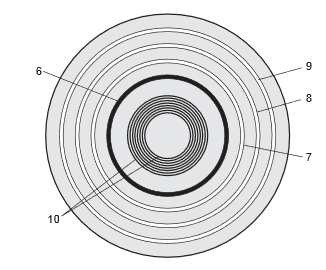
Here is part of the story behind the invention:
To represent information visually, he realized, he would need a code. The only code he knew was the one he had learned in the
Boy Scouts.
What would happen, Mr. Woodland wondered one day, if Morse code, with its elegant simplicity and limitless combinatorial
potential, were adapted graphically? He began trailing his fingers idly through the sand.
“What I'm going to tell you sounds like a fairy tale," Mr. Woodland told Smithsonian magazine in 1999. “I poked my four fingers
into the sand and for whatever reason − I didn't know − I pulled my hand toward me and drew four lines. I said: 'Golly! Now I have four
lines, and they could be wide lines and narrow lines instead of dots and dashes.' "
That consequential pass was merely the beginning. “Only seconds later," Mr. Woodland continued, “I took my four fingers − they
were still in the sand − and I swept them around into a full circle."
Mr. Woodland favored the circular pattern for its omnidirectionality: a checkout clerk, he reasoned, could scan a product without
regard for its orientation.
But that method − a variegated bull's-eye of wide and narrow bands −, which depended on an immense scanner equipped with
a 500-watt light, was expensive and unwieldy, and it languished for years.
The two men eventually sold their patent to Philco for $15,000 − all they ever made from their invention.
By the time the patent expired at the end of the 1960s, Mr. Woodland was on the staff of I.B.M., where he worked from 1951
until his retirement in 1987.
Over time, laser scanning technology and the advent of the microprocessor made the bar code viable. In the early 1970s, an
I.B.M. colleague, George J. Laurer, designed the familiar black-and-white rectangle, based on the Woodland-Silver model and drawing
on Mr. Woodland's considerable input.
(Adapted from http://www.nytimes.com/2012/12/13/business/n-josep...
&emc=edit_th_20121214&_r=0)
De acordo com o texto,
If It's for Sale, His Lines Sort It
By MARGALIT FOX
It was born on a beach six decades ago, the product of a pressing need, an intellectual spark and the sweep of a young man's
fingers through the sand.
The result adorns almost every product of contemporary life, including groceries, wayward luggage and, if you are a
traditionalist, the newspaper you are holding.
The man on the beach that day was a mechanical-engineer-in-training named N. Joseph Woodland. With that transformative
stroke of his fingers − yielding a set of literal lines in the sand − Mr. Woodland, who died on Sunday at 91, conceived the modern bar
code.
Mr. Woodland was a graduate student when he and a classmate, Bernard Silver, created a technology, based on a printed
series of wide and narrow striations, that encoded consumer-product information for optical scanning.
Their idea, developed in the late 1940s and patented 60 years ago this fall, turned out to be ahead of its time, and the two men
together made only $15,000 from it, when they sold their patent to Philco. But the curious round symbol they devised would ultimately
give rise to the universal product code, or U.P.C., as the staggeringly prevalent rectangular bar code (it graces tens of millions of
different items) is officially known.
Here is part of the story behind the invention:
To represent information visually, he realized, he would need a code. The only code he knew was the one he had learned in the
Boy Scouts.
What would happen, Mr. Woodland wondered one day, if Morse code, with its elegant simplicity and limitless combinatorial
potential, were adapted graphically? He began trailing his fingers idly through the sand.
“What I'm going to tell you sounds like a fairy tale," Mr. Woodland told Smithsonian magazine in 1999. “I poked my four fingers
into the sand and for whatever reason − I didn't know − I pulled my hand toward me and drew four lines. I said: 'Golly! Now I have four
lines, and they could be wide lines and narrow lines instead of dots and dashes.' "
That consequential pass was merely the beginning. “Only seconds later," Mr. Woodland continued, “I took my four fingers − they
were still in the sand − and I swept them around into a full circle."
Mr. Woodland favored the circular pattern for its omnidirectionality: a checkout clerk, he reasoned, could scan a product without
regard for its orientation.
But that method − a variegated bull's-eye of wide and narrow bands −, which depended on an immense scanner equipped with
a 500-watt light, was expensive and unwieldy, and it languished for years.
The two men eventually sold their patent to Philco for $15,000 − all they ever made from their invention.
By the time the patent expired at the end of the 1960s, Mr. Woodland was on the staff of I.B.M., where he worked from 1951
until his retirement in 1987.
Over time, laser scanning technology and the advent of the microprocessor made the bar code viable. In the early 1970s, an
I.B.M. colleague, George J. Laurer, designed the familiar black-and-white rectangle, based on the Woodland-Silver model and drawing
on Mr. Woodland's considerable input.
(Adapted from http://www.nytimes.com/2012/12/13/business/n-josep...
&emc=edit_th_20121214&_r=0)
De acordo com o texto,
Provas
Questão presente nas seguintes provas
December 12, 2012
If It's for Sale, His Lines Sort It
By MARGALIT FOX
It was born on a beach six decades ago, the product of a pressing need, an intellectual spark and the sweep of a young man's
fingers through the sand.
The result adorns almost every product of contemporary life, including groceries, wayward luggage and, if you are a
traditionalist, the newspaper you are holding.
The man on the beach that day was a mechanical-engineer-in-training named N. Joseph Woodland. With that transformative
stroke of his fingers − yielding a set of literal lines in the sand − Mr. Woodland, who died on Sunday at 91, conceived the modern bar
code.
Mr. Woodland was a graduate student when he and a classmate, Bernard Silver, created a technology, based on a printed
series of wide and narrow striations, that encoded consumer-product information for optical scanning.
Their idea, developed in the late 1940s and patented 60 years ago this fall, turned out to be ahead of its time, and the two men
together made only $15,000 from it, when they sold their patent to Philco. But the curious round symbol they devised would ultimately
give rise to the universal product code, or U.P.C., as the staggeringly prevalent rectangular bar code (it graces tens of millions of
different items) is officially known.
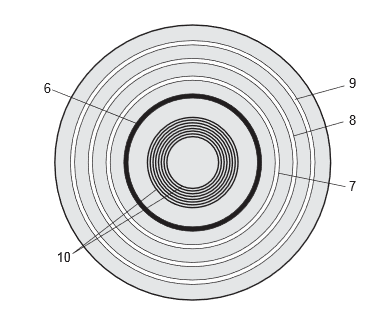
Here is part of the story behind the invention:
To represent information visually, he realized, he would need a code. The only code he knew was the one he had learned in the
Boy Scouts.
What would happen, Mr. Woodland wondered one day, if Morse code, with its elegant simplicity and limitless combinatorial
potential, were adapted graphically? He began trailing his fingers idly through the sand.
“What I'm going to tell you sounds like a fairy tale," Mr. Woodland told Smithsonian magazine in 1999. “I poked my four fingers
into the sand and for whatever reason − I didn't know − I pulled my hand toward me and drew four lines. I said: 'Golly! Now I have four
lines, and they could be wide lines and narrow lines instead of dots and dashes.' "
That consequential pass was merely the beginning. “Only seconds later," Mr. Woodland continued, “I took my four fingers − they
were still in the sand − and I swept them around into a full circle."
Mr. Woodland favored the circular pattern for its omnidirectionality: a checkout clerk, he reasoned, could scan a product without
regard for its orientation.
But that method − a variegated bull's-eye of wide and narrow bands −, which depended on an immense scanner equipped with
a 500-watt light, was expensive and unwieldy, and it languished for years.
The two men eventually sold their patent to Philco for $15,000 − all they ever made from their invention.
By the time the patent expired at the end of the 1960s, Mr. Woodland was on the staff of I.B.M., where he worked from 1951
until his retirement in 1987.
Over time, laser scanning technology and the advent of the microprocessor made the bar code viable. In the early 1970s, an
I.B.M. colleague, George J. Laurer, designed the familiar black-and-white rectangle, based on the Woodland-Silver model and drawing
on Mr. Woodland's considerable input.
(Adapted from http://www.nytimes.com/2012/12/13/business/n-josep...
&emc=edit_th_20121214&_r=0)
Infere-se do texto que
If It's for Sale, His Lines Sort It
By MARGALIT FOX
It was born on a beach six decades ago, the product of a pressing need, an intellectual spark and the sweep of a young man's
fingers through the sand.
The result adorns almost every product of contemporary life, including groceries, wayward luggage and, if you are a
traditionalist, the newspaper you are holding.
The man on the beach that day was a mechanical-engineer-in-training named N. Joseph Woodland. With that transformative
stroke of his fingers − yielding a set of literal lines in the sand − Mr. Woodland, who died on Sunday at 91, conceived the modern bar
code.
Mr. Woodland was a graduate student when he and a classmate, Bernard Silver, created a technology, based on a printed
series of wide and narrow striations, that encoded consumer-product information for optical scanning.
Their idea, developed in the late 1940s and patented 60 years ago this fall, turned out to be ahead of its time, and the two men
together made only $15,000 from it, when they sold their patent to Philco. But the curious round symbol they devised would ultimately
give rise to the universal product code, or U.P.C., as the staggeringly prevalent rectangular bar code (it graces tens of millions of
different items) is officially known.
Here is part of the story behind the invention:
To represent information visually, he realized, he would need a code. The only code he knew was the one he had learned in the
Boy Scouts.
What would happen, Mr. Woodland wondered one day, if Morse code, with its elegant simplicity and limitless combinatorial
potential, were adapted graphically? He began trailing his fingers idly through the sand.
“What I'm going to tell you sounds like a fairy tale," Mr. Woodland told Smithsonian magazine in 1999. “I poked my four fingers
into the sand and for whatever reason − I didn't know − I pulled my hand toward me and drew four lines. I said: 'Golly! Now I have four
lines, and they could be wide lines and narrow lines instead of dots and dashes.' "
That consequential pass was merely the beginning. “Only seconds later," Mr. Woodland continued, “I took my four fingers − they
were still in the sand − and I swept them around into a full circle."
Mr. Woodland favored the circular pattern for its omnidirectionality: a checkout clerk, he reasoned, could scan a product without
regard for its orientation.
But that method − a variegated bull's-eye of wide and narrow bands −, which depended on an immense scanner equipped with
a 500-watt light, was expensive and unwieldy, and it languished for years.
The two men eventually sold their patent to Philco for $15,000 − all they ever made from their invention.
By the time the patent expired at the end of the 1960s, Mr. Woodland was on the staff of I.B.M., where he worked from 1951
until his retirement in 1987.
Over time, laser scanning technology and the advent of the microprocessor made the bar code viable. In the early 1970s, an
I.B.M. colleague, George J. Laurer, designed the familiar black-and-white rectangle, based on the Woodland-Silver model and drawing
on Mr. Woodland's considerable input.
(Adapted from http://www.nytimes.com/2012/12/13/business/n-josep...
&emc=edit_th_20121214&_r=0)
Infere-se do texto que
Provas
Questão presente nas seguintes provas
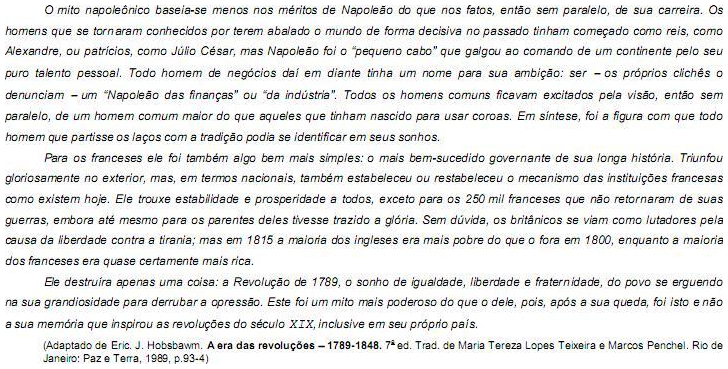
Uma nova redação para a frase acima, em que se preservam a correção e a clareza, está em:
Provas
Questão presente nas seguintes provas
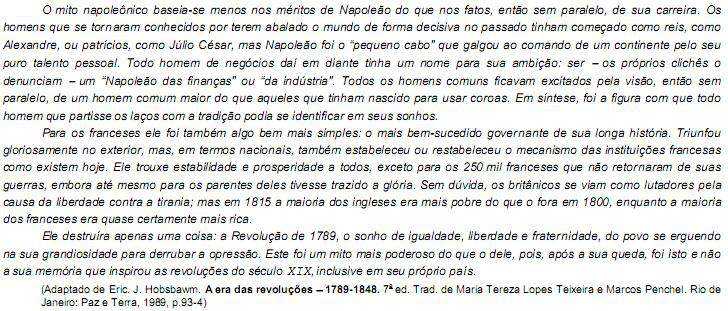
Provas
Questão presente nas seguintes provas
Cadernos
Caderno Container