Foram encontradas 46.760 questões.
Leia o texto a seguir para responder à questão:
Brian Tomlinson and Hitomi Masuhara, The Complete Guide to the Theory and Practice of Materials Development for Language Learning
Whenever we look for resources on materials development, it is difficult to find books which bring together theory and practice in an organic manner. This book does precisely that; it provides the practicality of materials development guides and the academic rigour of reports and research studies published in the field.
Tomlinson and Masuhara’s book has three specific aims. First is to help teachers, researchers and students to know, understand and be constructively critical of what has been achieved to date; secondly to help them develop, adapt, use, review and research materials on their own. Finally, while talking most particularly to teachers, the authors highlight that they want the strong opinions and approaches presented in the book to inspire readers to think independently and to develop and apply innovative approaches on their own.
These three aims seem to be very ambitious and that is the feeling you get when you read through the chapters. The book includes everything related to the theory and practice in materials development to date, and advocates that theory must inform practice and vice versa. Each of the fifteen chapters ends with a section which includes recommendations for teachers followed by a ‘What do you think?’ section to encourage them to reflect on their own contexts and teaching experience in them.
Although at times the book seems overwhelming as it attempts to provide everything about materials in language learning, it successfully realizes its aim to address a wide audience from publishers, researchers to teachers.
(https://www.fortell.org. acessado em 02.10.2025. Adaptado)
Provas

Leia o texto a seguir para responder à questão:
The term “language practice” refers to activities which involve repetition of the same language point or skill in an environment which is controlled by the framework of the activity. The purpose for language production and the language to be produced are usually predetermined by the task or the teacher. The intention is not to use the language for communication but to strengthen the ability to manipulate a particular language form or function.
Activities centered on “language use”, on the other hand, involve the production of language in order to communicate. The purpose of the activity might be predetermined but the language which is used is determined by the learners.
Provas
Leia o texto a seguir para responder à questão:
The term “language practice” refers to activities which involve repetition of the same language point or skill in an environment which is controlled by the framework of the activity. The purpose for language production and the language to be produced are usually predetermined by the task or the teacher. The intention is not to use the language for communication but to strengthen the ability to manipulate a particular language form or function.
Activities centered on “language use”, on the other hand, involve the production of language in order to communicate. The purpose of the activity might be predetermined but the language which is used is determined by the learners.
O sufixo -en assume vários papéis e significados na língua inglesa.
A palavra que segue o mesmo processo de formação verificado em strengthen, no primeiro parágrafo do texto, é:
Provas
Leia o texto a seguir para responder à questão:
The term “language practice” refers to activities which involve repetition of the same language point or skill in an environment which is controlled by the framework of the activity. The purpose for language production and the language to be produced are usually predetermined by the task or the teacher. The intention is not to use the language for communication but to strengthen the ability to manipulate a particular language form or function.
Activities centered on “language use”, on the other hand, involve the production of language in order to communicate. The purpose of the activity might be predetermined but the language which is used is determined by the learners.
Provas
Leia o cartum a seguir.
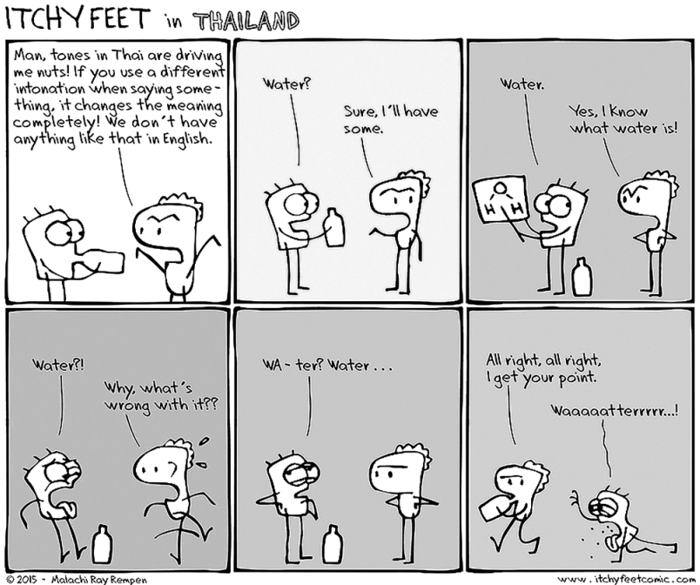
(www.itchyfeetcomic.com)
Image and text help capture the humor in the cartoon, which derives from
Provas
Read the following text and answer the next five question.
The implications of a rapidly changing information ecosystem on how governments communicate
Public communication does not happen in a vacuum: the context in which it occurs is core to understanding the challenges and opportunities it faces. Indeed, the analysis of its role for policy and governance mechanisms is made urgent by shifts in the information ecosystem that have transformed the function over the past decade and raised important implications for democracy. The technological revolution that has connected the world through social media has given rise to online social movements and simplified the creation and sharing of content and data. Such changes have also facilitated, however, the spread of mis- and disinformation, contributed to undermining the role of traditional information gatekeepers, and have fundamentally changed how governments communicate. Whereas until the early 2000s a so-called “one-to-many” model of communication prevailed, this has shifted today to a “many-to-many” model. Anyone can be both a producer and a consumer of information, and anybody with an internet connection has the potential to engage with and influence public debates.
Traditionally, governments had largely relied on traditional media to amplify official messages to reach citizens. With the advent of digital channels, this approach has gradually lost its primacy to direct institution-to-individual communication via online platforms that bypass traditional media. This shift has also enabled a broader scope for governments to communicate about more diverse policy issues targeted to more specific audiences, as traditional media tend to concentrate on “newsworthy” subjects and political affairs, often under-reporting less mainstream issues. The unprecedented volumes of data that promise to make communication ever more precise, combined with the direct, unmediated access to vast and diverse publics, are some of the opportunities and challenges that have emerged.
At the same time, digital platforms have altered patterns in eople’s consumption of information and raised demands on their attention. The latter has become a resource that technology companies sell to advertisers. In turn, the design of online platforms and their algorithms, and the massive increase in the volume of information served to increase competition for what content people pay attention to, while making focus more superficial. As governments compete with all other information sources for the public’s attention, cognitive and psychological factors such as information overload can undermine the efficacy of even well-crafted content.
Online and social media have also heightened the pace at which information travels, accelerated the news cycle, and enabled a wider range of actors to drive discussions on policy issues. Taken together, digital technologies have produced a complex information ecosystem that has made it more challenging for official messages to “cut through the noise”. Cumulatively, these changes require considerable adjustments to practices, public officials’ skills, and even to how communication is organised, if governments are to make the most of the digital transformation and ensure it can promote better governance. […]
The ability for governments to use the communication function to promote constructive democratic spaces is critically threatened by widespread mis- and disinformation. When falsehoods spread extensively and rapidly on issues of public policy, official messages are drowned out, creating significant challenges for public communicators to get key information out to all groups in society. Whether in the context of elections, health crises, migration or climate change, mis- and disinformation cast evidence and facts into doubt, sow distrust, and work against policy goals.
Adapted from: https://www.oecd.org/content/dam/oecd/en/publications/ reports/2021/12/oecd-report-on-public-communication_b74311bc/22f8031c-en.pdf
The text ends by pointing out the need for governments to be:
Provas
Read the following text and answer the next five question.
The implications of a rapidly changing information ecosystem on how governments communicate
Public communication does not happen in a vacuum: the context in which it occurs is core to understanding the challenges and opportunities it faces. Indeed, the analysis of its role for policy and governance mechanisms is made urgent by shifts in the information ecosystem that have transformed the function over the past decade and raised important implications for democracy. The technological revolution that has connected the world through social media has given rise to online social movements and simplified the creation and sharing of content and data. Such changes have also facilitated, however, the spread of mis- and disinformation, contributed to undermining the role of traditional information gatekeepers, and have fundamentally changed how governments communicate. Whereas until the early 2000s a so-called “one-to-many” model of communication prevailed, this has shifted today to a “many-to-many” model. Anyone can be both a producer and a consumer of information, and anybody with an internet connection has the potential to engage with and influence public debates.
Traditionally, governments had largely relied on traditional media to amplify official messages to reach citizens. With the advent of digital channels, this approach has gradually lost its primacy to direct institution-to-individual communication via online platforms that bypass traditional media. This shift has also enabled a broader scope for governments to communicate about more diverse policy issues targeted to more specific audiences, as traditional media tend to concentrate on “newsworthy” subjects and political affairs, often under-reporting less mainstream issues. The unprecedented volumes of data that promise to make communication ever more precise, combined with the direct, unmediated access to vast and diverse publics, are some of the opportunities and challenges that have emerged.
At the same time, digital platforms have altered patterns in eople’s consumption of information and raised demands on their attention. The latter has become a resource that technology companies sell to advertisers. In turn, the design of online platforms and their algorithms, and the massive increase in the volume of information served to increase competition for what content people pay attention to, while making focus more superficial. As governments compete with all other information sources for the public’s attention, cognitive and psychological factors such as information overload can undermine the efficacy of even well-crafted content.
Online and social media have also heightened the pace at which information travels, accelerated the news cycle, and enabled a wider range of actors to drive discussions on policy issues. Taken together, digital technologies have produced a complex information ecosystem that has made it more challenging for official messages to “cut through the noise”. Cumulatively, these changes require considerable adjustments to practices, public officials’ skills, and even to how communication is organised, if governments are to make the most of the digital transformation and ensure it can promote better governance. […]
The ability for governments to use the communication function to promote constructive democratic spaces is critically threatened by widespread mis- and disinformation. When falsehoods spread extensively and rapidly on issues of public policy, official messages are drowned out, creating significant challenges for public communicators to get key information out to all groups in society. Whether in the context of elections, health crises, migration or climate change, mis- and disinformation cast evidence and facts into doubt, sow distrust, and work against policy goals.
Adapted from: https://www.oecd.org/content/dam/oecd/en/publications/ reports/2021/12/oecd-report-on-public-communication_b74311bc/22f8031c-en.pdf
The verb phrase in “official messages are drowned out” (5th paragraph) is in the:
Provas
Read the following text and answer the next five question.
The implications of a rapidly changing information ecosystem on how governments communicate
Public communication does not happen in a vacuum: the context in which it occurs is core to understanding the challenges and opportunities it faces. Indeed, the analysis of its role for policy and governance mechanisms is made urgent by shifts in the information ecosystem that have transformed the function over the past decade and raised important implications for democracy. The technological revolution that has connected the world through social media has given rise to online social movements and simplified the creation and sharing of content and data. Such changes have also facilitated, however, the spread of mis- and disinformation, contributed to undermining the role of traditional information gatekeepers, and have fundamentally changed how governments communicate. Whereas until the early 2000s a so-called “one-to-many” model of communication prevailed, this has shifted today to a “many-to-many” model. Anyone can be both a producer and a consumer of information, and anybody with an internet connection has the potential to engage with and influence public debates.
Traditionally, governments had largely relied on traditional media to amplify official messages to reach citizens. With the advent of digital channels, this approach has gradually lost its primacy to direct institution-to-individual communication via online platforms that bypass traditional media. This shift has also enabled a broader scope for governments to communicate about more diverse policy issues targeted to more specific audiences, as traditional media tend to concentrate on “newsworthy” subjects and political affairs, often under-reporting less mainstream issues. The unprecedented volumes of data that promise to make communication ever more precise, combined with the direct, unmediated access to vast and diverse publics, are some of the opportunities and challenges that have emerged.
At the same time, digital platforms have altered patterns in eople’s consumption of information and raised demands on their attention. The latter has become a resource that technology companies sell to advertisers. In turn, the design of online platforms and their algorithms, and the massive increase in the volume of information served to increase competition for what content people pay attention to, while making focus more superficial. As governments compete with all other information sources for the public’s attention, cognitive and psychological factors such as information overload can undermine the efficacy of even well-crafted content.
Online and social media have also heightened the pace at which information travels, accelerated the news cycle, and enabled a wider range of actors to drive discussions on policy issues. Taken together, digital technologies have produced a complex information ecosystem that has made it more challenging for official messages to “cut through the noise”. Cumulatively, these changes require considerable adjustments to practices, public officials’ skills, and even to how communication is organised, if governments are to make the most of the digital transformation and ensure it can promote better governance. […]
The ability for governments to use the communication function to promote constructive democratic spaces is critically threatened by widespread mis- and disinformation. When falsehoods spread extensively and rapidly on issues of public policy, official messages are drowned out, creating significant challenges for public communicators to get key information out to all groups in society. Whether in the context of elections, health crises, migration or climate change, mis- and disinformation cast evidence and facts into doubt, sow distrust, and work against policy goals.
Adapted from: https://www.oecd.org/content/dam/oecd/en/publications/ reports/2021/12/oecd-report-on-public-communication_b74311bc/22f8031c-en.pdf
The first word in “shifts in the information ecosystem” (1st paragraph) is close in meaning to:
Provas
- Gramática - Língua InglesaAdvérbios e conjunções | Adverbs and conjunctions
- Gramática - Língua InglesaPalavras conectivas | Connective words
Read the following text and answer the next five question.
The implications of a rapidly changing information ecosystem on how governments communicate
Public communication does not happen in a vacuum: the context in which it occurs is core to understanding the challenges and opportunities it faces. Indeed, the analysis of its role for policy and governance mechanisms is made urgent by shifts in the information ecosystem that have transformed the function over the past decade and raised important implications for democracy. The technological revolution that has connected the world through social media has given rise to online social movements and simplified the creation and sharing of content and data. Such changes have also facilitated, however, the spread of mis- and disinformation, contributed to undermining the role of traditional information gatekeepers, and have fundamentally changed how governments communicate. Whereas until the early 2000s a so-called “one-to-many” model of communication prevailed, this has shifted today to a “many-to-many” model. Anyone can be both a producer and a consumer of information, and anybody with an internet connection has the potential to engage with and influence public debates.
Traditionally, governments had largely relied on traditional media to amplify official messages to reach citizens. With the advent of digital channels, this approach has gradually lost its primacy to direct institution-to-individual communication via online platforms that bypass traditional media. This shift has also enabled a broader scope for governments to communicate about more diverse policy issues targeted to more specific audiences, as traditional media tend to concentrate on “newsworthy” subjects and political affairs, often under-reporting less mainstream issues. The unprecedented volumes of data that promise to make communication ever more precise, combined with the direct, unmediated access to vast and diverse publics, are some of the opportunities and challenges that have emerged.
At the same time, digital platforms have altered patterns in eople’s consumption of information and raised demands on their attention. The latter has become a resource that technology companies sell to advertisers. In turn, the design of online platforms and their algorithms, and the massive increase in the volume of information served to increase competition for what content people pay attention to, while making focus more superficial. As governments compete with all other information sources for the public’s attention, cognitive and psychological factors such as information overload can undermine the efficacy of even well-crafted content.
Online and social media have also heightened the pace at which information travels, accelerated the news cycle, and enabled a wider range of actors to drive discussions on policy issues. Taken together, digital technologies have produced a complex information ecosystem that has made it more challenging for official messages to “cut through the noise”. Cumulatively, these changes require considerable adjustments to practices, public officials’ skills, and even to how communication is organised, if governments are to make the most of the digital transformation and ensure it can promote better governance. […]
The ability for governments to use the communication function to promote constructive democratic spaces is critically threatened by widespread mis- and disinformation. When falsehoods spread extensively and rapidly on issues of public policy, official messages are drowned out, creating significant challenges for public communicators to get key information out to all groups in society. Whether in the context of elections, health crises, migration or climate change, mis- and disinformation cast evidence and facts into doubt, sow distrust, and work against policy goals.
Adapted from: https://www.oecd.org/content/dam/oecd/en/publications/ reports/2021/12/oecd-report-on-public-communication_b74311bc/22f8031c-en.pdf
“Indeed” in “Indeed, the analysis of its role for policy and governance mechanisms is made urgent” (1st paragraph) indicates:
Provas
Read the following text and answer the next five question.
The implications of a rapidly changing information ecosystem on how governments communicate
Public communication does not happen in a vacuum: the context in which it occurs is core to understanding the challenges and opportunities it faces. Indeed, the analysis of its role for policy and governance mechanisms is made urgent by shifts in the information ecosystem that have transformed the function over the past decade and raised important implications for democracy. The technological revolution that has connected the world through social media has given rise to online social movements and simplified the creation and sharing of content and data. Such changes have also facilitated, however, the spread of mis- and disinformation, contributed to undermining the role of traditional information gatekeepers, and have fundamentally changed how governments communicate. Whereas until the early 2000s a so-called “one-to-many” model of communication prevailed, this has shifted today to a “many-to-many” model. Anyone can be both a producer and a consumer of information, and anybody with an internet connection has the potential to engage with and influence public debates.
Traditionally, governments had largely relied on traditional media to amplify official messages to reach citizens. With the advent of digital channels, this approach has gradually lost its primacy to direct institution-to-individual communication via online platforms that bypass traditional media. This shift has also enabled a broader scope for governments to communicate about more diverse policy issues targeted to more specific audiences, as traditional media tend to concentrate on “newsworthy” subjects and political affairs, often under-reporting less mainstream issues. The unprecedented volumes of data that promise to make communication ever more precise, combined with the direct, unmediated access to vast and diverse publics, are some of the opportunities and challenges that have emerged.
At the same time, digital platforms have altered patterns in eople’s consumption of information and raised demands on their attention. The latter has become a resource that technology companies sell to advertisers. In turn, the design of online platforms and their algorithms, and the massive increase in the volume of information served to increase competition for what content people pay attention to, while making focus more superficial. As governments compete with all other information sources for the public’s attention, cognitive and psychological factors such as information overload can undermine the efficacy of even well-crafted content.
Online and social media have also heightened the pace at which information travels, accelerated the news cycle, and enabled a wider range of actors to drive discussions on policy issues. Taken together, digital technologies have produced a complex information ecosystem that has made it more challenging for official messages to “cut through the noise”. Cumulatively, these changes require considerable adjustments to practices, public officials’ skills, and even to how communication is organised, if governments are to make the most of the digital transformation and ensure it can promote better governance. […]
The ability for governments to use the communication function to promote constructive democratic spaces is critically threatened by widespread mis- and disinformation. When falsehoods spread extensively and rapidly on issues of public policy, official messages are drowned out, creating significant challenges for public communicators to get key information out to all groups in society. Whether in the context of elections, health crises, migration or climate change, mis- and disinformation cast evidence and facts into doubt, sow distrust, and work against policy goals.
Adapted from: https://www.oecd.org/content/dam/oecd/en/publications/ reports/2021/12/oecd-report-on-public-communication_b74311bc/22f8031c-en.pdf
Based on the information provided by the text, mark the statements below as true (T) or false (F).
( ) Public messages are detached from their environment.
( ) The pervasiveness of “many-to-many” communication predates the turn of the century.
( ) Innovations in technology have enabled the quick spread of inaccurate information.
The statements are, respectively:
Provas
Caderno Container