Foram encontradas 47.328 questões.
- Interpretação de texto | Reading comprehension
- Gramática - Língua InglesaVerbos | VerbsPresente perfeito | Present perfect
Read the text to answer question.
Using Machine Learning to Develop
Personalized Vaccines for Cancer
Yale researchers have developed a machine
learning model, called Immunostruct, that can
help scientists create more personalized
vaccines, including vaccines for cancer. They
described the tool in Nature Machine
Intelligence along with findings from applying
it to cancer and immunology data.
When a potential threat, such as a virus
or tumor, arises in our body, our immune cells
recognize peptides---essentially short
proteins---on the surface of the invader and
mount a defensive response. This small region
that the immune system interacts with is known
as an epitope.
Epitope-based vaccines are an emerging
technology that contain specific peptides in
order to trigger immune responses that
precisely target particular diseases. Ongoing
studies show that these vaccines are a
promising potential immunotherapy for a range
of cancers including melanomas, breast
cancers, and glioblastomas. Researchers are
also investigating whether these vaccines could
more effectively combat new variants of
infectious diseases.
To develop these vaccines, scientists
can use models that help them predict which
peptides are most likely to trigger a strong immune response to a particular antigen. A
limitation of many of these models, the
researchers say, is that they treat peptides as a
one-dimensional sequence of amino acids, not
the three-dimensional, active structures that
they are.
Now, Yale researchers have created a
model that also incorporates structural and
biochemical properties of peptides. In the new
study, they show that the multimodal model is
more effective at identifying peptide candidates
than its predecessors.
"Cancer is extremely heterogeneous---which often makes it very hard to treat
effectively," says Kevin B. Givechian, PhD, an
MD-PhD student at Yale and co-first author on
the study. “We have built a deep-learning model
that integrates more information than had
previously been combined to help us improve
the identification of vaccine targets that
stimulate people's immune system against their
own tumor. Doing so would enable a more
effective and less toxic method of treatment."
ВACKMAN, Isabella. Using Machine Learning to
Develop Personalized Vaccines for Cancer. Yale School
of Medicine, 24 fev. 2026. Acesso em: 28 june. 2026.
Provas
Questão presente nas seguintes provas

- Interpretação de texto | Reading comprehension
- Vocabulário | Vocabulary
- Gramática - Língua InglesaAdjetivos | Adjectives
Read the text to answer question.
Using Machine Learning to Develop
Personalized Vaccines for Cancer
Yale researchers have developed a machine
learning model, called Immunostruct, that can
help scientists create more personalized
vaccines, including vaccines for cancer. They
described the tool in Nature Machine
Intelligence along with findings from applying
it to cancer and immunology data.
When a potential threat, such as a virus
or tumor, arises in our body, our immune cells
recognize peptides---essentially short
proteins---on the surface of the invader and
mount a defensive response. This small region
that the immune system interacts with is known
as an epitope.
Epitope-based vaccines are an emerging
technology that contain specific peptides in
order to trigger immune responses that
precisely target particular diseases. Ongoing
studies show that these vaccines are a
promising potential immunotherapy for a range
of cancers including melanomas, breast
cancers, and glioblastomas. Researchers are
also investigating whether these vaccines could
more effectively combat new variants of
infectious diseases.
To develop these vaccines, scientists
can use models that help them predict which
peptides are most likely to trigger a strong immune response to a particular antigen. A
limitation of many of these models, the
researchers say, is that they treat peptides as a
one-dimensional sequence of amino acids, not
the three-dimensional, active structures that
they are.
Now, Yale researchers have created a
model that also incorporates structural and
biochemical properties of peptides. In the new
study, they show that the multimodal model is
more effective at identifying peptide candidates
than its predecessors.
"Cancer is extremely heterogeneous---which often makes it very hard to treat
effectively," says Kevin B. Givechian, PhD, an
MD-PhD student at Yale and co-first author on
the study. “We have built a deep-learning model
that integrates more information than had
previously been combined to help us improve
the identification of vaccine targets that
stimulate people's immune system against their
own tumor. Doing so would enable a more
effective and less toxic method of treatment."
ВACKMAN, Isabella. Using Machine Learning to
Develop Personalized Vaccines for Cancer. Yale School
of Medicine, 24 fev. 2026. Acesso em: 28 june. 2026.
Provas
Questão presente nas seguintes provas
READ TEXTS V AND VI AND ANSWER THE QUESTION THAT
FOLLOW.
TEXT V
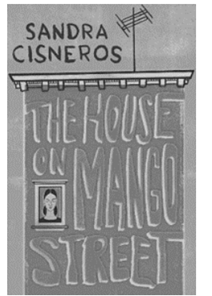
Acclaimed by critics, beloved by readers of all ages, taught
everywhere from inner-city grade schools to universities across the
country, and translated all over the world, The House on Mango
Street is the remarkable story of Esperanza Cordero.
Told in a series of vignettes – sometimes heartbreaking, sometimes
deeply joyous – it is the story of a young Latina girl growing up in
Chicago, inventing for herself who and what she will become. Few
other books in our time have touched so many readers.
From: https://www.amazon.com.br/dp/0679734775
TEXT VI
They always told us that one day we would move into a house, a
real house that would be ours for always so we wouldn't have to
move each year. And our house would have running water and
pipes that worked. And inside it would have real stairs, not hallway
stairs, but stairs inside like the houses on T.V. And we'd have a
basement and at least three washrooms so when we took a bath
we wouldn't have to tell everybody. Our house would be white with
trees around it, a great big yard and grass growing without a fence.
This was the house Papa talked about when he held a lottery ticket
and this was the house Mama dreamed up in the stories she told
us before we went to bed.
From: CISNEROS, Sandra. The House on Mango Street. New York: Vintage Books,
1991. p. 4.
Provas
Questão presente nas seguintes provas
READ TEXTS V AND VI AND ANSWER THE QUESTION THAT
FOLLOW.
TEXT V
Acclaimed by critics, beloved by readers of all ages, taught
everywhere from inner-city grade schools to universities across the
country, and translated all over the world, The House on Mango
Street is the remarkable story of Esperanza Cordero.
Told in a series of vignettes – sometimes heartbreaking, sometimes
deeply joyous – it is the story of a young Latina girl growing up in
Chicago, inventing for herself who and what she will become. Few
other books in our time have touched so many readers.
From: https://www.amazon.com.br/dp/0679734775
TEXT VI
They always told us that one day we would move into a house, a
real house that would be ours for always so we wouldn't have to
move each year. And our house would have running water and
pipes that worked. And inside it would have real stairs, not hallway
stairs, but stairs inside like the houses on T.V. And we'd have a
basement and at least three washrooms so when we took a bath
we wouldn't have to tell everybody. Our house would be white with
trees around it, a great big yard and grass growing without a fence.
This was the house Papa talked about when he held a lottery ticket
and this was the house Mama dreamed up in the stories she told
us before we went to bed.
From: CISNEROS, Sandra. The House on Mango Street. New York: Vintage Books,
1991. p. 4.
Provas
Questão presente nas seguintes provas
Cadernos
Caderno Container