Foram encontradas 46.760 questões.
Text 1
UN and Multilingualism
An essential factor in harmonious communication
among peoples and an enabler of multilateral diplomacy, multilingualism is of particular importance to
the United Nations. By promoting dialogue, tolerance
and understanding, multilingualism ensures effective
participation of all in the Organization’s work, as well
as greater transparency and efficiencies and better
outcomes.
Arabic, Chinese, English, French, Russian and Spanish
are the six official languages of the United Nations;
English and French being the working languages of
the United Nations Secretariat.
Parity among the six official languages has been an
ongoing concern of the Secretary-General. The use
of all the official languages, on an equal footing, is
actively promoted to guarantee that all stakeholders
can participate in the work of the United Nations.
To ensure that the goals and actions of the UN are
understood by the widest possible public, non-official
languages are also in use at the UN on a daily basis. To
achieve these objectives, the UN Secretariat promotes an organizational culture in its ranks that values
and nurtures multilingualism throughout the human
resources continuum.
(adapted from:https://www.un.org)
Provas
Questão presente nas seguintes provas

Text 1
UN and Multilingualism
An essential factor in harmonious communication
among peoples and an enabler of multilateral diplomacy, multilingualism is of particular importance to
the United Nations. By promoting dialogue, tolerance
and understanding, multilingualism ensures effective
participation of all in the Organization’s work, as well
as greater transparency and efficiencies and better
outcomes.
Arabic, Chinese, English, French, Russian and Spanish
are the six official languages of the United Nations;
English and French being the working languages of
the United Nations Secretariat.
Parity among the six official languages has been an
ongoing concern of the Secretary-General. The use
of all the official languages, on an equal footing, is
actively promoted to guarantee that all stakeholders
can participate in the work of the United Nations.
To ensure that the goals and actions of the UN are
understood by the widest possible public, non-official
languages are also in use at the UN on a daily basis. To
achieve these objectives, the UN Secretariat promotes an organizational culture in its ranks that values
and nurtures multilingualism throughout the human
resources continuum.
(adapted from:https://www.un.org)
( ) The verb “understood” is incorrect, it should be replaced by “understand”.
( ) “are understood” is a present passive structure.
( ) “widest” is an adjective, that is in the superlative of superiority form.
Choose the alternative which presents the correct sequence, from top to bottom.
Provas
Questão presente nas seguintes provas
Text 1
UN and Multilingualism
An essential factor in harmonious communication
among peoples and an enabler of multilateral diplomacy, multilingualism is of particular importance to
the United Nations. By promoting dialogue, tolerance
and understanding, multilingualism ensures effective
participation of all in the Organization’s work, as well
as greater transparency and efficiencies and better
outcomes.
Arabic, Chinese, English, French, Russian and Spanish
are the six official languages of the United Nations;
English and French being the working languages of
the United Nations Secretariat.
Parity among the six official languages has been an
ongoing concern of the Secretary-General. The use
of all the official languages, on an equal footing, is
actively promoted to guarantee that all stakeholders
can participate in the work of the United Nations.
To ensure that the goals and actions of the UN are
understood by the widest possible public, non-official
languages are also in use at the UN on a daily basis. To
achieve these objectives, the UN Secretariat promotes an organizational culture in its ranks that values
and nurtures multilingualism throughout the human
resources continuum.
(adapted from:https://www.un.org)
Provas
Questão presente nas seguintes provas
Text 1
UN and Multilingualism
An essential factor in harmonious communication
among peoples and an enabler of multilateral diplomacy, multilingualism is of particular importance to
the United Nations. By promoting dialogue, tolerance
and understanding, multilingualism ensures effective
participation of all in the Organization’s work, as well
as greater transparency and efficiencies and better
outcomes.
Arabic, Chinese, English, French, Russian and Spanish
are the six official languages of the United Nations;
English and French being the working languages of
the United Nations Secretariat.
Parity among the six official languages has been an
ongoing concern of the Secretary-General. The use
of all the official languages, on an equal footing, is
actively promoted to guarantee that all stakeholders
can participate in the work of the United Nations.
To ensure that the goals and actions of the UN are
understood by the widest possible public, non-official
languages are also in use at the UN on a daily basis. To
achieve these objectives, the UN Secretariat promotes an organizational culture in its ranks that values
and nurtures multilingualism throughout the human
resources continuum.
(adapted from:https://www.un.org)
Provas
Questão presente nas seguintes provas
About the topic “Pre-Communicative Methods”,
complete the following sentence:
“The pre-communicative practice in learning a language is similar to learn to walk as a baby. Learning a language needs this ........................ stage until you become ....................... in using your words and moving your tongue in your mouth to ...................... your words fluently and correctly.”
Mark the option that correctly completes the blanks in the text.
“The pre-communicative practice in learning a language is similar to learn to walk as a baby. Learning a language needs this ........................ stage until you become ....................... in using your words and moving your tongue in your mouth to ...................... your words fluently and correctly.”
Mark the option that correctly completes the blanks in the text.
Provas
Questão presente nas seguintes provas
In the Base Curricular da Rede Municipal de
Ensino de Palhoça document, table 18 EJA 8th grade
of elementary school, which topic is developed in Oral
Production?
Provas
Questão presente nas seguintes provas
Sobre o tema “competência comunicativa”, é correto afirmar a respeito de seu conceito:
Provas
Questão presente nas seguintes provas
De acordo com a Matriz Curricular 17 – Linguagens: Lingua Inglesa (EJA – nível III – 7º ano), o estudo
do Léxico e da Gramática estão inseridos em qual
eixo?
Provas
Questão presente nas seguintes provas
According to the Base Curricular da Rede Municipal de Ensino de Palhoça, Matriz Curricular (table 16
EJA-Linguagens-Língua Inglesa) physical caracteristics,
parts of the body and the verb ‘to be’ are topics studied in:
Provas
Questão presente nas seguintes provas
McDonald’s and Wendy’s investors group demands fixes to franchisee child labor issues


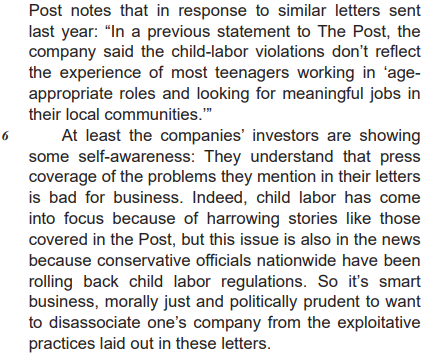
Available at: https://www.msnbc.com/the-reidout/reidout-blog/ mcdonalds-wendys-investors-child-labor-rcna151722. Retrieved on: May 14, 2024. Adapted.
Provas
Questão presente nas seguintes provas
Cadernos
Caderno Container