Foram encontradas 47.354 questões.
Text II
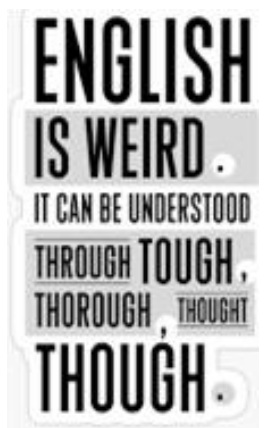
From: https://images.app.goo.gl/dCFurjmcnZzU7AHS6
Provas

Text II
From: https://images.app.goo.gl/dCFurjmcnZzU7AHS6
Provas
Text I
The BNCC and Twenty-First Century Skills
The most ambitious feature of the BNCC, which only appeared in the document’s third version, was to establish ten core competencies that all students should develop throughout basic education, starting in early childhood. These competencies include lifelong learning, critical thinking, aesthetic sensibilities, communication skills, digital literacy, entrepreneurship, self-care, empathy, citizenship and ethics. The core competencies broaden the goals of basic education well-beyond academic skills to twenty-first century skills widely regarded as essential to preparing the next generations for the challenges of the 4th industrial revolution.
As ambitious as it was, the BNCC was criticized for the lack of explicit links between the ten core competencies and the subject specific competencies and skills, leaving cities and states with the responsibility of making these links themselves. In addition to this, the core competencies are not generally integrated into teacher training programs and are often de-prioritized for the more basic literacy and numeracy needs. In this context, the Ministry of Education and its partners in the third sector have developed orientations, produced videos and online courses aimed at filling this gap, and helped cities and states integrate the ten core competencies in their curricula.
[…]
Ensuring all Brazilian students master the ten core competencies laid out by the BNCC by the end of high school is a long-term, extremely ambitious goal. Before we can set a timeframe for when we will be able to achieve this feat, we need to know where we stand. Due to the core competencies’ complexity, each involves several skills, attitudes and sometimes values, it is unclear whether we will be capable of measuring all ten of them and by when. Until then we are in the company of the OECD, which is already tackling this challenge and will likely pave the way for Brazil in this respect
Note: BNCC: Base Nacional Comum Curricular;
OECD: The Organization for Economic Cooperation and Development.
Adapted from https://link.springer.com/chapter/10.1007/978-3-030-41882-3_2
Provas
- Gramática - Língua InglesaSubstantivos e compostos | Nouns and compoundsPlural dos substantivos | Plural of nouns
Text I
The BNCC and Twenty-First Century Skills
The most ambitious feature of the BNCC, which only appeared in the document’s third version, was to establish ten core competencies that all students should develop throughout basic education, starting in early childhood. These competencies include lifelong learning, critical thinking, aesthetic sensibilities, communication skills, digital literacy, entrepreneurship, self-care, empathy, citizenship and ethics. The core competencies broaden the goals of basic education well-beyond academic skills to twenty-first century skills widely regarded as essential to preparing the next generations for the challenges of the 4th industrial revolution.
As ambitious as it was, the BNCC was criticized for the lack of explicit links between the ten core competencies and the subject specific competencies and skills, leaving cities and states with the responsibility of making these links themselves. In addition to this, the core competencies are not generally integrated into teacher training programs and are often de-prioritized for the more basic literacy and numeracy needs. In this context, the Ministry of Education and its partners in the third sector have developed orientations, produced videos and online courses aimed at filling this gap, and helped cities and states integrate the ten core competencies in their curricula.
[…]
Ensuring all Brazilian students master the ten core competencies laid out by the BNCC by the end of high school is a long-term, extremely ambitious goal. Before we can set a timeframe for when we will be able to achieve this feat, we need to know where we stand. Due to the core competencies’ complexity, each involves several skills, attitudes and sometimes values, it is unclear whether we will be capable of measuring all ten of them and by when. Until then we are in the company of the OECD, which is already tackling this challenge and will likely pave the way for Brazil in this respect
Note: BNCC: Base Nacional Comum Curricular;
OECD: The Organization for Economic Cooperation and Development.
Adapted from https://link.springer.com/chapter/10.1007/978-3-030-41882-3_2
Provas
Text I
The BNCC and Twenty-First Century Skills
The most ambitious feature of the BNCC, which only appeared in the document’s third version, was to establish ten core competencies that all students should develop throughout basic education, starting in early childhood. These competencies include lifelong learning, critical thinking, aesthetic sensibilities, communication skills, digital literacy, entrepreneurship, self-care, empathy, citizenship and ethics. The core competencies broaden the goals of basic education well-beyond academic skills to twenty-first century skills widely regarded as essential to preparing the next generations for the challenges of the 4th industrial revolution.
As ambitious as it was, the BNCC was criticized for the lack of explicit links between the ten core competencies and the subject specific competencies and skills, leaving cities and states with the responsibility of making these links themselves. In addition to this, the core competencies are not generally integrated into teacher training programs and are often de-prioritized for the more basic literacy and numeracy needs. In this context, the Ministry of Education and its partners in the third sector have developed orientations, produced videos and online courses aimed at filling this gap, and helped cities and states integrate the ten core competencies in their curricula.
[…]
Ensuring all Brazilian students master the ten core competencies laid out by the BNCC by the end of high school is a long-term, extremely ambitious goal. Before we can set a timeframe for when we will be able to achieve this feat, we need to know where we stand. Due to the core competencies’ complexity, each involves several skills, attitudes and sometimes values, it is unclear whether we will be capable of measuring all ten of them and by when. Until then we are in the company of the OECD, which is already tackling this challenge and will likely pave the way for Brazil in this respect
Note: BNCC: Base Nacional Comum Curricular;
OECD: The Organization for Economic Cooperation and Development.
Adapted from https://link.springer.com/chapter/10.1007/978-3-030-41882-3_2
I. Teacher education programs today focus more on the ten core competencies than on other needs the students may have. II. The BNCC has been the object of some resistance. III. Core competencies can now be measured in a simple way.
Choose the correct answer:
Provas
Text I
The BNCC and Twenty-First Century Skills
The most ambitious feature of the BNCC, which only appeared in the document’s third version, was to establish ten core competencies that all students should develop throughout basic education, starting in early childhood. These competencies include lifelong learning, critical thinking, aesthetic sensibilities, communication skills, digital literacy, entrepreneurship, self-care, empathy, citizenship and ethics. The core competencies broaden the goals of basic education well-beyond academic skills to twenty-first century skills widely regarded as essential to preparing the next generations for the challenges of the 4th industrial revolution.
As ambitious as it was, the BNCC was criticized for the lack of explicit links between the ten core competencies and the subject specific competencies and skills, leaving cities and states with the responsibility of making these links themselves. In addition to this, the core competencies are not generally integrated into teacher training programs and are often de-prioritized for the more basic literacy and numeracy needs. In this context, the Ministry of Education and its partners in the third sector have developed orientations, produced videos and online courses aimed at filling this gap, and helped cities and states integrate the ten core competencies in their curricula.
[…]
Ensuring all Brazilian students master the ten core competencies laid out by the BNCC by the end of high school is a long-term, extremely ambitious goal. Before we can set a timeframe for when we will be able to achieve this feat, we need to know where we stand. Due to the core competencies’ complexity, each involves several skills, attitudes and sometimes values, it is unclear whether we will be capable of measuring all ten of them and by when. Until then we are in the company of the OECD, which is already tackling this challenge and will likely pave the way for Brazil in this respect
Note: BNCC: Base Nacional Comum Curricular;
OECD: The Organization for Economic Cooperation and Development.
Adapted from https://link.springer.com/chapter/10.1007/978-3-030-41882-3_2
( ) The core competencies are not solely restricted to academic skills. ( ) Mastering the ten core competencies by the end of high school can be easily achieved. ( ) The core competencies established by the BNCC for basic education were a later development.
The statements are, respectively:
Provas
Use the following TEXT to answer the next two questions.
It's not often we write about printers here on the Giz, but Brother's new MPrint MW-260 gets honorable mention for being the world's thinnest printer. It can print up to 20 pages per minute from any PC, Pocket PC, or Windows Mobile handheld. Best of all, it also prints over Bluetooth (in addition to your standard USB). No word on pricing or availability, but this is a 1-pound printer we wouldn't mind adding to our travel bag. It’s worth buying!
Louis Ramirez
http://www.gizmodo.com/
The pronoun “it” in “It can print up to 20 pages per minute from any PC, Pocket PC, or Windows Mobile handheld”, taken from TEXT, refers to
Provas
Caderno Container