Foram encontradas 50 questões.
READ TEXT 2 AND ANSWER QUESTIONS 19 AND 20:
TEXT 2
Robot Poet Composes The Sands Of Time
Jan 31, 2014 11:53 AM
| Now that robots are writing news stories and novels, the machines are getting their operating systems tweaked for more creative endeavors: poetry. Created by Dutch artist Gijs van Bon, “Skryf” is a robo-poet that composes its verse in a trail of sand. The tricycle like mechanism consists of a modified CNC milling machine on wheels, which van Bon controls via a laptop. Skryf is programmed to take its time and print the lines so that by the time the poem is finished, the first lines have been destroyed. Van Bon says this is intentional — a statement about the fleeting nature of poetry. “When you’re writing one line of text, another one is going away because people start walking through it,” he told Dezeen. “Once I’ve finished writing, I walk the same way back but it’s all destroyed. It’s ephemeral, it’s just for this moment and afterwards it’s left to the public and to the wind.” Unlike some artificially intelligent robots that generate content, Skryf’s words are chosen by Van Bon. ”I can just type in text and it converts it to a code that the machine accepts,” he explained. “It writes letter by letter and in the four hours that I write per day it will write about 160 meters.” (adapted from http://news.discovery.com/tech/robotics/ robot-poet-composes-the-sands-of-time-140131.htm) |
The robot created by the Dutch artist is expected to work:
Provas

READ TEXT 2 AND ANSWER QUESTIONS 19 AND 20:
TEXT 2
Robot Poet Composes The Sands Of Time
Jan 31, 2014 11:53 AM
| Now that robots are writing news stories and novels, the machines are getting their operating systems tweaked for more creative endeavors: poetry. Created by Dutch artist Gijs van Bon, “Skryf” is a robo-poet that composes its verse in a trail of sand. The tricycle like mechanism consists of a modified CNC milling machine on wheels, which van Bon controls via a laptop. Skryf is programmed to take its time and print the lines so that by the time the poem is finished, the first lines have been destroyed. Van Bon says this is intentional — a statement about the fleeting nature of poetry. “When you’re writing one line of text, another one is going away because people start walking through it,” he told Dezeen. “Once I’ve finished writing, I walk the same way back but it’s all destroyed. It’s ephemeral, it’s just for this moment and afterwards it’s left to the public and to the wind.” Unlike some artificially intelligent robots that generate content, Skryf’s words are chosen by Van Bon. ”I can just type in text and it converts it to a code that the machine accepts,” he explained. “It writes letter by letter and in the four hours that I write per day it will write about 160 meters.” (adapted from http://news.discovery.com/tech/robotics/ robot-poet-composes-the-sands-of-time-140131.htm) |
According to the text, Dutch artist van Bon sees poetry as being:
Provas
READ TEXT 1 AND ANSWER QUESTIONS 16 to 18:
TEXT 1
Ocean Acidification
Carbon Dioxide Is Putting Shelled Animals at Risk
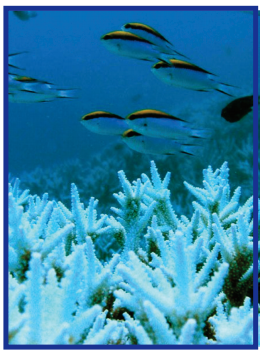
For tens of millions of years, Earth’s oceans have maintained a relatively stable acidity level. It’s within this steady environment that the rich and varied web of life in today’s seas has arisen and flourished. But research shows that this ancient balance is being undone by a recent and rapid drop in surface pH that could have devastating global consequences.
Since the beginning of the industrial revolution in the early 1800s, fossil fuel-powered machines have driven an unprecedented burst of human industry and advancement. The unfortunate consequence, however, has been the emission of billions of tons of carbon dioxide (CO2) and other greenhouse gases into Earth’s atmosphere.
Scientists now know that about half of this anthropogenic, or man-made, CO2 has been absorbed over time by the oceans. This has benefited us by slowing the climate change these emissions would have instigated if they had remained in the air. But relatively new research is finding that the introduction of massive amounts of CO2 into the seas is altering water chemistry and affecting the life cycles of many marine organisms, particularly those at the lower end of the food chain.
(http://ocean.nationalgeographic.com/ocean/ critical-issues-ocean-acidification/)
The verb phrase in “fossil fuel-powered machines have driven” (l.8) is in the:
Provas
READ TEXT 1 AND ANSWER QUESTIONS 16 to 18:
TEXT 1
Ocean Acidification
Carbon Dioxide Is Putting Shelled Animals at Risk
For tens of millions of years, Earth’s oceans have maintained a relatively stable acidity level. It’s within this steady environment that the rich and varied web of life in today’s seas has arisen and flourished. But research shows that this ancient balance is being undone by a recent and rapid drop in surface pH that could have devastating global consequences.
Since the beginning of the industrial revolution in the early 1800s, fossil fuel-powered machines have driven an unprecedented burst of human industry and advancement. The unfortunate consequence, however, has been the emission of billions of tons of carbon dioxide (CO2) and other greenhouse gases into Earth’s atmosphere.
Scientists now know that about half of this anthropogenic, or man-made, CO2 has been absorbed over time by the oceans. This has benefited us by slowing the climate change these emissions would have instigated if they had remained in the air. But relatively new research is finding that the introduction of massive amounts of CO2 into the seas is altering water chemistry and affecting the life cycles of many marine organisms, particularly those at the lower end of the food chain.
(http://ocean.nationalgeographic.com/ocean/ critical-issues-ocean-acidification/)
When the text informs that “this ancient balance is being undone” (l.4-5 ), it implies that the:
Provas
READ TEXT 1 AND ANSWER QUESTIONS 16 to 18:
TEXT 1
Ocean Acidification
Carbon Dioxide Is Putting Shelled Animals at Risk
For tens of millions of years, Earth’s oceans have maintained a relatively stable acidity level. It’s within this steady environment that the rich and varied web of life in today’s seas has arisen and flourished. But research shows that this ancient balance is being undone by a recent and rapid drop in surface pH that could have devastating global consequences.
Since the beginning of the industrial revolution in the early 1800s, fossil fuel-powered machines have driven an unprecedented burst of human industry and advancement. The unfortunate consequence, however, has been the emission of billions of tons of carbon dioxide (CO2) and other greenhouse gases into Earth’s atmosphere.
Scientists now know that about half of this anthropogenic, or man-made, CO2 has been absorbed over time by the oceans. This has benefited us by slowing the climate change these emissions would have instigated if they had remained in the air. But relatively new research is finding that the introduction of massive amounts of CO2 into the seas is altering water chemistry and affecting the life cycles of many marine organisms, particularly those at the lower end of the food chain.
(http://ocean.nationalgeographic.com/ocean/ critical-issues-ocean-acidification/)
According to the text, new research has been indicating that ocean acidification can be:
Provas
- Lógica ProposicionalEquivalências Lógicas
- Lógica ProposicionalNegação de Proposições CompostasLeis de De Morgan
Provas
- Lógica ProposicionalEquivalências Lógicas
- Lógica ProposicionalNegação de Proposições CompostasLeis de De Morgan
Provas
Provas
Provas
156, 151, 145, 138, ..
O décimo termo é:
Provas
Caderno Container