Magna Concursos

Foram encontradas 815 questões.
4092745 Ano: 2026
Disciplina: Inglês (Língua Inglesa)
Banca: UEPB
Orgão: Pref. Cuité-PB
Provas:

Enunciado 4530524-1

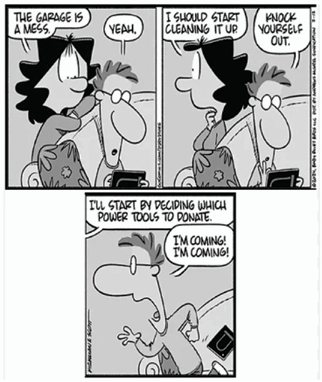
Source: KIRKMAN, Rick; SCOTT, Jerry. Baby Blues. GoComics, 12 fev. 2024. Disponível em: www.gocomics.com. Acesso em: 10 mar. 2026.

In the comic strip, the man replies “Knock yourself out” when the woman says she should start cleaning the garage. What is the most accurate interpretation of this expression in that context?
 

Provas

Questão presente nas seguintes provas
4092744 Ano: 2026
Disciplina: Inglês (Língua Inglesa)
Banca: UEPB
Orgão: Pref. Cuité-PB
Provas:

Enunciado 4530523-1

Source: KIRKMAN, Rick; SCOTT, Jerry. Baby Blues. GoComics, 12 fev. 2024. Disponível em: www.gocomics.com. Acesso em: 10 mar. 2026.

What primarily motivates the man to suddenly run toward the garage at the end of the comic strip?


Provas

Questão presente nas seguintes provas
4092743 Ano: 2026
Disciplina: Inglês (Língua Inglesa)
Banca: UEPB
Orgão: Pref. Cuité-PB
Provas:
        Digital technologies have transformed the way English is taught and learned, offering educators and students more dynamic and flexible ways to engage with language. According to recent research, tools such as computer-assisted instruction, mobile devices, and online multimedia platforms enable both teachers and learners to access a wide variety of resources — from interactive exercises, videos, and audio recordings to adaptive learning modules. 
        These tools facilitate exposure to real language input, allow for repetition and individual pacing, and help learners practise all four language skills (listening, speaking, reading, writing) beyond the constraints of the traditional classroom schedule. 
        Moreover, the integration of technology in English-language instruction tends to increase student motivation and engagement. Studies report that when classrooms incorporate digital media and interactive tasks, students often show greater participation, interest, and willingness to communicate — factors that contribute to better learning outcomes.
        In contexts where technology offers immediate feedback or allows for collaborative online work, learners also benefit from more autonomy and personalized learning paths, which can boost confidence and foster a more learner-centered environment. 
       However, effective technology integration depends on thoughtful planning, teacher training, and pedagogical balance. The literature warns that simply having access to digital tools does not guarantee improved learning; educators must design meaningful tasks, adapt materials appropriately, and support learners' needs. 
          Furthermore, in settings where access to devices or internet is limited, or where teachers lack sufficient training, the potential benefits may not be realized — which underlines the importance of institutional support and professional development for successful implementation. 
Source: Günüç, S. (2023). Technology Integration in English Language Teaching and Learning. International Journal of Language Learning and Applied Linguistics. Nishat Tasneem (2024). The Impact of Technology-Enhanced EFL Reading Classes on Learners' Performances and Participations. International Journal of English Learning and Applied Linguistics.
In the sentence “These tools facilitate exposure to real language input, allow for repetition and individual pacing, and help learners practise all four language skills…”, the word “These” refers to:
 

Provas

Questão presente nas seguintes provas
4092742 Ano: 2026
Disciplina: Inglês (Língua Inglesa)
Banca: UEPB
Orgão: Pref. Cuité-PB
Provas:
        Digital technologies have transformed the way English is taught and learned, offering educators and students more dynamic and flexible ways to engage with language. According to recent research, tools such as computer-assisted instruction, mobile devices, and online multimedia platforms enable both teachers and learners to access a wide variety of resources — from interactive exercises, videos, and audio recordings to adaptive learning modules. 
        These tools facilitate exposure to real language input, allow for repetition and individual pacing, and help learners practise all four language skills (listening, speaking, reading, writing) beyond the constraints of the traditional classroom schedule. 
        Moreover, the integration of technology in English-language instruction tends to increase student motivation and engagement. Studies report that when classrooms incorporate digital media and interactive tasks, students often show greater participation, interest, and willingness to communicate — factors that contribute to better learning outcomes.
        In contexts where technology offers immediate feedback or allows for collaborative online work, learners also benefit from more autonomy and personalized learning paths, which can boost confidence and foster a more learner-centered environment. 
       However, effective technology integration depends on thoughtful planning, teacher training, and pedagogical balance. The literature warns that simply having access to digital tools does not guarantee improved learning; educators must design meaningful tasks, adapt materials appropriately, and support learners' needs. 
          Furthermore, in settings where access to devices or internet is limited, or where teachers lack sufficient training, the potential benefits may not be realized — which underlines the importance of institutional support and professional development for successful implementation. 
Source: Günüç, S. (2023). Technology Integration in English Language Teaching and Learning. International Journal of Language Learning and Applied Linguistics. Nishat Tasneem (2024). The Impact of Technology-Enhanced EFL Reading Classes on Learners' Performances and Participations. International Journal of English Learning and Applied Linguistics.
In the text, the noun “integration” is used when discussing how technology is incorporated into teaching. Which option CORRECTLY provides the adjective form that best fits the context of describing this process?
 

Provas

Questão presente nas seguintes provas
4092741 Ano: 2026
Disciplina: Inglês (Língua Inglesa)
Banca: UEPB
Orgão: Pref. Cuité-PB
Provas:
        Digital technologies have transformed the way English is taught and learned, offering educators and students more dynamic and flexible ways to engage with language. According to recent research, tools such as computer-assisted instruction, mobile devices, and online multimedia platforms enable both teachers and learners to access a wide variety of resources — from interactive exercises, videos, and audio recordings to adaptive learning modules. 
        These tools facilitate exposure to real language input, allow for repetition and individual pacing, and help learners practise all four language skills (listening, speaking, reading, writing) beyond the constraints of the traditional classroom schedule. 
        Moreover, the integration of technology in English-language instruction tends to increase student motivation and engagement. Studies report that when classrooms incorporate digital media and interactive tasks, students often show greater participation, interest, and willingness to communicate — factors that contribute to better learning outcomes.
        In contexts where technology offers immediate feedback or allows for collaborative online work, learners also benefit from more autonomy and personalized learning paths, which can boost confidence and foster a more learner-centered environment. 
       However, effective technology integration depends on thoughtful planning, teacher training, and pedagogical balance. The literature warns that simply having access to digital tools does not guarantee improved learning; educators must design meaningful tasks, adapt materials appropriately, and support learners' needs. 
          Furthermore, in settings where access to devices or internet is limited, or where teachers lack sufficient training, the potential benefits may not be realized — which underlines the importance of institutional support and professional development for successful implementation. 
Source: Günüç, S. (2023). Technology Integration in English Language Teaching and Learning. International Journal of Language Learning and Applied Linguistics. Nishat Tasneem (2024). The Impact of Technology-Enhanced EFL Reading Classes on Learners' Performances and Participations. International Journal of English Learning and Applied Linguistics.
In the sentence “Studies report that when classrooms incorporate digital media and interactive tasks, students often show greater participation, interest, and willingness to communicate”, the word “incorporate” is closest in meaning to:
 

Provas

Questão presente nas seguintes provas
4092740 Ano: 2026
Disciplina: Inglês (Língua Inglesa)
Banca: UEPB
Orgão: Pref. Cuité-PB
Provas:
        Digital technologies have transformed the way English is taught and learned, offering educators and students more dynamic and flexible ways to engage with language. According to recent research, tools such as computer-assisted instruction, mobile devices, and online multimedia platforms enable both teachers and learners to access a wide variety of resources — from interactive exercises, videos, and audio recordings to adaptive learning modules. 
        These tools facilitate exposure to real language input, allow for repetition and individual pacing, and help learners practise all four language skills (listening, speaking, reading, writing) beyond the constraints of the traditional classroom schedule. 
        Moreover, the integration of technology in English-language instruction tends to increase student motivation and engagement. Studies report that when classrooms incorporate digital media and interactive tasks, students often show greater participation, interest, and willingness to communicate — factors that contribute to better learning outcomes.
        In contexts where technology offers immediate feedback or allows for collaborative online work, learners also benefit from more autonomy and personalized learning paths, which can boost confidence and foster a more learner-centered environment. 
       However, effective technology integration depends on thoughtful planning, teacher training, and pedagogical balance. The literature warns that simply having access to digital tools does not guarantee improved learning; educators must design meaningful tasks, adapt materials appropriately, and support learners' needs. 
          Furthermore, in settings where access to devices or internet is limited, or where teachers lack sufficient training, the potential benefits may not be realized — which underlines the importance of institutional support and professional development for successful implementation. 
Source: Günüç, S. (2023). Technology Integration in English Language Teaching and Learning. International Journal of Language Learning and Applied Linguistics. Nishat Tasneem (2024). The Impact of Technology-Enhanced EFL Reading Classes on Learners' Performances and Participations. International Journal of English Learning and Applied Linguistics.

Based on the information in the text, what can be inferred about the role of technology in English-language teaching?


Provas

Questão presente nas seguintes provas
4092739 Ano: 2026
Disciplina: Inglês (Língua Inglesa)
Banca: UEPB
Orgão: Pref. Cuité-PB
Provas:
        Digital technologies have transformed the way English is taught and learned, offering educators and students more dynamic and flexible ways to engage with language. According to recent research, tools such as computer-assisted instruction, mobile devices, and online multimedia platforms enable both teachers and learners to access a wide variety of resources — from interactive exercises, videos, and audio recordings to adaptive learning modules. 
        These tools facilitate exposure to real language input, allow for repetition and individual pacing, and help learners practise all four language skills (listening, speaking, reading, writing) beyond the constraints of the traditional classroom schedule. 
        Moreover, the integration of technology in English-language instruction tends to increase student motivation and engagement. Studies report that when classrooms incorporate digital media and interactive tasks, students often show greater participation, interest, and willingness to communicate — factors that contribute to better learning outcomes.
        In contexts where technology offers immediate feedback or allows for collaborative online work, learners also benefit from more autonomy and personalized learning paths, which can boost confidence and foster a more learner-centered environment. 
       However, effective technology integration depends on thoughtful planning, teacher training, and pedagogical balance. The literature warns that simply having access to digital tools does not guarantee improved learning; educators must design meaningful tasks, adapt materials appropriately, and support learners' needs. 
          Furthermore, in settings where access to devices or internet is limited, or where teachers lack sufficient training, the potential benefits may not be realized — which underlines the importance of institutional support and professional development for successful implementation. 
Source: Günüç, S. (2023). Technology Integration in English Language Teaching and Learning. International Journal of Language Learning and Applied Linguistics. Nishat Tasneem (2024). The Impact of Technology-Enhanced EFL Reading Classes on Learners' Performances and Participations. International Journal of English Learning and Applied Linguistics.

According to the text, what is one key benefit of integrating digital technologies into English-language teaching?


Provas

Questão presente nas seguintes provas
4092738 Ano: 2026
Disciplina: Inglês (Língua Inglesa)
Banca: UEPB
Orgão: Pref. Cuité-PB
Provas:

Perisylvian polymicrogyria (PMG) is a malformation of cortical development in which the cortex around the Sylvian fissures shows excessive small gyri and abnormal cortical lamination. This regional form of PMG is among the commonest patterns seen on MRI and may vary from focal posterior perisylvian involvement to extensive bilateral disease that (Magnetic Resonance Imaging) extends beyond the perisylvian region. Imaging typically demonstrates a thickened, irregular cortical ribbon with shallow sulci and an irregular gray–white matter junction, which is best characterized using high-resolution MRI.

Clinically, perisylvian PMG—especially when bilateral—is frequently associated with oromotor dysfunction (dysarthria, feeding and swallowing difficulties), language impairments, cognitive delay, and epilepsy; severity correlates with the extent and symmetry of cortical involvement. The condition is genetically and etiologically heterogeneous: cases may be sporadic, associated with prenatal injury (for example infectious or vascular insults), or linked to chromosomal and single-gene variants in some familial forms. Management focuses on symptomatic therapies (speech/feeding therapy, epilepsy control) and genetic/neurological evaluation when appropriate.

Source: Barkovich, A. J., Guerrini, R., Kuzniecky, R. I., Jackson, G. D., & Dobyns, W. B. (2010). Current concepts of polymicrogyria. Neuroradiology. Leventer, R. J., Jansen, A., Pilz, D. T., et al. (2010). Clinical and imaging heterogeneity of polymicrogyria. Brain.

In the sentence “Clinically, perisylvian PMG—especially when bilateral—is frequently associated with oromotor dysfunction, language impairments, cognitive delay, and epilepsy; severity correlates with the extent and symmetry of cortical involvement.”, which connective would best replace the semicolon to preserve the logical relationship between the two clauses?
 

Provas

Questão presente nas seguintes provas
4092737 Ano: 2026
Disciplina: Inglês (Língua Inglesa)
Banca: UEPB
Orgão: Pref. Cuité-PB
Provas:

Perisylvian polymicrogyria (PMG) is a malformation of cortical development in which the cortex around the Sylvian fissures shows excessive small gyri and abnormal cortical lamination. This regional form of PMG is among the commonest patterns seen on MRI and may vary from focal posterior perisylvian involvement to extensive bilateral disease that (Magnetic Resonance Imaging) extends beyond the perisylvian region. Imaging typically demonstrates a thickened, irregular cortical ribbon with shallow sulci and an irregular gray–white matter junction, which is best characterized using high-resolution MRI.

Clinically, perisylvian PMG—especially when bilateral—is frequently associated with oromotor dysfunction (dysarthria, feeding and swallowing difficulties), language impairments, cognitive delay, and epilepsy; severity correlates with the extent and symmetry of cortical involvement. The condition is genetically and etiologically heterogeneous: cases may be sporadic, associated with prenatal injury (for example infectious or vascular insults), or linked to chromosomal and single-gene variants in some familial forms. Management focuses on symptomatic therapies (speech/feeding therapy, epilepsy control) and genetic/neurological evaluation when appropriate.

Source: Barkovich, A. J., Guerrini, R., Kuzniecky, R. I., Jackson, G. D., & Dobyns, W. B. (2010). Current concepts of polymicrogyria. Neuroradiology. Leventer, R. J., Jansen, A., Pilz, D. T., et al. (2010). Clinical and imaging heterogeneity of polymicrogyria. Brain.

In the sentence “The condition is genetically and etiologically heterogeneous: cases may be sporadic, associated with prenatal injury, or linked to chromosomal and single-gene variants in some familial forms.”, what does the word “cases” refer to?
 

Provas

Questão presente nas seguintes provas
4092736 Ano: 2026
Disciplina: Inglês (Língua Inglesa)
Banca: UEPB
Orgão: Pref. Cuité-PB
Provas:

Perisylvian polymicrogyria (PMG) is a malformation of cortical development in which the cortex around the Sylvian fissures shows excessive small gyri and abnormal cortical lamination. This regional form of PMG is among the commonest patterns seen on MRI and may vary from focal posterior perisylvian involvement to extensive bilateral disease that (Magnetic Resonance Imaging) extends beyond the perisylvian region. Imaging typically demonstrates a thickened, irregular cortical ribbon with shallow sulci and an irregular gray–white matter junction, which is best characterized using high-resolution MRI.

Clinically, perisylvian PMG—especially when bilateral—is frequently associated with oromotor dysfunction (dysarthria, feeding and swallowing difficulties), language impairments, cognitive delay, and epilepsy; severity correlates with the extent and symmetry of cortical involvement. The condition is genetically and etiologically heterogeneous: cases may be sporadic, associated with prenatal injury (for example infectious or vascular insults), or linked to chromosomal and single-gene variants in some familial forms. Management focuses on symptomatic therapies (speech/feeding therapy, epilepsy control) and genetic/neurological evaluation when appropriate.

Source: Barkovich, A. J., Guerrini, R., Kuzniecky, R. I., Jackson, G. D., & Dobyns, W. B. (2010). Current concepts of polymicrogyria. Neuroradiology. Leventer, R. J., Jansen, A., Pilz, D. T., et al. (2010). Clinical and imaging heterogeneity of polymicrogyria. Brain.

According to the text, which statement best describes perisylvian polymicrogyria?
 

Provas

Questão presente nas seguintes provas