Foram encontradas 40 questões.
1391235
Ano: 2009
Disciplina: Inglês (Língua Inglesa)
Banca: FUMARC
Orgão: Pref. Governador Valadares-MG
Disciplina: Inglês (Língua Inglesa)
Banca: FUMARC
Orgão: Pref. Governador Valadares-MG
Provas:
READ THE FOLLOWING TEXTS AND CHOOSE THE OPTION WHICH BEST COMPLETES EACH QUESTION ACCORDING TO THE TEXTS:
TEXT 01
Does good teaching equal good learning?
Submitted by Alan Maley on 13 December, 2009 - 12:11
Once we start to consider what good teachers need to do, we come up with enormously long lists, and come to realize just how complex the job of teaching is. They need to plan, to control, to present, to monitor, to react to feedback, to offer a model, to motivate, and so on. And these labels are also over-simplifications. For example, the teacher needs to simultaneously control what happens while empowering learners, leaving space for them to learn. Teachers need to provide input yet also to promote learner discovery. They need to motivate in the short term ('keeping them awake') while keeping them interested in the long term ('keeping them alive'). They need to plan but not to become the slaves of their plans but to remain receptive to what is happening 'in the moment'.
Above all, they need to offer engaging, varied, non-trivial input in the form of content and activities. This implies finding things that learners will find both interesting and relevant.
But what teachers do is contingent on how learners respond to it. There are some obvious but nonetheless important differences between teaching and learning. Whereas teaching is a public, observable act, learning is private and largely unobservable. Teaching is intentional - the teacher has in mind what he/she wants to teach, but learning is largely unconscious. Teaching is an intermittent activity (so many minutes per lesson, so many lessons per week, etc.) but learning is a process which goes on outside these time frames. The teacher must assume that there is a degree of predictability in the teaching whereas unpredictability is the only certainty.
This reminds me of Norman Whitney's wise observation: that any classroom event is unpredictable, unrepeatable, unobservable (in every detail) and has unforeseen, long-term consequences.
So teaching is very much a process of seeing 'through a glass darkly'. Perhaps the best teachers are those who, while well-informed and well-trained, are also those best able to live with the unexpected.
(Adapted from: http://www.teachingenglish.org.uk/blogs)
The conjunction yet in “…yet also to promote…” (paragraph 1) indicates
Provas
Questão presente nas seguintes provas

A questão abaixo se refere ao livro: Escola e Democracia: teorias da educação
“... um professor de história ou de matemática, de ciências ou estudos sociais, de comunicação e expressão ou de literatura brasileira etc. tem cada um uma contribuição específica a dar, em vista da democratização da sociedade brasileira, do atendimento aos interesses das camadas populares, da transformação estrutural da sociedade. Tal contribuição consubstancia-se na instrumentalização, isto é, nas ferramentas de caráter histórico, matemático, científico, literário etc., cuja apropriação o professor seja capaz de garantir aos alunos”.
Saviani (1989), p.80
Assinale como verdadeiras(V) ou falsas(F) as diferentes interpretações pontuadas pelo autor:
( ) A contribuição específica de um professor será mais eficaz se este for capaz de compreender os vínculos da sua prática com a prática social global.
( ) A instrumentalização desenvolve-se como decorrência da problematização da prática social, possibilitando alterar qualitativamente a prática dos alunos como agentes sociais.
( ) Os conteúdos específicos de cada disciplina valem por si mesmos, portanto não há necessidade de referi-los à prática social em que se inserem.
( ) Colocando-se o peso na luta política social ampla, os conteúdos específicos tornam-se pouco relevantes.
Com base nas alternativas acima, selecione a seqüência correta, de cima para baixo:
Provas
Questão presente nas seguintes provas
1389200
Ano: 2009
Disciplina: Inglês (Língua Inglesa)
Banca: FUMARC
Orgão: Pref. Governador Valadares-MG
Disciplina: Inglês (Língua Inglesa)
Banca: FUMARC
Orgão: Pref. Governador Valadares-MG
Provas:
READ THE FOLLOWING TEXTS AND CHOOSE THE OPTION WHICH BEST COMPLETES EACH QUESTION ACCORDING TO THE TEXTS:
TEXT 01
Does good teaching equal good learning?
Submitted by Alan Maley on 13 December, 2009 - 12:11
Once we start to consider what good teachers need to do, we come up with enormously long lists, and come to realize just how complex the job of teaching is. They need to plan, to control, to present, to monitor, to react to feedback, to offer a model, to motivate, and so on. And these labels are also over-simplifications. For example, the teacher needs to simultaneously control what happens while empowering learners, leaving space for them to learn. Teachers need to provide input yet also to promote learner discovery. They need to motivate in the short term ('keeping them awake') while keeping them interested in the long term ('keeping them alive'). They need to plan but not to become the slaves of their plans but to remain receptive to what is happening 'in the moment'.
Above all, they need to offer engaging, varied, non-trivial input in the form of content and activities. This implies finding things that learners will find both interesting and relevant.
But what teachers do is contingent on how learners respond to it. There are some obvious but nonetheless important differences between teaching and learning. Whereas teaching is a public, observable act, learning is private and largely unobservable. Teaching is intentional - the teacher has in mind what he/she wants to teach, but learning is largely unconscious. Teaching is an intermittent activity (so many minutes per lesson, so many lessons per week, etc.) but learning is a process which goes on outside these time frames. The teacher must assume that there is a degree of predictability in the teaching whereas unpredictability is the only certainty.
This reminds me of Norman Whitney's wise observation: that any classroom event is unpredictable, unrepeatable, unobservable (in every detail) and has unforeseen, long-term consequences.
So teaching is very much a process of seeing 'through a glass darkly'. Perhaps the best teachers are those who, while well-informed and well-trained, are also those best able to live with the unexpected.
(Adapted from: http://www.teachingenglish.org.uk/blogs)
The words teaching in “Does good teaching equal…?” (in the title), happening in “what is happening in the moment” (paragraph 1) and engaging in “…they need to offer engaging …” (paragraph 2), function respectively as
Provas
Questão presente nas seguintes provas
A inclusão escolar pressupõe a atuação de um professor que acredite na caminhada para o saber e dela participa ativamente, valorizando as diferenças individuais de seus alunos. Mantoan (2006) ao enfatizar a importância da inclusão, aponta para a relevância da atuação do professor, sendo INCORRETO afirmar:
Provas
Questão presente nas seguintes provas
1386903
Ano: 2009
Disciplina: Inglês (Língua Inglesa)
Banca: FUMARC
Orgão: Pref. Governador Valadares-MG
Disciplina: Inglês (Língua Inglesa)
Banca: FUMARC
Orgão: Pref. Governador Valadares-MG
Provas:
READ THE FOLLOWING TEXTS AND CHOOSE THE OPTION WHICH BEST COMPLETES EACH QUESTION ACCORDING TO THE TEXTS:
TEXT 01
Does good teaching equal good learning?
Submitted by Alan Maley on 13 December, 2009 - 12:11
Once we start to consider what good teachers need to do, we come up with enormously long lists, and come to realize just how complex the job of teaching is. They need to plan, to control, to present, to monitor, to react to feedback, to offer a model, to motivate, and so on. And these labels are also over-simplifications. For example, the teacher needs to simultaneously control what happens while empowering learners, leaving space for them to learn. Teachers need to provide input yet also to promote learner discovery. They need to motivate in the short term ('keeping them awake') while keeping them interested in the long term ('keeping them alive'). They need to plan but not to become the slaves of their plans but to remain receptive to what is happening 'in the moment'.
Above all, they need to offer engaging, varied, non-trivial input in the form of content and activities. This implies finding things that learners will find both interesting and relevant.
But what teachers do is contingent on how learners respond to it. There are some obvious but nonetheless important differences between teaching and learning. Whereas teaching is a public, observable act, learning is private and largely unobservable. Teaching is intentional - the teacher has in mind what he/she wants to teach, but learning is largely unconscious. Teaching is an intermittent activity (so many minutes per lesson, so many lessons per week, etc.) but learning is a process which goes on outside these time frames. The teacher must assume that there is a degree of predictability in the teaching whereas unpredictability is the only certainty.
This reminds me of Norman Whitney's wise observation: that any classroom event is unpredictable, unrepeatable, unobservable (in every detail) and has unforeseen, long-term consequences.
So teaching is very much a process of seeing 'through a glass darkly'. Perhaps the best teachers are those who, while well-informed and well-trained, are also those best able to live with the unexpected.
(Adapted from: http://www.teachingenglish.org.uk/blogs)
Teachers should get activities their students will consider
Provas
Questão presente nas seguintes provas
1386740
Ano: 2009
Disciplina: Inglês (Língua Inglesa)
Banca: FUMARC
Orgão: Pref. Governador Valadares-MG
Disciplina: Inglês (Língua Inglesa)
Banca: FUMARC
Orgão: Pref. Governador Valadares-MG
Provas:
TEXT 03
learning from your students
Submitted on 14 December, 2009 - 11:44
Dear Zira,
Thank you so much! Your message was warm and encouraging. To answer your question, I do not think there is a magic formula for this. However, the kind of things _____________ will make learning from your students possible would include:
- learning to stop yourself from making immediate judgments on their performance.
- learning how to listen. All too often, we tend to be in a hurry and do not give our students the kind of listening attention they deserve.
- learning to open yourself up to the unexpected, rather than foreclosing the options because they do not fit into your pre-conceived plan for the class.
- learning how to respond to opportunities that arise when you do the other three things above.
Of course, it is ______________ to say these things than to actually do them but I hope they offer some kind of response to what you are asking me.
Very best wishes,
Alan
(Adapted from: http://www.teachingenglish.org.uk/blogs)
According to Alan, a teacher should
Provas
Questão presente nas seguintes provas
Leia atentamente o trecho extraído do livro “Pedagogia da Autonomia: Saberes necessários a prática educativa”:
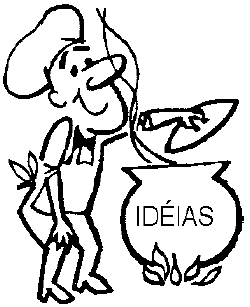
O ato de cozinhar, por exemplo, supõe alguns saberes concernentes ao uso do fogão, como acendê-lo, como equilibrar para mais, para menos, a chama, como lidar com certos riscos mesmo remotos de incêndio, como harmonizar os diferentes temperos numa síntese gostosa e atraente. A prática de cozinhar vai preparando o novato, ratificando alguns daqueles saberes, retificando outros, e vai possibilitando que ele vire cozinheiro. A prática de velejar coloca a necessidade de saberes fundantes, como o do domínio do barco, das partes que o compõem e da função de cada uma delas, como o conhecimento dos ventos, de sua força, de sua direção, os ventos e as velas, a posição das velas, o papel do motor e da combinação entre motor e velas. Na prática de velejar se confirmam, se modificam ou se ampliam esses saberes.
FREIRE, 2000, p.23 e 24
O texto acima permite analisar que:
Provas
Questão presente nas seguintes provas
Você se considera um empreendedor?
Ricardo Melo*
Muitas pessoas, ao ouvirem essa pergunta, respondem imediatamente que não, pois não são empresários ou comerciantes. Fato curioso essa associação imediata da idéia empreendedora a essas opções profissionais e o esquecimento de como a competência empreendedora está intimamente ligada a muitas outras escolhas e posturas.
O verbo empreender vem do latim emprehendo ou impraehendo e quer dizer – a habilidade de executar uma tarefa. Com o tempo passou a ser sinônimo de ousadia, coragem e visão de futuro. Seja como for, é importante você parar para pensar em como é possível viver essa postura empreendedora.
Quando ouvimos falar de um estudante que vem do interior para a capital, ou de um jovem casal que assume o matrimônio, mesmo sem tantas facilidades materiais, estamos falando de atitudes empreendedoras em relação a vida.
Essa essência é a mesma que leva pessoas arrojadas a abrirem negócios, a se arriscarem em inúmeras situações em que haja ou não ganho material, mas que proporcione um senso de realização. Sendo assim, creio que todo ser humano é um pouco empreendedor, embora poucas pessoas tenham essa consciência e se esforcem por desenvolver essa habilidade.
E em momentos históricos como o nosso, em que se costuma falar de crise, nada melhor que alimentar nossa energia empreendedora e dela tirar substrato para construir uma mentalidade empreendedora. Pensar como um empreendedor é sempre procurar novos caminhos ou novas e melhores formas de caminhar.
É olhar para o horizonte, ver o que todos veem, mas enxergar o que poucos enxergam. É dar-se o direito de sonhar e agir para concretizar o sonho. E, acima de tudo, aliar persistência ao bom senso de se divertir enquanto vai em busca do que tanto deseja.
Utopia? Para algumas pessoas, sim, mas para quem realmente ama a vida e deseja vivê-la com intensidade é apenas mais uma postura mental a ser cultivada, que propiciará a seu portador grandes possibilidades de construir a sua própria história .
Você se considera um empreendedor? Ou, talvez, melhor: o que você pode fazer, a partir de agora para ser uma pessoa com pensamentos e atitudes mais empreendedoras?
(*Ricardo Melo é escritor, consultor e palestrante e especialista em coaching.)
O quinto parágrafo do texto tem como objetivo:
Provas
Questão presente nas seguintes provas
Você se considera um empreendedor?
Ricardo Melo*
Muitas pessoas, ao ouvirem essa pergunta, respondem imediatamente que não, pois não são empresários ou comerciantes. Fato curioso essa associação imediata da idéia empreendedora a essas opções profissionais e o esquecimento de como a competência empreendedora está intimamente ligada a muitas outras escolhas e posturas.
O verbo empreender vem do latim emprehendo ou impraehendo e quer dizer – a habilidade de executar uma tarefa. Com o tempo passou a ser sinônimo de ousadia, coragem e visão de futuro. Seja como for, é importante você parar para pensar em como é possível viver essa postura empreendedora.
Quando ouvimos falar de um estudante que vem do interior para a capital, ou de um jovem casal que assume o matrimônio, mesmo sem tantas facilidades materiais, estamos falando de atitudes empreendedoras em relação a vida.
Essa essência é a mesma que leva pessoas arrojadas a abrirem negócios, a se arriscarem em inúmeras situações em que haja ou não ganho material, mas que proporcione um senso de realização. Sendo assim, creio que todo ser humano é um pouco empreendedor, embora poucas pessoas tenham essa consciência e se esforcem por desenvolver essa habilidade.
E em momentos históricos como o nosso, em que se costuma falar de crise, nada melhor que alimentar nossa energia empreendedora e dela tirar substrato para construir uma mentalidade empreendedora. Pensar como um empreendedor é sempre procurar novos caminhos ou novas e melhores formas de caminhar.
É olhar para o horizonte, ver o que todos veem, mas enxergar o que poucos enxergam. É dar-se o direito de sonhar e agir para concretizar o sonho. E, acima de tudo, aliar persistência ao bom senso de se divertir enquanto vai em busca do que tanto deseja.
Utopia? Para algumas pessoas, sim, mas para quem realmente ama a vida e deseja vivê-la com intensidade é apenas mais uma postura mental a ser cultivada, que propiciará a seu portador grandes possibilidades de construir a sua própria história .
Você se considera um empreendedor? Ou, talvez, melhor: o que você pode fazer, a partir de agora para ser uma pessoa com pensamentos e atitudes mais empreendedoras?
(*Ricardo Melo é escritor, consultor e palestrante e especialista em coaching.)
Fazendo um paralelo entre o título do texto “Você se Considera um Empreendedor?”, o 1º § e o último § do texto, pode-se afirmar que há:
Provas
Questão presente nas seguintes provas
1382434
Ano: 2009
Disciplina: Inglês (Língua Inglesa)
Banca: FUMARC
Orgão: Pref. Governador Valadares-MG
Disciplina: Inglês (Língua Inglesa)
Banca: FUMARC
Orgão: Pref. Governador Valadares-MG
Provas:
TEXT 02
Learning from students via teaching
Submitted on 13 December, 2009 - 16:54
Dear Alan
I liked the way you're describing teaching and learning. It's fantastic!
You have raised a very important question I am asked very often by young teachers: How do we learn from our learners? Is it really possible? Aren't we teachers who teach them? You managed to do it in a very simple way :-). Thanks for this!
I would like you to give an answer to this other question:
What is necessary for a teacher (a specific quality or anything else) to be able to learn from students/learners while teaching?
Thank you in advance. Warmest wishes from Ukraine,
Zira
(Adapted from: http://www.teachingenglish.org.uk/blogs)
Zira wants to know
Provas
Questão presente nas seguintes provas
Cadernos
Caderno Container