Foram encontradas 365 questões.
2756533
Ano: 2023
Disciplina: Inglês (Língua Inglesa)
Banca: FGV
Orgão: Pref. Jaboatão dos Guararapes-PE
Disciplina: Inglês (Língua Inglesa)
Banca: FGV
Orgão: Pref. Jaboatão dos Guararapes-PE
Provas:
Text I
What is English as a Lingua Franca?
‘English’, as a language, has for some time been seen as a
global phenomenon and, therefore, as no longer defined by fixed
territorial, cultural and social functions. At the same time, people
using English around the world have been shaping it and adapting
it to their contexts of use and have made it relevant to their
socio-cultural settings. English as a Lingua Franca, or ELF for
short, is a field of research interest that was born out of this
tension between the global and the local, and it originally began
as a ramification of the World Englishes framework in order to
address the international, or, rather, transnational perspective on
English in the world. The field of ELF very quickly took on a nature
of its own in its attempt to address the communication, attitudes,
ideologies in transnational contexts, which go beyond the
national categorisations of World Englishes (such as descriptions
of Nigerian English, Malaysian English and other national
varieties). ELF research, therefore, has built on World Englishes
research by focusing on the diversity of English, albeit from more
transnational, intercultural and multilingual perspectives.
ELF is an intercultural medium of communication used among people from different socio-cultural and linguistic backgrounds,
and usually among people from different first languages.
Although it is possible that many people who use ELF have learnt
it formally as a foreign language, at school or in an educational
institution, the emphasis is on
using
rather than on learning. And
this is a fundamental difference between ELF and English as a
Foreign Language, or EFL, whereby people learn English to
assimilate to or emulate native speakers. In ELF, instead, speakers
are considered language users in their own right, and not failed
native speakers or deficient learners of English. Some examples
of typical ELF contexts may include communication among a
group of neuroscientists, from, say, Belgium, Brazil and Russia, at
an international conference on neuroscience, discussing their
work in English, or an international call concerning a business
project between Chinese and German business experts, or a
group of migrants from Syria, Ethiopia and Iraq discussing their
migration documents and requirements in English. The use of
English will of course depend on the linguistic profile of the
participants in these contexts, and they may have another
common language at their disposal (other than English), but
today ELF is the most common medium of intercultural
communication, especially in transnational contexts.
So, research in ELF pertains to roughly the same area of
research as English as a contact language and English
sociolinguistics. However, the initial impetus to conducting
research in ELF originated from a pedagogical rationale – it
seemed irrelevant and unrealistic to expect learners of English
around the world to conform to native norms, British or
American, or even to new English national varieties, which would
be only suitable to certain socio-cultural and geographical
locations. So, people from Brazil, France, Russia, Mozambique, or
others around the world, would not need to acquire the norms
originated and relevant to British or American English speakers,
but could orientate themselves towards more appropriate and
relevant ways of using English, or ELF. Researchers called for
“closing a conceptual gap” between descriptions of native English
varieties and new empirical and analytical approaches to English
in the world. With the compilation of a number of corpora, ELF
empirical research started to explore how English is developing,
emerging and changing in its international uses around the world.
Since the empirical corpus work started, research has expanded
beyond the pedagogical aim, to include explorations of
communication in different domains of expertise (professional,
academic, etc.) and in relation to other concepts and research,
such as culture, ideology and identity.
Adapted from https://www.gold.ac.uk/glits-e/
back-issues/english-as-a-lingua-franca/
Provas
Questão presente nas seguintes provas

2756532
Ano: 2023
Disciplina: Inglês (Língua Inglesa)
Banca: FGV
Orgão: Pref. Jaboatão dos Guararapes-PE
Disciplina: Inglês (Língua Inglesa)
Banca: FGV
Orgão: Pref. Jaboatão dos Guararapes-PE
Provas:
Text I
What is English as a Lingua Franca?
‘English’, as a language, has for some time been seen as a
global phenomenon and, therefore, as no longer defined by fixed
territorial, cultural and social functions. At the same time, people
using English around the world have been shaping it and adapting
it to their contexts of use and have made it relevant to their
socio-cultural settings. English as a Lingua Franca, or ELF for
short, is a field of research interest that was born out of this
tension between the global and the local, and it originally began
as a ramification of the World Englishes framework in order to
address the international, or, rather, transnational perspective on
English in the world. The field of ELF very quickly took on a nature
of its own in its attempt to address the communication, attitudes,
ideologies in transnational contexts, which go beyond the
national categorisations of World Englishes (such as descriptions
of Nigerian English, Malaysian English and other national
varieties). ELF research, therefore, has built on World Englishes
research by focusing on the diversity of English, albeit from more
transnational, intercultural and multilingual perspectives.
ELF is an intercultural medium of communication used among people from different socio-cultural and linguistic backgrounds,
and usually among people from different first languages.
Although it is possible that many people who use ELF have learnt
it formally as a foreign language, at school or in an educational
institution, the emphasis is on
using
rather than on learning. And
this is a fundamental difference between ELF and English as a
Foreign Language, or EFL, whereby people learn English to
assimilate to or emulate native speakers. In ELF, instead, speakers
are considered language users in their own right, and not failed
native speakers or deficient learners of English. Some examples
of typical ELF contexts may include communication among a
group of neuroscientists, from, say, Belgium, Brazil and Russia, at
an international conference on neuroscience, discussing their
work in English, or an international call concerning a business
project between Chinese and German business experts, or a
group of migrants from Syria, Ethiopia and Iraq discussing their
migration documents and requirements in English. The use of
English will of course depend on the linguistic profile of the
participants in these contexts, and they may have another
common language at their disposal (other than English), but
today ELF is the most common medium of intercultural
communication, especially in transnational contexts.
So, research in ELF pertains to roughly the same area of
research as English as a contact language and English
sociolinguistics. However, the initial impetus to conducting
research in ELF originated from a pedagogical rationale – it
seemed irrelevant and unrealistic to expect learners of English
around the world to conform to native norms, British or
American, or even to new English national varieties, which would
be only suitable to certain socio-cultural and geographical
locations. So, people from Brazil, France, Russia, Mozambique, or
others around the world, would not need to acquire the norms
originated and relevant to British or American English speakers,
but could orientate themselves towards more appropriate and
relevant ways of using English, or ELF. Researchers called for
“closing a conceptual gap” between descriptions of native English
varieties and new empirical and analytical approaches to English
in the world. With the compilation of a number of corpora, ELF
empirical research started to explore how English is developing,
emerging and changing in its international uses around the world.
Since the empirical corpus work started, research has expanded
beyond the pedagogical aim, to include explorations of
communication in different domains of expertise (professional,
academic, etc.) and in relation to other concepts and research,
such as culture, ideology and identity.
Adapted from https://www.gold.ac.uk/glits-e/
back-issues/english-as-a-lingua-franca/
( ) English as a Lingua Franca (ELF) and as a Foreign Language (EFL) present different perspectives.
( ) In an ELF context, learners look up to native language speakers as models.
( ) Research in the area of ELF has involved areas other than pedagogical settings.
The statements are, respectively:
Provas
Questão presente nas seguintes provas
2756531
Ano: 2023
Disciplina: Inglês (Língua Inglesa)
Banca: FGV
Orgão: Pref. Jaboatão dos Guararapes-PE
Disciplina: Inglês (Língua Inglesa)
Banca: FGV
Orgão: Pref. Jaboatão dos Guararapes-PE
Provas:
Text I
What is English as a Lingua Franca?
‘English’, as a language, has for some time been seen as a
global phenomenon and, therefore, as no longer defined by fixed
territorial, cultural and social functions. At the same time, people
using English around the world have been shaping it and adapting
it to their contexts of use and have made it relevant to their
socio-cultural settings. English as a Lingua Franca, or ELF for
short, is a field of research interest that was born out of this
tension between the global and the local, and it originally began
as a ramification of the World Englishes framework in order to
address the international, or, rather, transnational perspective on
English in the world. The field of ELF very quickly took on a nature
of its own in its attempt to address the communication, attitudes,
ideologies in transnational contexts, which go beyond the
national categorisations of World Englishes (such as descriptions
of Nigerian English, Malaysian English and other national
varieties). ELF research, therefore, has built on World Englishes
research by focusing on the diversity of English, albeit from more
transnational, intercultural and multilingual perspectives.
ELF is an intercultural medium of communication used among people from different socio-cultural and linguistic backgrounds,
and usually among people from different first languages.
Although it is possible that many people who use ELF have learnt
it formally as a foreign language, at school or in an educational
institution, the emphasis is on
using
rather than on learning. And
this is a fundamental difference between ELF and English as a
Foreign Language, or EFL, whereby people learn English to
assimilate to or emulate native speakers. In ELF, instead, speakers
are considered language users in their own right, and not failed
native speakers or deficient learners of English. Some examples
of typical ELF contexts may include communication among a
group of neuroscientists, from, say, Belgium, Brazil and Russia, at
an international conference on neuroscience, discussing their
work in English, or an international call concerning a business
project between Chinese and German business experts, or a
group of migrants from Syria, Ethiopia and Iraq discussing their
migration documents and requirements in English. The use of
English will of course depend on the linguistic profile of the
participants in these contexts, and they may have another
common language at their disposal (other than English), but
today ELF is the most common medium of intercultural
communication, especially in transnational contexts.
So, research in ELF pertains to roughly the same area of
research as English as a contact language and English
sociolinguistics. However, the initial impetus to conducting
research in ELF originated from a pedagogical rationale – it
seemed irrelevant and unrealistic to expect learners of English
around the world to conform to native norms, British or
American, or even to new English national varieties, which would
be only suitable to certain socio-cultural and geographical
locations. So, people from Brazil, France, Russia, Mozambique, or
others around the world, would not need to acquire the norms
originated and relevant to British or American English speakers,
but could orientate themselves towards more appropriate and
relevant ways of using English, or ELF. Researchers called for
“closing a conceptual gap” between descriptions of native English
varieties and new empirical and analytical approaches to English
in the world. With the compilation of a number of corpora, ELF
empirical research started to explore how English is developing,
emerging and changing in its international uses around the world.
Since the empirical corpus work started, research has expanded
beyond the pedagogical aim, to include explorations of
communication in different domains of expertise (professional,
academic, etc.) and in relation to other concepts and research,
such as culture, ideology and identity.
Adapted from https://www.gold.ac.uk/glits-e/
back-issues/english-as-a-lingua-franca/
Provas
Questão presente nas seguintes provas
No final de um ano letivo, a média aritmética das idades dos
9 professores de uma escola de educação infantil foi de 30 anos.
Uma nova professora, que tem 25 anos, será contratada para
iniciar o ano letivo seguinte e os demais permanecerão.
Além disso, do fim de um ano letivo para o início do ano seguinte
nenhum professor fez aniversário.
A nova média aritmética das idades dos professores dessa escola, no início do novo ano letivo, será de
A nova média aritmética das idades dos professores dessa escola, no início do novo ano letivo, será de
Provas
Questão presente nas seguintes provas
Observa figura a seguir.

A planificação que está na figura se refere ao sólido geométrico chamado
Provas
Questão presente nas seguintes provas
Um estudante precisava resolver a divisão 3512 ÷ 15 e montou o
esquema a seguir, no qual apresentou 234 como quociente e 2
como resto.
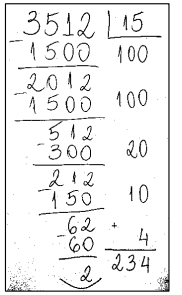
Sobre a resposta apresentada e o método usado no algoritmo da divisão, pode-se afirmar, respectivamente, que
Sobre a resposta apresentada e o método usado no algoritmo da divisão, pode-se afirmar, respectivamente, que
Provas
Questão presente nas seguintes provas
Quando está contando com seus dedos, determinada criança
conta na ordem que aparece na figura a seguir.

Após contar de 1 a 5 ela retorna ao polegar e continua contando, a partir de 6, na mesma ordem, e assim por diante.
Considerando esse procedimento, analise as afirmações a seguir e assinale (V) para a afirmativa verdadeira e (F) para a falsa.
( ) Se ela continuar contando desta forma até o número 2023, encerrará a contagem no dedo indicador.
( ) Todos os números que ela associa ao dedo mínimo são múltiplos de 5.
( ) O número 87 é associado ao dedo médio.
As afirmações são, respectivamente,
Após contar de 1 a 5 ela retorna ao polegar e continua contando, a partir de 6, na mesma ordem, e assim por diante.
Considerando esse procedimento, analise as afirmações a seguir e assinale (V) para a afirmativa verdadeira e (F) para a falsa.
( ) Se ela continuar contando desta forma até o número 2023, encerrará a contagem no dedo indicador.
( ) Todos os números que ela associa ao dedo mínimo são múltiplos de 5.
( ) O número 87 é associado ao dedo médio.
As afirmações são, respectivamente,
Provas
Questão presente nas seguintes provas
De acordo com o IBGE, em 2020, o salário médio mensal dos
trabalhadores formais na cidade de Jaboatão dos Guararapes – PE
foi de 1,9 salários mínimos. Sabe-se que o salário mínimo brasileiro
em 2020 valia R$ 1.045,00.
Com base nessas informações, o salário médio mensal dos trabalhadores formais em Jaboatão dos Guararapes – PE em 2020 foi um valor próximo de
Com base nessas informações, o salário médio mensal dos trabalhadores formais em Jaboatão dos Guararapes – PE em 2020 foi um valor próximo de
Provas
Questão presente nas seguintes provas
A figura a seguir ilustra duas urnas onde estão depositadas bolas brancas e pretas.

Um dado comum e honesto será lançado. Se o resultado desse lançamento for 1, 2, 3 ou 4, uma bola será sorteada, ao acaso, da Urna 1. Se o resultado do lançamento for 5 ou 6, uma bola será sorteada, ao acaso, da Urna 2.
Nessas condições, após o lançamento aleatório do dado e a subsequente extração ao acaso da bola de uma das urnas, a probabilidade de que essa bola seja preta
Provas
Questão presente nas seguintes provas
Em um país, determinadas remessas de dinheiro para o exterior
acima de $ 1.000 sofrem bitributação, ou seja, o valor a ser
remetido sofre a incidência de um tributo e, em seguida, sofre a
incidência de um segundo tributo. Entretanto, o valor do primeiro
tributo é incluído na base de cálculo do segundo tributo. Assim, se
um cidadão desse país precisa que um certo valor (maior que mil
unidades monetárias) seja recebido por um destinatário no
exterior, é preciso fazer a remessa do tal valor acrescido dos dois
tributos.
O primeiro tributo tem alíquota de 20% e sua base de cálculo é o valor ao destinatário. O segundo tributo tem alíquota de 10% e sua base de cálculo é o valor ao destinatário acrescido do primeiro tributo e subtraído (deduzido) de $ 200,00.
Se um cidadão desse país fez remessa para o exterior no valor de $ 2.224,00, o destinatário receberá um valor que está entre
O primeiro tributo tem alíquota de 20% e sua base de cálculo é o valor ao destinatário. O segundo tributo tem alíquota de 10% e sua base de cálculo é o valor ao destinatário acrescido do primeiro tributo e subtraído (deduzido) de $ 200,00.
Se um cidadão desse país fez remessa para o exterior no valor de $ 2.224,00, o destinatário receberá um valor que está entre
Provas
Questão presente nas seguintes provas
Cadernos
Caderno Container