Foram encontradas 410 questões.
Em condições clínicas habituais, com técnica anestésica adequada e sem ocorrência de injeção intravascular acidental, a associação de vasoconstritores às soluções de anestésicos locais produz qual dos seguintes efeitos?
Provas

Durante o atendimento odontológico, um paciente apresenta dor intensa em molar inferior com diagnóstico de pulpite irreversível sintomática. Após a realização do bloqueio do nervo alveolar inferior com anestésico local, observa-se falha anestésica significativa, mesmo com técnica adequada. Considerando os aspectos farmacodinâmicos dos anestésicos locais em tecidos inflamados, assinale a alternativa correta.
Provas
Analise a Figura 1 abaixo com um gráfico que representa o caminho de duas reações químicas (linha roxa e linha verde) em função da energia:
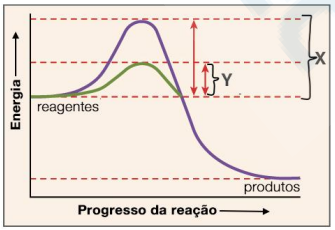
Figura 1
Fonte: Khan Academy.
Sobre o gráfico, pode-se afirmar que a(s):
Provas
São exemplos de substâncias orgânicas:
Provas
Considerando uma espécie animal hipotética com 2n = 62 cromossomos, assinale a alternativa que apresenta o número de cromossomos presentes nos gametas dessa espécie e a respectiva justificativa para o número.
Provas
A membrana celular, ou membrana plasmática, é a fronteira biológica que delimita o perímetro da célula, separando o meio intracelular do extracelular. Sua estrutura é:
Provas
Em uma aula de Ciências, no laboratório, os estudantes observaram diferentes lâminas de células variadas com o objetivo de identificar suas estruturas e que tipo de organismo pertenciam. Analise abaixo as anotações dos estudantes sobre cada lâmina:
● Lâmina 1: célula com parede celular e um grande vacúolo.
● Lâmina 2: célula sem núcleo.
● Lâmina 3: célula com núcleo bem definido e um único flagelo, sem parede celular.
Assinale a alternativa que indica, correta e respectivamente, a relação entre as células observadas nas lâminas 1, 2 e 3 e os organismos.
Provas
Disciplina: Inglês (Língua Inglesa)
Banca: FUNDATEC
Orgão: Pref. Pontão-RS
Publisher cancels horror novel's release over AI claims
By Paul Glynn
- Shy Girl was originally self-published in February 2025, then got a full UK release in
- November.
- The US release of a horror novel has been cancelled by its publisher over concerns that AI
- was used to help write it.
- Shy Girl by US author Mia Ballard had been scheduled for publication in the US next month,
- but that will no longer go ahead, publisher Hachette said. The UK version, which was released in
- November, will also be discontinued.
- A spokesperson for Hachette told BBC News the company “remains committed to protecting
- original creative expression and storytelling”.
- Ballard, who sold almost 2,000 copies of the book in the UK, has denied using AI to write
- the book—telling the New York Times an acquaintance she hired to edit the original self-published
- version of the novel had used AI.
- “This controversy has changed my life in many ways and my mental health is at an all time
- low and my name is ruined for something I didn't even personally do,” she said, noting she was
- pursuing legal action.
- The New York Times, which first reported the story, said it “appears to be the first
- commercial novel from a major publishing house to be pulled over evidence of AI use”.
- The publisher said: “Hachette remains committed to protecting original creative expression
- and storytelling”.
- “Orbit (in the US) will not publish Shy Girl, and Wildfire (in the UK) have decided to no
- longer continue publishing their edition,” it added, referring to its imprints.
- Originally self-published last February, Shy Girl was described in its promotional material
- as a “buzzy¹ BookTok sensation” and “a harrowing tale of survival and revenge” and well as
- being “bloody and unapologetic”.
- However, one reviewer on the GoodReads website claimed the book appeared to be “written
- by ChatGPT”, while another noted the “bizarre formatting, typos and repetitive turns of phrase”.
- BBC News has approached Ballard for further comment.
¹Buzzy (adj.): Something that is buzzy is getting a lot of attention and excitement, especially online. People are talking about it a lot, and it is popular right now.
(Available at: https://www.bbc.com/news/articles/c5y9d44jj24o – text specially adapted for this test).
In the sentence “Shy Girl by US author Mia Ballard had been scheduled for publication in the US next month, but that will no longer go ahead”, the use of “had been scheduled” serves to:
Provas
Disciplina: Inglês (Língua Inglesa)
Banca: FUNDATEC
Orgão: Pref. Pontão-RS
Publisher cancels horror novel's release over AI claims
By Paul Glynn
- Shy Girl was originally self-published in February 2025, then got a full UK release in
- November.
- The US release of a horror novel has been cancelled by its publisher over concerns that AI
- was used to help write it.
- Shy Girl by US author Mia Ballard had been scheduled for publication in the US next month,
- but that will no longer go ahead, publisher Hachette said. The UK version, which was released in
- November, will also be discontinued.
- A spokesperson for Hachette told BBC News the company “remains committed to protecting
- original creative expression and storytelling”.
- Ballard, who sold almost 2,000 copies of the book in the UK, has denied using AI to write
- the book—telling the New York Times an acquaintance she hired to edit the original self-published
- version of the novel had used AI.
- “This controversy has changed my life in many ways and my mental health is at an all time
- low and my name is ruined for something I didn't even personally do,” she said, noting she was
- pursuing legal action.
- The New York Times, which first reported the story, said it “appears to be the first
- commercial novel from a major publishing house to be pulled over evidence of AI use”.
- The publisher said: “Hachette remains committed to protecting original creative expression
- and storytelling”.
- “Orbit (in the US) will not publish Shy Girl, and Wildfire (in the UK) have decided to no
- longer continue publishing their edition,” it added, referring to its imprints.
- Originally self-published last February, Shy Girl was described in its promotional material
- as a “buzzy¹ BookTok sensation” and “a harrowing tale of survival and revenge” and well as
- being “bloody and unapologetic”.
- However, one reviewer on the GoodReads website claimed the book appeared to be “written
- by ChatGPT”, while another noted the “bizarre formatting, typos and repetitive turns of phrase”.
- BBC News has approached Ballard for further comment.
¹Buzzy (adj.): Something that is buzzy is getting a lot of attention and excitement, especially online. People are talking about it a lot, and it is popular right now.
(Available at: https://www.bbc.com/news/articles/c5y9d44jj24o – text specially adapted for this test).
In the promotional material, the novel is described as a “harrowing tale of survival and revenge” (l. 23). Based on the context of the story and its genre, the underlined word “harrowing” is closest in meaning to:
Provas
Disciplina: Inglês (Língua Inglesa)
Banca: FUNDATEC
Orgão: Pref. Pontão-RS
Publisher cancels horror novel's release over AI claims
By Paul Glynn
- Shy Girl was originally self-published in February 2025, then got a full UK release in
- November.
- The US release of a horror novel has been cancelled by its publisher over concerns that AI
- was used to help write it.
- Shy Girl by US author Mia Ballard had been scheduled for publication in the US next month,
- but that will no longer go ahead, publisher Hachette said. The UK version, which was released in
- November, will also be discontinued.
- A spokesperson for Hachette told BBC News the company “remains committed to protecting
- original creative expression and storytelling”.
- Ballard, who sold almost 2,000 copies of the book in the UK, has denied using AI to write
- the book—telling the New York Times an acquaintance she hired to edit the original self-published
- version of the novel had used AI.
- “This controversy has changed my life in many ways and my mental health is at an all time
- low and my name is ruined for something I didn't even personally do,” she said, noting she was
- pursuing legal action.
- The New York Times, which first reported the story, said it “appears to be the first
- commercial novel from a major publishing house to be pulled over evidence of AI use”.
- The publisher said: “Hachette remains committed to protecting original creative expression
- and storytelling”.
- “Orbit (in the US) will not publish Shy Girl, and Wildfire (in the UK) have decided to no
- longer continue publishing their edition,” it added, referring to its imprints.
- Originally self-published last February, Shy Girl was described in its promotional material
- as a “buzzy¹ BookTok sensation” and “a harrowing tale of survival and revenge” and well as
- being “bloody and unapologetic”.
- However, one reviewer on the GoodReads website claimed the book appeared to be “written
- by ChatGPT”, while another noted the “bizarre formatting, typos and repetitive turns of phrase”.
- BBC News has approached Ballard for further comment.
¹Buzzy (adj.): Something that is buzzy is getting a lot of attention and excitement, especially online. People are talking about it a lot, and it is popular right now.
(Available at: https://www.bbc.com/news/articles/c5y9d44jj24o – text specially adapted for this test).
Analyze the use of the relative pronoun in the third paragraph. The underlined word “which” (l. 06) refers to:
Provas
Caderno Container