Foram encontradas 40 questões.
No dia 10 de dezembro, o município de Rondonópolis comemora o aniversário de sua emancipação política. Em 2015, o Secretário Executivo lotado na sede daquele poder executivo municipal ficou responsável pela organização de um evento público em razão dessa data.
O evento ocorreria em uma praça municipal, contando com autoridades, sociedade civil organizada e cidadãos, de modo que haveria um palco para autoridades, em que também ocorreriam apresentações culturais e exposição de trabalhos de artistas regionais.
O evento iniciaria com a composição do dispositivo de honra e hasteamento das bandeiras nacional, estadual e municipal, com a fala dos membros do dispositivo, dissolução do mesmo e realização das apresentações culturais.
Durante o planejamento do evento, o Secretário Executivo identificou que seria necessário o reforço no policiamento, de modo que o Prefeito deveria realizar solicitação formal ao Comando da Polícia Militar, assim como seria necessária a contratação de serviços de montagem do palco, de sonorização, iluminação, banheiros químicos e outros serviços comuns para a execução do evento.
No evento também seria anunciado o resultado de uma licitação que visava à escolha de uma obra de arte que seria construída na praça do evento, com uma premiação ao vencedor do certame, conforme especificações em edital.
No começo do processo de planejamento, foi elaborado um gráfico para demonstrar o início e o término das diversas fases de um processo operacional, dentro das faixas de tempo previamente determinadas, possibilitando acompanhar e controlar a execução planejada. Qual nome desse gráfico?
Provas
Questão presente nas seguintes provas

No dia 10 de dezembro, o município de Rondonópolis comemora o aniversário de sua emancipação política. Em 2015, o Secretário Executivo lotado na sede daquele poder executivo municipal ficou responsável pela organização de um evento público em razão dessa data.
O evento ocorreria em uma praça municipal, contando com autoridades, sociedade civil organizada e cidadãos, de modo que haveria um palco para autoridades, em que também ocorreriam apresentações culturais e exposição de trabalhos de artistas regionais.
O evento iniciaria com a composição do dispositivo de honra e hasteamento das bandeiras nacional, estadual e municipal, com a fala dos membros do dispositivo, dissolução do mesmo e realização das apresentações culturais.
Durante o planejamento do evento, o Secretário Executivo identificou que seria necessário o reforço no policiamento, de modo que o Prefeito deveria realizar solicitação formal ao Comando da Polícia Militar, assim como seria necessária a contratação de serviços de montagem do palco, de sonorização, iluminação, banheiros químicos e outros serviços comuns para a execução do evento.
No evento também seria anunciado o resultado de uma licitação que visava à escolha de uma obra de arte que seria construída na praça do evento, com uma premiação ao vencedor do certame, conforme especificações em edital.
No planejamento para a realização do evento, o Secretário Executivo optou pela utilização de um método que consiste basicamente em fazer perguntas no sentido de obter as informações primordiais que servirão de apoio ao planejamento de uma forma geral. Que método foi utilizado?
Provas
Questão presente nas seguintes provas
1681014
Ano: 2016
Disciplina: Ética e Regulação Profissional
Banca: UFMT
Orgão: Pref. Rondonópolis-MT
Disciplina: Ética e Regulação Profissional
Banca: UFMT
Orgão: Pref. Rondonópolis-MT
De acordo com a Lei n.º 7.377/1985, complementada pela Lei n.º 9.261/1996, que dispõe sobre o exercício da profissão de Secretário e dá outras providências, analise as afirmativas.
I - É considerado Secretário Executivo o profissional diplomado no Brasil por curso superior de Secretariado, reconhecido na forma de Lei, ou diplomado no exterior por curso de Secretariado, cujo diploma seja revalidado no Brasil, na forma de Lei.
II - Pode ser considerado Secretário Executivo o profissional portador de certificado de conclusão de curso de Secretariado em nível médio, com graduação em Letras.
III - Considera-se Secretário Executivo o portador de qualquer diploma de nível superior que, na data de vigência da Lei n.º 9.261/1996, comprovar, através de declarações de empregadores, o exercício efetivo, durante pelo menos trinta e seis meses, das atribuições mencionadas no Art. 4º da referida lei.
IV - Pode ser considerado Secretário Executivo o profissional portador de certificado de conclusão de curso de Secretariado em nível médio, com graduação nas áreas afins de Gestão e possuir registro profissional no Conselho Federal de Administração.
Estão corretas as afirmativas
Provas
Questão presente nas seguintes provas
No dia 10 de dezembro, o município de Rondonópolis comemora o aniversário de sua emancipação política. Em 2015, o Secretário Executivo lotado na sede daquele poder executivo municipal ficou responsável pela organização de um evento público em razão dessa data.
O evento ocorreria em uma praça municipal, contando com autoridades, sociedade civil organizada e cidadãos, de modo que haveria um palco para autoridades, em que também ocorreriam apresentações culturais e exposição de trabalhos de artistas regionais.
O evento iniciaria com a composição do dispositivo de honra e hasteamento das bandeiras nacional, estadual e municipal, com a fala dos membros do dispositivo, dissolução do mesmo e realização das apresentações culturais.
Durante o planejamento do evento, o Secretário Executivo identificou que seria necessário o reforço no policiamento, de modo que o Prefeito deveria realizar solicitação formal ao Comando da Polícia Militar, assim como seria necessária a contratação de serviços de montagem do palco, de sonorização, iluminação, banheiros químicos e outros serviços comuns para a execução do evento.
No evento também seria anunciado o resultado de uma licitação que visava à escolha de uma obra de arte que seria construída na praça do evento, com uma premiação ao vencedor do certame, conforme especificações em edital.
Considerando que as contratações dos serviços comuns necessários à realização do evento foram efetivadas por meio do Sistema de Registro de Preços, qual a validade máxima do registro?
Provas
Questão presente nas seguintes provas
3 Very Common Management Problems - And How To Avoid Them
People say many things about management, but one thing you hardly ever hear is that it’s an easy job. Indeed, with employee engagement levels generally hovering around the 30% mark, and the negative implications for productivity that has, there’s ample room for improvement.
I was recently reading a 2012 Harvard Business Review article with the provocative title One Out of Every Two Managers is Terrible at Accountability, by Darren Overfield and Rob Kaiser, and it made me think about basic management functions that cause managers chronic difficulties. Accordingly, here are three key functions that fit that description: three very common management problems – plus some tips on how to avoid them.
Inspired by the recently read HBR article, we’ll start with accountability.
Holding your employees sufficiently accountable – The HBR article cited a study in which 46 percent of high-level managers were rated poorly on the measure, “Holds people accountable – firm when they don’t deliver.” Given that this is unquestionably a core element of management, why is it so difficult? The authors point to the challenges managers face in a permissive age. “Who wants to risk being the bad guy?” is how they put it, when being seen as “the bad guy” may be damaging to someone’s career prospects. Additionally, I believe another very fundamental dynamic is operating. Firm accountability often involves conflict, and for many people conflict is difficult and unpleasant. It’s much easier to be a “conflict-avoider” than to confront shortcomings, which may well lead to a dispute or at the very least an unpleasant interaction. So how does a manager avoid developing an “accountability problem”? It starts with full awareness and acceptance that accountability (and its managerial cousin, control) is in fact a central task of management, and if you’re going to work in management and expect to enjoy the financial rewards that accompany it, you have to understand and accept in your gut that accountability is an integral part of this game. You may not always like it, but you have to do it. If you’re uncomfortable exerting this kind of authority, you’re frankly better off looking for another line of work. However, you can also be aided in this endeavor by my second point:
Setting the bar at the right height - Aka, establishing meaningful employee objectives that are clear and measurable. Optimizing employee objectives is both a common problem and a partial answer to the first point about accountability. Why are employee objectives a common problem? Because they’re often pick one or more nonexistent, unclear, out of date, hard to measure, or subject to interpretation, etc. – all of which lead to significant management problems (for example in evaluations) as time goes on. So how can well-conceived employee objectives help managers with accountability issues? Easy – by removing expectations from the realm of the subjective and placing them in black and white for everyone to refer to… in the realm of the (quite literally) objective. It’s much easier to hold someone accountable when an anticipated outcome is well known for all to see. In short, accountability becomes less of an issue when the height of the bar is clear, and any discussion about results is rational and fact-based rather than emotional and vague. Well-conceived employee objectives are a manager’s best friend.
My third point involves an entirely different aspect of management:
Not spending enough time with your employees on career development – Employee development is a widely neglected function. Numerous studies point to the issues that ensue when development needs aren’t being met – frequently leading to employee disengagement and retention problems. From a manager’s standpoint, taking a genuine interest in an employee’s professional growth sends a powerful, positive message… and it’s interest that usually is greatly appreciated by those on the receiving end. What’s the downside to providing such career support? Really very little. The most common reason managers don’t? Time – “there’s just no time for it.” Plus, it may be perceived as a “soft” activity – a long-term investment with little short-term operational payback. (Unless you consider having a more engaged, productive employee short-term payback, which I would.) Fortunately, this is an especially easy problem to rectify: Simply make it a priority and carve out the time with your employees to do it. If it’s done genuinely and thoughtfully, my strong guess is that both you and your employees will be pleased by the results.
Of course this modest list is by no means all-inclusive. As I noted at the outset, management is nothing if not a challenging, multi-faceted discipline. Pitfalls abound. Other thoughts from readers on very common management problems? I’d be glad to hear them…
(Extracted from http://www.forbes.com/sites/victorlipman/2014/04/15/3-very-common-management-problems-and-how-to-avoidthem/# 19c965bc64ec. Access in February, 28th.)
What does the author mean when he uses the expression “Setting the bar at the right height”?
Provas
Questão presente nas seguintes provas
3 Very Common Management Problems - And How To Avoid Them
People say many things about management, but one thing you hardly ever hear is that it’s an easy job. Indeed, with employee engagement levels generally hovering around the 30% mark, and the negative implications for productivity that has, there’s ample room for improvement.
I was recently reading a 2012 Harvard Business Review article with the provocative title One Out of Every Two Managers is Terrible at Accountability, by Darren Overfield and Rob Kaiser, and it made me think about basic management functions that cause managers chronic difficulties. Accordingly, here are three key functions that fit that description: three very common management problems – plus some tips on how to avoid them.
Inspired by the recently read HBR article, we’ll start with accountability.
Holding your employees sufficiently accountable – The HBR article cited a study in which 46 percent of high-level managers were rated poorly on the measure, “Holds people accountable – firm when they don’t deliver.” Given that this is unquestionably a core element of management, why is it so difficult? The authors point to the challenges managers face in a permissive age. “Who wants to risk being the bad guy?” is how they put it, when being seen as “the bad guy” may be damaging to someone’s career prospects. Additionally, I believe another very fundamental dynamic is operating. Firm accountability often involves conflict, and for many people conflict is difficult and unpleasant. It’s much easier to be a “conflict-avoider” than to confront shortcomings, which may well lead to a dispute or at the very least an unpleasant interaction. So how does a manager avoid developing an “accountability problem”? It starts with full awareness and acceptance that accountability (and its managerial cousin, control) is in fact a central task of management, and if you’re going to work in management and expect to enjoy the financial rewards that accompany it, you have to understand and accept in your gut that accountability is an integral part of this game. You may not always like it, but you have to do it. If you’re uncomfortable exerting this kind of authority, you’re frankly better off looking for another line of work. However, you can also be aided in this endeavor by my second point:
Setting the bar at the right height - Aka, establishing meaningful employee objectives that are clear and measurable. Optimizing employee objectives is both a common problem and a partial answer to the first point about accountability. Why are employee objectives a common problem? Because they’re often pick one or more nonexistent, unclear, out of date, hard to measure, or subject to interpretation, etc. – all of which lead to significant management problems (for example in evaluations) as time goes on. So how can well-conceived employee objectives help managers with accountability issues? Easy – by removing expectations from the realm of the subjective and placing them in black and white for everyone to refer to… in the realm of the (quite literally) objective. It’s much easier to hold someone accountable when an anticipated outcome is well known for all to see. In short, accountability becomes less of an issue when the height of the bar is clear, and any discussion about results is rational and fact-based rather than emotional and vague. Well-conceived employee objectives are a manager’s best friend.
My third point involves an entirely different aspect of management:
Not spending enough time with your employees on career development – Employee development is a widely neglected function. Numerous studies point to the issues that ensue when development needs aren’t being met – frequently leading to employee disengagement and retention problems. From a manager’s standpoint, taking a genuine interest in an employee’s professional growth sends a powerful, positive message… and it’s interest that usually is greatly appreciated by those on the receiving end. What’s the downside to providing such career support? Really very little. The most common reason managers don’t? Time – “there’s just no time for it.” Plus, it may be perceived as a “soft” activity – a long-term investment with little short-term operational payback. (Unless you consider having a more engaged, productive employee short-term payback, which I would.) Fortunately, this is an especially easy problem to rectify: Simply make it a priority and carve out the time with your employees to do it. If it’s done genuinely and thoughtfully, my strong guess is that both you and your employees will be pleased by the results.
Of course this modest list is by no means all-inclusive. As I noted at the outset, management is nothing if not a challenging, multi-faceted discipline. Pitfalls abound. Other thoughts from readers on very common management problems? I’d be glad to hear them…
(Extracted from http://www.forbes.com/sites/victorlipman/2014/04/15/3-very-common-management-problems-and-how-to-avoidthem/# 19c965bc64ec. Access in February, 28th.)
According to the first paragraph of the text, cross the option that presents a true statement about employee engagement.
Provas
Questão presente nas seguintes provas
Quando brindamos, o primeiro voto é “saúde” – e não por acaso. Só depois vem “paz, amor”. Sem saúde, o resto não é possível. Por que, então, o Brasil é tão cruel com seus doentes? Crises na Saúde não são produzidas de um dia para outro. O caos nos hospitais do Rio de Janeiro é apenas a vitrine de um sistema falido e desumano [...].
O Estado brasileiro nunca deu assistência médica digna à massa da população. Jamais transformou a Saúde em prioridade. No Brasil profundo, não é novidade a falta de médicos, leitos, remédios e equipamentos.
[...]
Os governos federal, estaduais e municipais empurram com a barriga, há mais tempo do que a nossa memória alcança, os péssimos índices de desenvolvimento humano no Brasil. E aí se incluem também educação, saneamento e transporte. A negligência se explica. Os políticos não usam hospital público, escola pública e transporte público. Eles enriquecem muito no poder. A vida real passa ao largo de quem manda.
(Revista ÉPOCA, ed. 917.)
Quanto aos recursos linguísticos e expressivos no texto, assinale a afirmativa correta.
Provas
Questão presente nas seguintes provas
No dia 10 de dezembro, o município de Rondonópolis comemora o aniversário de sua emancipação política. Em 2015, o Secretário Executivo lotado na sede daquele poder executivo municipal ficou responsável pela organização de um evento público em razão dessa data.
O evento ocorreria em uma praça municipal, contando com autoridades, sociedade civil organizada e cidadãos, de modo que haveria um palco para autoridades, em que também ocorreriam apresentações culturais e exposição de trabalhos de artistas regionais.
O evento iniciaria com a composição do dispositivo de honra e hasteamento das bandeiras nacional, estadual e municipal, com a fala dos membros do dispositivo, dissolução do mesmo e realização das apresentações culturais.
Durante o planejamento do evento, o Secretário Executivo identificou que seria necessário o reforço no policiamento, de modo que o Prefeito deveria realizar solicitação formal ao Comando da Polícia Militar, assim como seria necessária a contratação de serviços de montagem do palco, de sonorização, iluminação, banheiros químicos e outros serviços comuns para a execução do evento.
No evento também seria anunciado o resultado de uma licitação que visava à escolha de uma obra de arte que seria construída na praça do evento, com uma premiação ao vencedor do certame, conforme especificações em edital.
Em relação ao hasteamento das bandeiras nacional, estadual e municipal, assinale a sequência de disposição correta de acordo com a visão do público.
Provas
Questão presente nas seguintes provas
Considere a planilha do Microsoft Excel 2007 (idioma Português) com um conjunto de células selecionadas, apresentada abaixo.
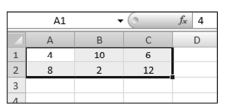
De acordo com a planilha, considerando-se o conjunto de células selecionado, quando o usuário clicar no botão  , qual o resultado apresentado?
, qual o resultado apresentado?Provas
Questão presente nas seguintes provas
3 Very Common Management Problems - And How To Avoid Them
People say many things about management, but one thing you hardly ever hear is that it’s an easy job. Indeed, with employee engagement levels generally hovering around the 30% mark, and the negative implications for productivity that has, there’s ample room for improvement.
I was recently reading a 2012 Harvard Business Review article with the provocative title One Out of Every Two Managers is Terrible at Accountability, by Darren Overfield and Rob Kaiser, and it made me think about basic management functions that cause managers chronic difficulties. Accordingly, here are three key functions that fit that description: three very common management problems – plus some tips on how to avoid them.
Inspired by the recently read HBR article, we’ll start with accountability.
Holding your employees sufficiently accountable – The HBR article cited a study in which 46 percent of high-level managers were rated poorly on the measure, “Holds people accountable – firm when they don’t deliver.” Given that this is unquestionably a core element of management, why is it so difficult? The authors point to the challenges managers face in a permissive age. “Who wants to risk being the bad guy?” is how they put it, when being seen as “the bad guy” may be damaging to someone’s career prospects. Additionally, I believe another very fundamental dynamic is operating. Firm accountability often involves conflict, and for many people conflict is difficult and unpleasant. It’s much easier to be a “conflict-avoider” than to confront shortcomings, which may well lead to a dispute or at the very least an unpleasant interaction. So how does a manager avoid developing an “accountability problem”? It starts with full awareness and acceptance that accountability (and its managerial cousin, control) is in fact a central task of management, and if you’re going to work in management and expect to enjoy the financial rewards that accompany it, you have to understand and accept in your gut that accountability is an integral part of this game. You may not always like it, but you have to do it. If you’re uncomfortable exerting this kind of authority, you’re frankly better off looking for another line of work. However, you can also be aided in this endeavor by my second point:
Setting the bar at the right height - Aka, establishing meaningful employee objectives that are clear and measurable. Optimizing employee objectives is both a common problem and a partial answer to the first point about accountability. Why are employee objectives a common problem? Because they’re often pick one or more nonexistent, unclear, out of date, hard to measure, or subject to interpretation, etc. – all of which lead to significant management problems (for example in evaluations) as time goes on. So how can well-conceived employee objectives help managers with accountability issues? Easy – by removing expectations from the realm of the subjective and placing them in black and white for everyone to refer to… in the realm of the (quite literally) objective. It’s much easier to hold someone accountable when an anticipated outcome is well known for all to see. In short, accountability becomes less of an issue when the height of the bar is clear, and any discussion about results is rational and fact-based rather than emotional and vague. Well-conceived employee objectives are a manager’s best friend.
My third point involves an entirely different aspect of management:
Not spending enough time with your employees on career development – Employee development is a widely neglected function. Numerous studies point to the issues that ensue when development needs aren’t being met – frequently leading to employee disengagement and retention problems. From a manager’s standpoint, taking a genuine interest in an employee’s professional growth sends a powerful, positive message… and it’s interest that usually is greatly appreciated by those on the receiving end. What’s the downside to providing such career support? Really very little. The most common reason managers don’t? Time – “there’s just no time for it.” Plus, it may be perceived as a “soft” activity – a long-term investment with little short-term operational payback. (Unless you consider having a more engaged, productive employee short-term payback, which I would.) Fortunately, this is an especially easy problem to rectify: Simply make it a priority and carve out the time with your employees to do it. If it’s done genuinely and thoughtfully, my strong guess is that both you and your employees will be pleased by the results.
Of course this modest list is by no means all-inclusive. As I noted at the outset, management is nothing if not a challenging, multi-faceted discipline. Pitfalls abound. Other thoughts from readers on very common management problems? I’d be glad to hear them…
(Extracted from http://www.forbes.com/sites/victorlipman/2014/04/15/3-very-common-management-problems-and-how-to-avoidthem/# 19c965bc64ec. Access in February, 28th.)
In the first paragraph, in the excerpt […] and the negative implications for productivity that has, there’s ample room for improvement., the word that is a pronoun, substituting another word or a phrase. Which word or phrase is the pronoun that replacing?
Provas
Questão presente nas seguintes provas
Cadernos
Caderno Container