Foram encontradas 922 questões.
Em um processo de planejamento emancipatório, NÃO se pretende
Provas
Questão presente nas seguintes provas

1671249
Ano: 2016
Disciplina: TI - Desenvolvimento de Sistemas
Banca: UFMT
Orgão: Pref. Rondonópolis-MT
Disciplina: TI - Desenvolvimento de Sistemas
Banca: UFMT
Orgão: Pref. Rondonópolis-MT
Analise o diagrama de classes construído segundo notações da linguagem de modelagem UML (Linguagem de Modelagem Unificada). Considere que métodos com o nome igual ao da classe são construtores.
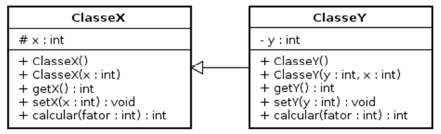
Sobre o diagrama, assinale a afirmativa correta.
Provas
Questão presente nas seguintes provas
A biologia da conservação tem se ocupado com a perda e a degradação dos habitats por ser considerada a maior causa da perda de espécies. Estudos mostram que a cobertura florestal em países em desenvolvimento diminuiu cerca de 2 milhões de quilômetros quadrados em 15 anos. As causas mais importantes da perda florestal são a conversão para fins agrícolas e programas de desenvolvimento para reassentamentos que resultam em fragmentação de habitats.
Sobre o tema que trata o texto, analise as proposições.
I - O processo de fragmentação do ambiente resulta exclusivamente da ação humana.
II - A fragmentação é o processo no qual um habitat contínuo é dividido em manchas, ou fragmentos, mais ou menos isolados.
III - O desmatamento e a fragmentação levam à modificação do habitat remanescente devido à influência dos habitats alterados, criando ao seu redor o efeito de borda.
IV - A fragmentação das florestas muda os mesohabitats, mas não interfere nos microhabitats disponíveis; mudam também as espécies e, portanto, todas as comunidades são afetadas.
Estão corretas as proposições
Provas
Questão presente nas seguintes provas
3 Very Common Management Problems - And How To Avoid Them
People say many things about management, but one thing you hardly ever hear is that it’s an easy job. Indeed, with employee engagement levels generally hovering around the 30% mark, and the negative implications for productivity that has, there’s ample room for improvement.
I was recently reading a 2012 Harvard Business Review article with the provocative title One Out of Every Two Managers is Terrible at Accountability, by Darren Overfield and Rob Kaiser, and it made me think about basic management functions that cause managers chronic difficulties. Accordingly, here are three key functions that fit that description: three very common management problems – plus some tips on how to avoid them.
Inspired by the recently read HBR article, we’ll start with accountability.
Holding your employees sufficiently accountable – The HBR article cited a study in which 46 percent of high-level managers were rated poorly on the measure, “Holds people accountable – firm when they don’t deliver.” Given that this is unquestionably a core element of management, why is it so difficult? The authors point to the challenges managers face in a permissive age. “Who wants to risk being the bad guy?” is how they put it, when being seen as “the bad guy” may be damaging to someone’s career prospects. Additionally, I believe another very fundamental dynamic is operating. Firm accountability often involves conflict, and for many people conflict is difficult and unpleasant. It’s much easier to be a “conflict-avoider” than to confront shortcomings, which may well lead to a dispute or at the very least an unpleasant interaction. So how does a manager avoid developing an “accountability problem”? It starts with full awareness and acceptance that accountability (and its managerial cousin, control) is in fact a central task of management, and if you’re going to work in management and expect to enjoy the financial rewards that accompany it, you have to understand and accept in your gut that accountability is an integral part of this game. You may not always like it, but you have to do it. If you’re uncomfortable exerting this kind of authority, you’re frankly better off looking for another line of work. However, you can also be aided in this endeavor by my second point:
Setting the bar at the right height - Aka, establishing meaningful employee objectives that are clear and measurable. Optimizing employee objectives is both a common problem and a partial answer to the first point about accountability. Why are employee objectives a common problem? Because they’re often pick one or more nonexistent, unclear, out of date, hard to measure, or subject to interpretation, etc. – all of which lead to significant management problems (for example in evaluations) as time goes on. So how can well-conceived employee objectives help managers with accountability issues? Easy – by removing expectations from the realm of the subjective and placing them in black and white for everyone to refer to… in the realm of the (quite literally) objective. It’s much easier to hold someone accountable when an anticipated outcome is well known for all to see. In short, accountability becomes less of an issue when the height of the bar is clear, and any discussion about results is rational and fact-based rather than emotional and vague. Well-conceived employee objectives are a manager’s best friend.
My third point involves an entirely different aspect of management:
Not spending enough time with your employees on career development – Employee development is a widely neglected function. Numerous studies point to the issues that ensue when development needs aren’t being met – frequently leading to employee disengagement and retention problems. From a manager’s standpoint, taking a genuine interest in an employee’s professional growth sends a powerful, positive message… and it’s interest that usually is greatly appreciated by those on the receiving end. What’s the downside to providing such career support? Really very little. The most common reason managers don’t? Time – “there’s just no time for it.” Plus, it may be perceived as a “soft” activity – a long-term investment with little short-term operational payback. (Unless you consider having a more engaged, productive employee short-term payback, which I would.) Fortunately, this is an especially easy problem to rectify: Simply make it a priority and carve out the time with your employees to do it. If it’s done genuinely and thoughtfully, my strong guess is that both you and your employees will be pleased by the results.
Of course this modest list is by no means all-inclusive. As I noted at the outset, management is nothing if not a challenging, multi-faceted discipline. Pitfalls abound. Other thoughts from readers on very common management problems? I’d be glad to hear them…
(Extracted from http://www.forbes.com/sites/victorlipman/2014/04/15/3-very-common-management-problems-and-how-to-avoidthem/# 19c965bc64ec. Access in February, 28th.)
What does the author mean when he uses the expression “Setting the bar at the right height”?
Provas
Questão presente nas seguintes provas
Todos estamos inseridos no turbilhão mundial da modernidade. Uns engajam-se no 'establishmen’, outros criticam-no. Uns fazem da ciência instrumento de ascensão social e envolvimento político, outros procuram colocar o conhecimento científico a serviço da transformação e da justiça social.
(BOMBARDI, L. M. Geografia Agrária: teoria e Poder. São Paulo: Expresso Popular, 2007.)
O texto aplicado ao estudo da Geografia Agrária revela uma concepção teórica dentro da trajetória do pensamento geográfico no contexto do campo brasileiro que identifica
Provas
Questão presente nas seguintes provas
1671112
Ano: 2016
Disciplina: Agronomia (Engenharia Agronômica)
Banca: UFMT
Orgão: Pref. Rondonópolis-MT
Disciplina: Agronomia (Engenharia Agronômica)
Banca: UFMT
Orgão: Pref. Rondonópolis-MT
Sobre implementos agrícolas, marque V para as afirmativas verdadeiras e F para as falsas.
( ) O arado de discos trabalha numa profundidade média de 20 cm e serve para incorporação parcial de restos culturais e plantas daninhas.
( ) Arado de aiveca trabalha numa profundidade de até 40 cm, sendo eficiente na distribuição de fertilizantes e corretivos.
( ) A grade aradora é eficiente para destorroar terrenos, trabalhando em solos com grande quantidade de plantas daninhas.
( ) O arado escarificador é utilizado na descompactação do solo, possibilitando que grande parte de resíduos culturais fiquem sobre a superfície.
Assinale a sequência correta.
Provas
Questão presente nas seguintes provas
Os distúrbios da comunicação oral compreendem alterações nos aspectos expressivos e compreensivos da linguagem. Especificamente sobre o atraso de linguagem em crianças, é INCORRETO afirmar:
Provas
Questão presente nas seguintes provas
1671054
Ano: 2016
Disciplina: TI - Desenvolvimento de Sistemas
Banca: UFMT
Orgão: Pref. Rondonópolis-MT
Disciplina: TI - Desenvolvimento de Sistemas
Banca: UFMT
Orgão: Pref. Rondonópolis-MT
Sobre testes funcionais de software, analise as afirmativas.
I - Teste de Unidade tem o objetivo de verificar se um componente individual do software foi implementado corretamente.
II - Teste de Aceitação visa à validação do software no que tange aos requisitos e não à verificação de defeitos.
III - Teste de Sistema tem como objetivo verificar se a versão atual do sistema pode ser implantada em ambiente de produção, ou seja, verifica-se a compatibilidade das tecnologias do ambiente de produção.
IV - Teste de Integração é realizado depois que as unidades do software estão prontas e tem o objetivo de verificar se essas unidades podem ser incorporadas em uma nova versão do sistema em desenvolvimento.
Está correto o que se afirma em
Provas
Questão presente nas seguintes provas
3 Very Common Management Problems - And How To Avoid Them
People say many things about management, but one thing you hardly ever hear is that it’s an easy job. Indeed, with employee engagement levels generally hovering around the 30% mark, and the negative implications for productivity that has, there’s ample room for improvement.
I was recently reading a 2012 Harvard Business Review article with the provocative title One Out of Every Two Managers is Terrible at Accountability, by Darren Overfield and Rob Kaiser, and it made me think about basic management functions that cause managers chronic difficulties. Accordingly, here are three key functions that fit that description: three very common management problems – plus some tips on how to avoid them.
Inspired by the recently read HBR article, we’ll start with accountability.
Holding your employees sufficiently accountable – The HBR article cited a study in which 46 percent of high-level managers were rated poorly on the measure, “Holds people accountable – firm when they don’t deliver.” Given that this is unquestionably a core element of management, why is it so difficult? The authors point to the challenges managers face in a permissive age. “Who wants to risk being the bad guy?” is how they put it, when being seen as “the bad guy” may be damaging to someone’s career prospects. Additionally, I believe another very fundamental dynamic is operating. Firm accountability often involves conflict, and for many people conflict is difficult and unpleasant. It’s much easier to be a “conflict-avoider” than to confront shortcomings, which may well lead to a dispute or at the very least an unpleasant interaction. So how does a manager avoid developing an “accountability problem”? It starts with full awareness and acceptance that accountability (and its managerial cousin, control) is in fact a central task of management, and if you’re going to work in management and expect to enjoy the financial rewards that accompany it, you have to understand and accept in your gut that accountability is an integral part of this game. You may not always like it, but you have to do it. If you’re uncomfortable exerting this kind of authority, you’re frankly better off looking for another line of work. However, you can also be aided in this endeavor by my second point:
Setting the bar at the right height - Aka, establishing meaningful employee objectives that are clear and measurable. Optimizing employee objectives is both a common problem and a partial answer to the first point about accountability. Why are employee objectives a common problem? Because they’re often pick one or more nonexistent, unclear, out of date, hard to measure, or subject to interpretation, etc. – all of which lead to significant management problems (for example in evaluations) as time goes on. So how can well-conceived employee objectives help managers with accountability issues? Easy – by removing expectations from the realm of the subjective and placing them in black and white for everyone to refer to… in the realm of the (quite literally) objective. It’s much easier to hold someone accountable when an anticipated outcome is well known for all to see. In short, accountability becomes less of an issue when the height of the bar is clear, and any discussion about results is rational and fact-based rather than emotional and vague. Well-conceived employee objectives are a manager’s best friend.
My third point involves an entirely different aspect of management:
Not spending enough time with your employees on career development – Employee development is a widely neglected function. Numerous studies point to the issues that ensue when development needs aren’t being met – frequently leading to employee disengagement and retention problems. From a manager’s standpoint, taking a genuine interest in an employee’s professional growth sends a powerful, positive message… and it’s interest that usually is greatly appreciated by those on the receiving end. What’s the downside to providing such career support? Really very little. The most common reason managers don’t? Time – “there’s just no time for it.” Plus, it may be perceived as a “soft” activity – a long-term investment with little short-term operational payback. (Unless you consider having a more engaged, productive employee short-term payback, which I would.) Fortunately, this is an especially easy problem to rectify: Simply make it a priority and carve out the time with your employees to do it. If it’s done genuinely and thoughtfully, my strong guess is that both you and your employees will be pleased by the results.
Of course this modest list is by no means all-inclusive. As I noted at the outset, management is nothing if not a challenging, multi-faceted discipline. Pitfalls abound. Other thoughts from readers on very common management problems? I’d be glad to hear them…
(Extracted from http://www.forbes.com/sites/victorlipman/2014/04/15/3-very-common-management-problems-and-how-to-avoidthem/# 19c965bc64ec. Access in February, 28th.)
According to the first paragraph of the text, cross the option that presents a true statement about employee engagement.
Provas
Questão presente nas seguintes provas
Segundo o Programa Nacional de Sanidade Apícola (PNSAp) do Ministério da Agricultura, Pecuária e Abastecimento (MAPA), a doença das abelhas denominada “CRIA PÚTRIDA EUROPEIA (CPE)” tem como agente etiológico
Provas
Questão presente nas seguintes provas
Cadernos
Caderno Container