Foram encontradas 529 questões.
Com base na imagem apresentada a seguir, assinalar a alternativa que preenche as lacunas abaixo CORRETAMENTE:
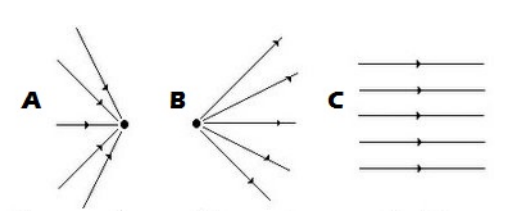
Segundo as leis da propagação da luz, esta se propaga no vácuo, em todas as direções e em linha reta. Essas direções são indicadas por retas, que representam os raios luminosos, sendo que um conjunto de raios luminosos constitui um feixe luminoso, que pode ser de três tipos, representados na figura acima. São eles: ____________ (A), ____________ (B) e ____________ (C).
Provas

De acordo com LOPES, sobre a dengue e a febre amarela, assinalar a alternativa CORRETA:
Provas
A Base Nacional Comum Curricular: Ciências propõe oito competências específicas de Ciências da Natureza para o Ensino Fundamental. Em relação a essas competências, marcar C para as afirmativas Certas, E para as Erradas e, após, assinalar a alternativa que apresenta a sequência CORRETA:
( ) Considerar aplicações e implicações políticas, socioambientais e culturais da ciência e suas tecnologias para propor alternativas aos desafios do mundo contemporâneo, incluindo aqueles relativos ao mundo do trabalho.
( ) Construir argumentos com base em dados, evidências e informações confiáveis para negociar e defender ideias/pontos de vista que promovam a consciência socioambiental e o respeito a si próprio e ao outro, acolhendo e valorizando a diversidade de indivíduos e de grupos sociais, sem preconceitos de qualquer natureza.
( ) Compreender as Ciências da Natureza como empreendimento humano prescindível, e o conhecimento científico, como constante, cultural e histórico.
Provas
Disciplina: Inglês (Língua Inglesa)
Banca: OBJETIVA
Orgão: Pref. Sobradinho-RS
What season in Brazil corresponds to December 20-23 to March 20-23?
Provas
Disciplina: Inglês (Língua Inglesa)
Banca: OBJETIVA
Orgão: Pref. Sobradinho-RS
Who was Egypt’s first pharaoh?
Five thousand years ago, there was no single nation of Egypt—at least not as it exists today. There were, and had been for thousands of years, two lands: Upper Egypt in the south and Lower Egypt in the north. There are millennia-old inscriptions on ceramics and depictions of leaders from each kingdom that show two distinct entities with different sets of traditions.
Prior to unification, depictions of kings showed different regalia. Rulers of Upper Egypt wore a tall white crown called a hedjet, while in Lower Egypt kings __________ a short red crown called a deshret. Around 3100 B.C., a king of Upper Egypt, known as Narmer, changed all that. By incorporating the lands west of the fertile, triangular Nile Delta region into his own kingdom—which spanned the lush Nile Valley area in the south (roughly from what is Cairo today to Lake Nasser)—he created a united Egypt, the world’s first great _________ state.
When the two lands united, it marked not only the beginnings of a political state, but also the origins of a great cultural one. Beginning with Narmer, Egypt began developing its own distinctive visual style, one that would echo through the ages as the iconography and symbols embraced by Narmer and his successors took hold. These symbols became tools used by pharaohs—from Khufu to Hatshepsut to Ptolemy XII—to convey power, ________, and unity for millennia.
(Fonte: National Geographic - adaptado.)
According to the text, Ancient Egypt was:
Provas
Disciplina: Inglês (Língua Inglesa)
Banca: OBJETIVA
Orgão: Pref. Sobradinho-RS
Who was Egypt’s first pharaoh?
Five thousand years ago, there was no single nation of Egypt—at least not as it exists today. There were, and had been for thousands of years, two lands: Upper Egypt in the south and Lower Egypt in the north. There are millennia-old inscriptions on ceramics and depictions of leaders from each kingdom that show two distinct entities with different sets of traditions.
Prior to unification, depictions of kings showed different regalia. Rulers of Upper Egypt wore a tall white crown called a hedjet, while in Lower Egypt kings __________ a short red crown called a deshret. Around 3100 B.C., a king of Upper Egypt, known as Narmer, changed all that. By incorporating the lands west of the fertile, triangular Nile Delta region into his own kingdom—which spanned the lush Nile Valley area in the south (roughly from what is Cairo today to Lake Nasser)—he created a united Egypt, the world’s first great _________ state.
When the two lands united, it marked not only the beginnings of a political state, but also the origins of a great cultural one. Beginning with Narmer, Egypt began developing its own distinctive visual style, one that would echo through the ages as the iconography and symbols embraced by Narmer and his successors took hold. These symbols became tools used by pharaohs—from Khufu to Hatshepsut to Ptolemy XII—to convey power, ________, and unity for millennia.
(Fonte: National Geographic - adaptado.)
Concerning the use of possessives, check the sentence that shows a CORRECT use of a possessive:
Provas
Disciplina: Inglês (Língua Inglesa)
Banca: OBJETIVA
Orgão: Pref. Sobradinho-RS
- Gramática - Língua InglesaAdvérbios e conjunções | Adverbs and conjunctions
- Gramática - Língua InglesaDeterminantes e quantificadores | Determiners and quantifiers
- Gramática - Língua InglesaPreposições | Prepositions
- Gramática - Língua InglesaPronomes | PronounsPronome possessivo substantivo | Possessive pronoun
Who was Egypt’s first pharaoh?
Five thousand years ago, there was no single nation of Egypt—at least not as it exists today. There were, and had been for thousands of years, two lands: Upper Egypt in the south and Lower Egypt in the north. There are millennia-old inscriptions on ceramics and depictions of leaders from each kingdom that show two distinct entities with different sets of traditions.
Prior to unification, depictions of kings showed different regalia. Rulers of Upper Egypt wore a tall white crown called a hedjet, while in Lower Egypt kings __________ a short red crown called a deshret. Around 3100 B.C., a king of Upper Egypt, known as Narmer, changed all that. By incorporating the lands west of the fertile, triangular Nile Delta region into his own kingdom—which spanned the lush Nile Valley area in the south (roughly from what is Cairo today to Lake Nasser)—he created a united Egypt, the world’s first great _________ state.
When the two lands united, it marked not only the beginnings of a political state, but also the origins of a great cultural one. Beginning with Narmer, Egypt began developing its own distinctive visual style, one that would echo through the ages as the iconography and symbols embraced by Narmer and his successors took hold. These symbols became tools used by pharaohs—from Khufu to Hatshepsut to Ptolemy XII—to convey power, ________, and unity for millennia.
(Fonte: National Geographic - adaptado.)
Concerning the parts of speech, the word underlined in “Egypt began developing its own distinctive visual style” is classified as:
Provas
Disciplina: Inglês (Língua Inglesa)
Banca: OBJETIVA
Orgão: Pref. Sobradinho-RS
Who was Egypt’s first pharaoh?
Five thousand years ago, there was no single nation of Egypt—at least not as it exists today. There were, and had been for thousands of years, two lands: Upper Egypt in the south and Lower Egypt in the north. There are millennia-old inscriptions on ceramics and depictions of leaders from each kingdom that show two distinct entities with different sets of traditions.
Prior to unification, depictions of kings showed different regalia. Rulers of Upper Egypt wore a tall white crown called a hedjet, while in Lower Egypt kings __________ a short red crown called a deshret. Around 3100 B.C., a king of Upper Egypt, known as Narmer, changed all that. By incorporating the lands west of the fertile, triangular Nile Delta region into his own kingdom—which spanned the lush Nile Valley area in the south (roughly from what is Cairo today to Lake Nasser)—he created a united Egypt, the world’s first great _________ state.
When the two lands united, it marked not only the beginnings of a political state, but also the origins of a great cultural one. Beginning with Narmer, Egypt began developing its own distinctive visual style, one that would echo through the ages as the iconography and symbols embraced by Narmer and his successors took hold. These symbols became tools used by pharaohs—from Khufu to Hatshepsut to Ptolemy XII—to convey power, ________, and unity for millennia.
(Fonte: National Geographic - adaptado.)
Check the alternative that CORRECTLY fills the gaps in the text:
Provas
Disciplina: Inglês (Língua Inglesa)
Banca: OBJETIVA
Orgão: Pref. Sobradinho-RS
Who was Egypt’s first pharaoh?
Five thousand years ago, there was no single nation of Egypt—at least not as it exists today. There were, and had been for thousands of years, two lands: Upper Egypt in the south and Lower Egypt in the north. There are millennia-old inscriptions on ceramics and depictions of leaders from each kingdom that show two distinct entities with different sets of traditions.
Prior to unification, depictions of kings showed different regalia. Rulers of Upper Egypt wore a tall white crown called a hedjet, while in Lower Egypt kings __________ a short red crown called a deshret. Around 3100 B.C., a king of Upper Egypt, known as Narmer, changed all that. By incorporating the lands west of the fertile, triangular Nile Delta region into his own kingdom—which spanned the lush Nile Valley area in the south (roughly from what is Cairo today to Lake Nasser)—he created a united Egypt, the world’s first great _________ state.
When the two lands united, it marked not only the beginnings of a political state, but also the origins of a great cultural one. Beginning with Narmer, Egypt began developing its own distinctive visual style, one that would echo through the ages as the iconography and symbols embraced by Narmer and his successors took hold. These symbols became tools used by pharaohs—from Khufu to Hatshepsut to Ptolemy XII—to convey power, ________, and unity for millennia.
(Fonte: National Geographic - adaptado.)
In “By incorporating the lands west of the fertile, triangular Nile Delta region into his own kingdom—which spanned the lush Nile Valley area in the south (roughly from what is Cairo today to Lake Nasser)”, the underlined word can be substituted without loss of meaning by:
Provas
Disciplina: Inglês (Língua Inglesa)
Banca: OBJETIVA
Orgão: Pref. Sobradinho-RS
Who was Egypt’s first pharaoh?
Five thousand years ago, there was no single nation of Egypt—at least not as it exists today. There were, and had been for thousands of years, two lands: Upper Egypt in the south and Lower Egypt in the north. There are millennia-old inscriptions on ceramics and depictions of leaders from each kingdom that show two distinct entities with different sets of traditions.
Prior to unification, depictions of kings showed different regalia. Rulers of Upper Egypt wore a tall white crown called a hedjet, while in Lower Egypt kings __________ a short red crown called a deshret. Around 3100 B.C., a king of Upper Egypt, known as Narmer, changed all that. By incorporating the lands west of the fertile, triangular Nile Delta region into his own kingdom—which spanned the lush Nile Valley area in the south (roughly from what is Cairo today to Lake Nasser)—he created a united Egypt, the world’s first great _________ state.
When the two lands united, it marked not only the beginnings of a political state, but also the origins of a great cultural one. Beginning with Narmer, Egypt began developing its own distinctive visual style, one that would echo through the ages as the iconography and symbols embraced by Narmer and his successors took hold. These symbols became tools used by pharaohs—from Khufu to Hatshepsut to Ptolemy XII—to convey power, ________, and unity for millennia.
(Fonte: National Geographic - adaptado.)
Considering the text, analyze the following items:
I. Millennia-old inscriptions reveal that there was always a single tradition in Ancient Egypt.
II. A king from the Upper Egypt, Narmer, unified the Upper and Lower Egypt Kingdoms.
III. Narmer’s rule started a distinctive culture in Egypt.
Is/are CORRECT:
Provas
Caderno Container