Foram encontradas 792 questões.
Read the text to answer.
Delta variant and low vaccine access creates a third wave in Africa
Covid-19 cases are surging across the African continent, with more than twenty countries now in the grip of a third wave. Experts predict this wave will surpass case numbers seen in previous peaks. The speed and scale of Africa’s third wave is like nothing seen before, says Matshidiso Moeti, the World Health Organization regional director for Africa. The Delta variant is a big part of this potentially catastrophic surge, with over a dozen countries having detected cases. In Uganda and the Democratic Republic of the Congo, the Delta variant is now the most common in circulation. Stopping the spread and mutation of Covid-19 relies on populations being vaccinated. But access to vaccines in Africa is far too low. According to the latest WHO figures, only 1% of the African population has been fully vaccinated, compared to 50% of the population in high income countries like the UK and USA. Covid-19 vaccines, the world’s best hope to end the pandemic, are not being distributed fairly.
(Available in: https://shareverified.com. Adapted.)
Taking into account the elements constituting a journalistic text, we may infer that the author’s objective is to:
Provas

Read the text to answer.
Universal Declaration of Human Rights
Article 1
All human beings are born free and equal in dignity and rights.
They are endowed with reason and conscience and should act
towards one another in a spirit of brotherhood.
Article 2
Everyone is entitled to all the rights and freedoms set forth in
this Declaration, without distinction of any kind, such as race,
colour, sex, language, religion, political or other opinion, national
or social origin, property, birth or other status. Furthermore, no
distinction shall be made on the basis of the political, jurisdictional
or international status of the country or territory to which
a person belongs, whether it be independent, trust, non-selfgoverning
or under any other limitation of sovereignty.
Article 3
Everyone has the right to life, liberty and security of person.
Article 4
No one shall be held in slavery or servitude; slavery and the
slave trade shall be prohibited in all their forms.
Article 5
No one shall be subjected to torture or to cruel, inhuman or
degrading treatment or punishment.
Article 6
Everyone has the right to recognition everywhere as a
person before the law.
Article 7
All are equal before the law and are entitled without any
discrimination to equal protection of the law. All are entitled
to equal protection against any discrimination in violation of
this Declaration and against any incitement to such discrimination.
Article 8
Everyone has the right to an effective remedy by the competent
national tribunals for acts violating the fundamental rights granted
him by the constitution or by law.
Article 9
No one shall be subjected to arbitrary arrest, detention or
exile.
Article 10
Everyone is entitled in full equality to a fair and public hearing
by an independent and impartial tribunal, in the determination
of his rights and obligations and of any criminal charge against
him.
(Available in: https://www.un.org/en/about-us/universal-declarationof- human-rights. Adapted.)
The Universal Declaration of the Human Rights displays relevant genre aspects, belonging in the normative domain as far as text composition is concerned, among those aspects, we might single out:
Provas
According to the conceptions supported in the BNCC, the English language status is currently characterized by:
Provas
Reading practices in English cover a variety of reading possibilities and reading strategies, including broadening knowledge on issues that are significant to students. Review the chart and description of a reading activity to answer.
The teacher introduces the topic of past verb forms by means of informal conversation asking students about activities they performed on the last weekend (it is useful to know that the past tense of regular and irregular verbs has already been studied in other previous classes). Then he/she presents students a text, in the genre interview, which students should silently read and employ to fill in the individual chart that they have just been given. The students are told to pay close attention to verb use in the text, so that the chart should be filled with regular and irregular verbs which appear in the text in their past form. Students are also told that not all of the blanks in the chart would be filled. Afterward there will happen the sharing and discussion of the collected information.
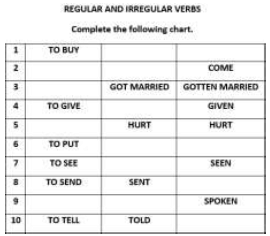
(Available in: https://es.liveworksheets.com. Adapted.)
Choose the micro ability related to the purposes of reading, which the activity specifically seeks to improve.
Provas
Some of the deep-seated concepts about the English language, and consequently concerning its teaching, do not cater to the prospects of a language that “went viral” and has become “miscigenated”, as it is the concept of a foreign language strongly criticized for its eurocentric slant. The item that represents a conflicting aspect regarding the ILF (Inglês como Língua Franca) conception defended in BNCC is:
Provas
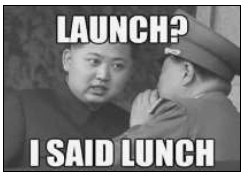
Examine the image to answer.
(Available in: https://www.researchgate.net.)
A meme is an amusing or interesting item, such as a captioned picture or video, or genre of items that is spread widely online especially through social media. It is consistent to assert the highlighted meme contributes to overall student development because it.
Provas
Read the description of an oral practice activity to answer.
The teacher tells students they will train pronunciation. First he/she reads pairs of sentences aloud; the students follow the teacher’s reading. Next, the teacher delivers students handouts containing the pairs of sentences they have just heard, and gets them oriented to repeat the sentences that he/she will read aloud again, pausing after each sentence to give students the opportunity to carry out choir repetition. After this step is repeated several times and performed satisfactory, the teacher will ask individual students to read the sentences, and he/she will ellicit any doudts they might have, as well as correct pronunciation.
The handout sentences
1.A – Do you know Valen’s address?
1.B – Do you have permition to address President Biden?
2.A – Dishonesty is a common attribute of politicians.
2.B – That quote is attributed to Bob Dylan.
3.A – We aren’t happy with your conduct.
3.B – He was asked to conduct the philarmonic orchestra.
4.A – The content of your essay is fine, the structure is not.
4.B – She seemed very content while reading the message.
5.A – The army marched through the desert.
5.B – If you desert the army you will be in big trouble.
6.A – What is that object over there?
6.B – Would you object if I opened the window?
7.A – The project should be completed next month.
7.B – We could project the film on the wall.
Choose the item that justifies the use of the pairs of sentences for oral practice.
Provas
Analyse the image to answer.

(Available in: https://www.reddit.com.)
Linguistic knowledge strengthens by means of language practice, together with analysis, and insight about its use, always considering context in articulation with reading, writing, and speaking. Having observed verbal and non verbal data in the featured image, it is possible to state that the building of humor is based on:
Provas
Um estudante no ensino fundamental terá como tarefa para as festas julinas o desenvolvimento de um pequeno painel reciclado, cujo fundo deverá ser executado com papéis de carta. Considerando que João possui 3 papéis. Sendo elas com as seguintes medidas:
- 20 cm x 30 cm.
- 0,5 m x 1 m.
- 300 mm x 100 mm.
Qual é soma total das áreas das cartas que resultará ao final da execução de sua tarefa a área do painel?
Provas
A educação nem sempre é cercada somente por sucessos e aprovações. Muitas vezes, no decorrer do ensino, nos deparamos com problemas que deixam os alunos paralisados diante do processo de aprendizagem, assim são rotulados pela própria família, professores e colegas. Entre esses problemas, encontram-se as dificuldades na aprendizagem e na socialização. É importante que todos os envolvidos no processo educativo estejam atentos a essas dificuldades, observando se são momentâneas ou se persistem por algum tempo. No gráfico a seguir estão expressos por meio de indicadores de percepção dos estudantes acerca das práticas avaliativas do docente, didática de ensino e uso de recursos de tecnologia nas aulas e o desempenho dos alunos.
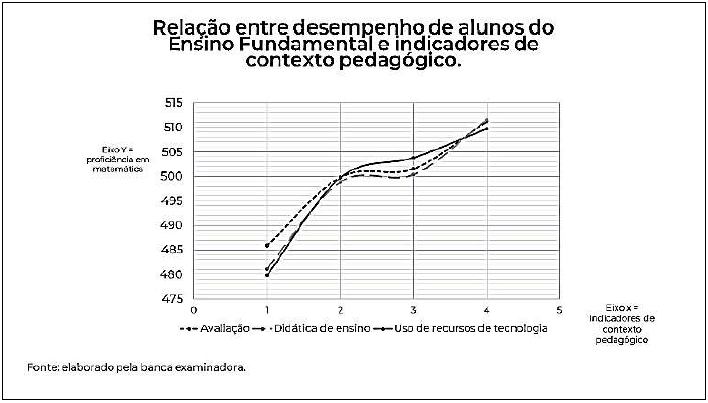
Assinale a afirmativa correta.
Provas
Caderno Container