Foram encontradas 46.760 questões.
1.a) The coming and going of people is easy in a humanized city. 1.b) People are coming and going to choose their Christmas gifts.
2.a) Mike’s arriving to class late became a bad habit. 2.b) Look, Mike’s arriving to class late once more!
3.a) Jordan gets detention for his disrespecting the teachers. 3.b) Jordan gets detention for he’s disrespecting the teachers.
4.a) The candidate’s winning the elections in several key areas. 4.b) Her winning the elections was happily celebrated.
5.a) We are buying the gear for the weekend camping trip. 5.b) For the weekend camping trip, our buying the gear was expensive.
Provas

Fill in the blank with the appropriate verb form.

(Available: https://stock.adobe.com.)
“If you boil water, it ______________ into steam, that’s a scientific fact and there’s no doubt about it!”
Provas
The game is changing. For the first time in history, the Paris 2024 Olympic and Paralympic Games will see an equal number of men and women competing. This 50:50 representation of athletes makes them the first to reach gender equality. Progress does not stop there. With an expected global audience of 3 billion, this year’s Games have been deliberately scheduled to make possible more balanced coverage of all events, putting all athletes in the spotlight. They will also feature more women’s and mixed events, offering more opportunities for women to win medals. A recent survey found that 80 per cent of female Fortune 500 CEOs played sports in their formative years, emphasizing the impact of early exposure to sport on the development of young women. A 2023 Deloitte report also revealed that 85 per cent of surveyed women who played sports as children believed the skills they developed were crucial to their professional success. This rises to 91 per cent for women in leadership roles, and 93 per cent for those earning USD 100,000 or more. Additionally, 92 per cent of global audiences agree it is important for girls to play sports, with 61 per cent considering them “very important”. Despite the positive data, girls drop out of sports by age 14 at twice the rate of boys due to social expectations and lack of investment in quality programs which is worsened by other factors. For example, 21 per cent of female professional athletes have experienced sexual abuse at least once as children in sport, compared with 11 per cent of male athletes. Efforts to track and respond to such cases are increasing worldwide, but gaps in the magnitude and prevalence of violence in sports persist, being prevention efforts are often lacking.
(Available: https://www.unwomen.org/en/news-stories/explainer/2024/07/five-things-to-know-about-women-and-sport. Adapted.)
As to the featured words, it is compatible information that:
Provas
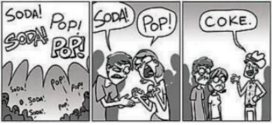
Consider, in the image that follows, verbal and nonverbal expression to indicate the matching item:
(Available: https://pt.slideshare.net.)
Provas
Provas
Examine the image and the examples introduced:

- It can’t be Sarah. I know she lives in France, not here.
- It might rain today for those clouds are really dark.
- They may be using the new laptop since it has been unpacked.
- I could go to the exhibition but I am torn about it.
- Della must have arrived, her schedule has not changed.
The modal verbs’ idea conveyed is the one of:
Provas
happiness-quickly-excitement-appointment-fondness-business-mainly
Provas
Provas
Provas
Provas
Caderno Container