Foram encontradas 220 questões.
Read the text below in order to answer questions 24 to 28.
1 When the sun rises on a warm and sunny day you can see the trumpet-
shaped flowers of the morning glory open up. When they close late in the
3 afternoon primrose flowers open and before daylight arrives the next morning
they close again.
5 Biological rhythms, like the opening and closing of flowers happen all over
nature. But not all of them are daily rhythms. Some, like the beating of your
7 heart, occur every second. Other rhythms are based on months, seasons or
years.
9 Scientists use the term biological clock to describe the timing that controls
biological rhythms. But what is this clock and where can you find it? In animals it
11 is probably controlled by the brain, but in plants and other living things that
have no brain it must be something else.
13 The biological rhythms of seashore organisms are connected to the rise and fall of the water. When the tide comes in they open their shells and get food,
15 when the water goes back the shells close to protect the animals from the dry
air.
17 The migration of animals is also an event that happens when a signal is sent
out. When days become shorter birds leave the northern parts of the world and
19 fly south where it is warm and they have enough food. In the summer they fly
back to have babies.
21 Humans also have biological clocks that control their daily rhythms. Body
temperature, blood pressure sleeping and waking up have a 24-hour rhythm.
23 Many illnesses have a yearly rhythm. Colds and flus often happen in winter.
Measles occur mostly during the spring and summer.
25 When people travel by plane from one continent to another they often cross
many time zones. Their internal clocks don’t seem to work correctly. We call this
27 jet lag. It makes you feel tired and it takes many days for your
body’s biological clock to get used to the new place.
29 People who work night shifts also have problems with their biological
clocks. In general, they may not be as alert or active as people who work during
31 the daytime. They also have more accidents during work. Sometimes they
ave more health and sleeping problems than other people.
33 By using the right medicine you can fight off problems that are connected with
different times of day. Heart attacks and strokes often 35 happen in the morning hours—
between the time you get up and noon. Asthma often occurs between midnight and the morning hours. So when people 37 with weak hearts take their medicine right after
waking up it might prevent a heart attack.
39 Biological clocks control many rhythms of life. We are learning more and more
about these rhythms. Doctors are looking for new ways to make travelling more
41 comfortable and medical treatment more effective.
(http://www.english-online.at/biology/biological-clock/biological-rhythms-in-nature.htm. Acesso em: 10 fev.2104)
According to the text, the biological clock is not:
Provas

Read the text below in order to answer questions 24 to 28.
1 When the sun rises on a warm and sunny day you can see the trumpet-
shaped flowers of the morning glory open up. When they close late in the
3 afternoon primrose flowers open and before daylight arrives the next morning
they close again.
5 Biological rhythms, like the opening and closing of flowers happen all over
nature. But not all of them are daily rhythms. Some, like the beating of your
7 heart, occur every second. Other rhythms are based on months, seasons or
years.
9 Scientists use the term biological clock to describe the timing that controls
biological rhythms. But what is this clock and where can you find it? In animals it
11 is probably controlled by the brain, but in plants and other living things that
have no brain it must be something else.
13 The biological rhythms of seashore organisms are connected to the rise and fall of the water. When the tide comes in they open their shells and get food,
15 when the water goes back the shells close to protect the animals from the dry
air.
17 The migration of animals is also an event that happens when a signal is sent
out. When days become shorter birds leave the northern parts of the world and
19 fly south where it is warm and they have enough food. In the summer they fly
back to have babies.
21 Humans also have biological clocks that control their daily rhythms. Body
temperature, blood pressure sleeping and waking up have a 24-hour rhythm.
23 Many illnesses have a yearly rhythm. Colds and flus often happen in winter.
Measles occur mostly during the spring and summer.
25 When people travel by plane from one continent to another they often cross
many time zones. Their internal clocks don’t seem to work correctly. We call this
27 jet lag. It makes you feel tired and it takes many days for your
body’s biological clock to get used to the new place.
29 People who work night shifts also have problems with their biological
clocks. In general, they may not be as alert or active as people who work during
31 the daytime. They also have more accidents during work. Sometimes they
ave more health and sleeping problems than other people.
33 By using the right medicine you can fight off problems that are connected with
different times of day. Heart attacks and strokes often 35 happen in the morning hours—
between the time you get up and noon. Asthma often occurs between midnight and the morning hours. So when people 37 with weak hearts take their medicine right after
waking up it might prevent a heart attack.
39 Biological clocks control many rhythms of life. We are learning more and more
about these rhythms. Doctors are looking for new ways to make travelling more
41 comfortable and medical treatment more effective.
(http://www.english-online.at/biology/biological-clock/biological-rhythms-in-nature.htm. Acesso em: 10 fev.2104)
Pay attention to the following sentence: “By using the right medicine you can fightoff problems…” (line 33). We could substitute the underlined words without changing the meaning in the following sequence in the alternative:
Provas
Read the text below in order to answer questions 24 to 28.
1 When the sun rises on a warm and sunny day you can see the trumpet-
shaped flowers of the morning glory open up. When they close late in the
3 afternoon primrose flowers open and before daylight arrives the next morning
they close again.
5 Biological rhythms, like the opening and closing of flowers happen all over
nature. But not all of them are daily rhythms. Some, like the beating of your
7 heart, occur every second. Other rhythms are based on months, seasons or
years.
9 Scientists use the term biological clock to describe the timing that controls
biological rhythms. But what is this clock and where can you find it? In animals it
11 is probably controlled by the brain, but in plants and other living things that
have no brain it must be something else.
13 The biological rhythms of seashore organisms are connected to the rise and fall of the water. When the tide comes in they open their shells and get food,
15 when the water goes back the shells close to protect the animals from the dry
air.
17 The migration of animals is also an event that happens when a signal is sent
out. When days become shorter birds leave the northern parts of the world and
19 fly south where it is warm and they have enough food. In the summer they fly
back to have babies.
21 Humans also have biological clocks that control their daily rhythms. Body
temperature, blood pressure sleeping and waking up have a 24-hour rhythm.
23 Many illnesses have a yearly rhythm. Colds and flus often happen in winter.
Measles occur mostly during the spring and summer.
25 When people travel by plane from one continent to another they often cross
many time zones. Their internal clocks don’t seem to work correctly. We call this
27 jet lag. It makes you feel tired and it takes many days for your
body’s biological clock to get used to the new place.
29 People who work night shifts also have problems with their biological
clocks. In general, they may not be as alert or active as people who work during
31 the daytime. They also have more accidents during work. Sometimes they
ave more health and sleeping problems than other people.
33 By using the right medicine you can fight off problems that are connected with
different times of day. Heart attacks and strokes often 35 happen in the morning hours—
between the time you get up and noon. Asthma often occurs between midnight and the morning hours. So when people 37 with weak hearts take their medicine right after
waking up it might prevent a heart attack.
39 Biological clocks control many rhythms of life. We are learning more and more
about these rhythms. Doctors are looking for new ways to make travelling more
41 comfortable and medical treatment more effective.
(http://www.english-online.at/biology/biological-clock/biological-rhythms-in-nature.htm. Acesso em: 10 fev.2104)
“But not all of them are daily rhythms”… (line 6). In this case, "Them" refers to:
Provas
Read the text below in order to answer questions 24 to 28.
1 When the sun rises on a warm and sunny day you can see the trumpet-
shaped flowers of the morning glory open up. When they close late in the
3 afternoon primrose flowers open and before daylight arrives the next morning
they close again.
5 Biological rhythms, like the opening and closing of flowers happen all over
nature. But not all of them are daily rhythms. Some, like the beating of your
7 heart, occur every second. Other rhythms are based on months, seasons or
years.
9 Scientists use the term biological clock to describe the timing that controls
biological rhythms. But what is this clock and where can you find it? In animals it
11 is probably controlled by the brain, but in plants and other living things that
have no brain it must be something else.
13 The biological rhythms of seashore organisms are connected to the rise and fall of the water. When the tide comes in they open their shells and get food,
15 when the water goes back the shells close to protect the animals from the dry
air.
17 The migration of animals is also an event that happens when a signal is sent
out. When days become shorter birds leave the northern parts of the world and
19 fly south where it is warm and they have enough food. In the summer they fly
back to have babies.
21 Humans also have biological clocks that control their daily rhythms. Body
temperature, blood pressure sleeping and waking up have a 24-hour rhythm.
23 Many illnesses have a yearly rhythm. Colds and flus often happen in winter.
Measles occur mostly during the spring and summer.
25 When people travel by plane from one continent to another they often cross
many time zones. Their internal clocks don’t seem to work correctly. We call this
27 jet lag. It makes you feel tired and it takes many days for your
body’s biological clock to get used to the new place.
29 People who work night shifts also have problems with their biological
clocks. In general, they may not be as alert or active as people who work during
31 the daytime. They also have more accidents during work. Sometimes they
ave more health and sleeping problems than other people.
33 By using the right medicine you can fight off problems that are connected with
different times of day. Heart attacks and strokes often 35 happen in the morning hours—
between the time you get up and noon. Asthma often occurs between midnight and the morning hours. So when people 37 with weak hearts take their medicine right after
waking up it might prevent a heart attack.
39 Biological clocks control many rhythms of life. We are learning more and more
about these rhythms. Doctors are looking for new ways to make travelling more
41 comfortable and medical treatment more effective.
(http://www.english-online.at/biology/biological-clock/biological-rhythms-in-nature.htm. Acesso em: 10 fev.2104)
According to the text, we can substitute “jet lag” (line 27) without changing the meaning in:
Provas
Read the text below in order to answer questions 24 to 28.
1 When the sun rises on a warm and sunny day you can see the trumpet-
shaped flowers of the morning glory open up. When they close late in the
3 afternoon primrose flowers open and before daylight arrives the next morning
they close again.
5 Biological rhythms, like the opening and closing of flowers happen all over
nature. But not all of them are daily rhythms. Some, like the beating of your
7 heart, occur every second. Other rhythms are based on months, seasons or
years.
9 Scientists use the term biological clock to describe the timing that controls
biological rhythms. But what is this clock and where can you find it? In animals it
11 is probably controlled by the brain, but in plants and other living things that
have no brain it must be something else.
13 The biological rhythms of seashore organisms are connected to the rise and fall of the water. When the tide comes in they open their shells and get food,
15 when the water goes back the shells close to protect the animals from the dry
air.
17 The migration of animals is also an event that happens when a signal is sent
out. When days become shorter birds leave the northern parts of the world and
19 fly south where it is warm and they have enough food. In the summer they fly
back to have babies.
21 Humans also have biological clocks that control their daily rhythms. Body
temperature, blood pressure sleeping and waking up have a 24-hour rhythm.
23 Many illnesses have a yearly rhythm. Colds and flus often happen in winter.
Measles occur mostly during the spring and summer.
25 When people travel by plane from one continent to another they often cross
many time zones. Their internal clocks don’t seem to work correctly. We call this
27 jet lag. It makes you feel tired and it takes many days for your
body’s biological clock to get used to the new place.
29 People who work night shifts also have problems with their biological
clocks. In general, they may not be as alert or active as people who work during
31 the daytime. They also have more accidents during work. Sometimes they
ave more health and sleeping problems than other people.
33 By using the right medicine you can fight off problems that are connected with
different times of day. Heart attacks and strokes often 35 happen in the morning hours—
between the time you get up and noon. Asthma often occurs between midnight and the morning hours. So when people 37 with weak hearts take their medicine right after
waking up it might prevent a heart attack.
39 Biological clocks control many rhythms of life. We are learning more and more
about these rhythms. Doctors are looking for new ways to make travelling more
41 comfortable and medical treatment more effective.
(http://www.english-online.at/biology/biological-clock/biological-rhythms-in-nature.htm. Acesso em: 10 fev.2104)
According to the text we can state that:
I – There is a daily routine that controls life on Earth.
II – Plants need a special central nervous system to control their biological clock.
III – Oceans and seas do not have an important role to control biological rhythm of seashore organisms.
IV – Measles never occur during the winter. The CORRECT alternative is:
Provas
Read the comic strip below and then answer the following question 23.
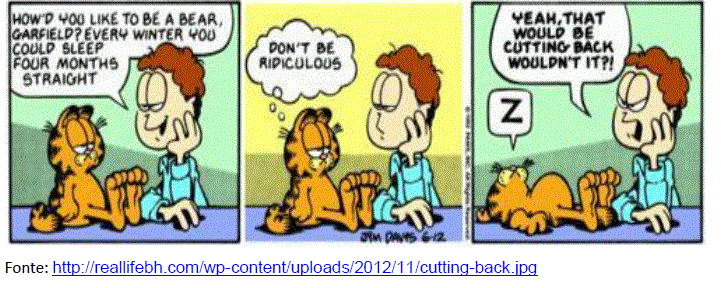
According to the comic strip above, “Cutting back” means:
Provas
Considering the first and the second stanzas, we can conclude:
Provas
WAKE ME UP WHEN SEPTEMBER ENDS
Music: GREEN DAY
Album: American Idiot (2004)
Summer has come and passed
The innocent can never last
Wake me up when September ends
Like my father's come to pass
Seven years has gone so fast
Wake me up when September ends
Here comes the rain again
Falling from the stars
Drenched in my pain again
Becoming who we are
As my memory rests
But never forgets what I lost
Wake me up when September ends
(…)
(http://www.vagalume.com.br/green-day/wake-me-up-when-september-ends.html#ixzz2x4QQMCVj adapted.Acesso
em: 22 abr.2014)
Green Day’s songs are used as a form of protest against a negative time. In “Wake me up when September ends”, we can deduce that they are:Provas
Assinale a alternativa que NÃO corresponde ao planejamento enquanto instrumento para a Práxis Pedagógica:
Provas
“Conta-se que, durante a visita à União Soviética, Sarney portava um belo casaco que causou admiração a Gorbachev. Ele procurou saber qual o material utilizado em sua confecção. Sarney respondeu que era de um material muito especial, o ‘pêlo social’. A piada, ao mesmo tempo, ironiza uma das metas daquele governo – ‘Tudo pelo Social’ – e dá ideia da espoliação que vem sofrendo o povo brasileiro. “Perdeu tudo, até a pele.”
(Marly Rodrigues. A Década de 80. Editora Ática)
Sobre as origens da espoliação do povo brasileiro, marque a alternativa INCORRETA:
Provas
Caderno Container