Foram encontradas 49 questões.
Read the text below and answer question based on the information provided.
“Research suggests that detecting false
information is difficult. When we encounter new
information, we tend to focus on understanding it
and deciding what to do next, rather than
evaluating it for accuracy. It takes effort to
compare new information with what we already
know; when new information is false but
plausible, we can learn it as fact. Several factors
may increase our susceptibility to
misinformation.
People are more likely to believe
misinformation if it comes from in-group sources
rather than out-group ones, or if they judge the
source as credible. The emotional content of
misinformation plays a role as well: People are more likely to believe false statements that
appeal to emotions such as fear and outrage.
They are also more likely to believe
misinformation that paints opponents in a
negative light than they are to believe
misinformation that is negative about their own
in-group. Finally, people are more likely to
believe repeated information, even when it
contradicts their prior knowledge. These findings
suggest that it is important to stop
misinformation early.
Susceptibility to misinformation shows
individual differences based on experience. For
example, educational attainment, analytical
reasoning, and numeracy skills can increase
resistance to misinformation, while anxiety
increases a person’s likelihood of believing it.
Older adults may be better at identifying
misinformation than younger adults, yet older
adults are also more likely to see and share false
information on social media.
Many of these effects are modest, and a
key conclusion from the existing literature is that
belief in misinformation does not always lead to
changes in a person’s attitudes, intentions, or
behaviors. In other words, what we believe does
not always translate into what we do.
Many of
these studies were conducted in laboratory and
other controlled settings, so more research is
needed in real-world contexts to determine the
full impact of misinformation on behavior and
health.”
Fonte: https://www.apa.org/topics/journalismfacts/misinformation-belief-action. Acesso em
05/01/2026 (adaptado).
Provas
Questão presente nas seguintes provas

Read the text below and answer question based on the information provided.
“Research suggests that detecting false
information is difficult. When we encounter new
information, we tend to focus on understanding it
and deciding what to do next, rather than
evaluating it for accuracy. It takes effort to
compare new information with what we already
know; when new information is false but
plausible, we can learn it as fact. Several factors
may increase our susceptibility to
misinformation.
People are more likely to believe
misinformation if it comes from in-group sources
rather than out-group ones, or if they judge the
source as credible. The emotional content of
misinformation plays a role as well: People are more likely to believe false statements that
appeal to emotions such as fear and outrage.
They are also more likely to believe
misinformation that paints opponents in a
negative light than they are to believe
misinformation that is negative about their own
in-group. Finally, people are more likely to
believe repeated information, even when it
contradicts their prior knowledge. These findings
suggest that it is important to stop
misinformation early.
Susceptibility to misinformation shows
individual differences based on experience. For
example, educational attainment, analytical
reasoning, and numeracy skills can increase
resistance to misinformation, while anxiety
increases a person’s likelihood of believing it.
Older adults may be better at identifying
misinformation than younger adults, yet older
adults are also more likely to see and share false
information on social media.
Many of these effects are modest, and a
key conclusion from the existing literature is that
belief in misinformation does not always lead to
changes in a person’s attitudes, intentions, or
behaviors. In other words, what we believe does
not always translate into what we do.
Many of
these studies were conducted in laboratory and
other controlled settings, so more research is
needed in real-world contexts to determine the
full impact of misinformation on behavior and
health.”
Fonte: https://www.apa.org/topics/journalismfacts/misinformation-belief-action. Acesso em
05/01/2026 (adaptado).
Provas
Questão presente nas seguintes provas
Read the text below and answer question based on the information provided.
“Research suggests that detecting false
information is difficult. When we encounter new
information, we tend to focus on understanding it
and deciding what to do next, rather than
evaluating it for accuracy. It takes effort to
compare new information with what we already
know; when new information is false but
plausible, we can learn it as fact. Several factors
may increase our susceptibility to
misinformation.
People are more likely to believe
misinformation if it comes from in-group sources
rather than out-group ones, or if they judge the
source as credible. The emotional content of
misinformation plays a role as well: People are more likely to believe false statements that
appeal to emotions such as fear and outrage.
They are also more likely to believe
misinformation that paints opponents in a
negative light than they are to believe
misinformation that is negative about their own
in-group. Finally, people are more likely to
believe repeated information, even when it
contradicts their prior knowledge. These findings
suggest that it is important to stop
misinformation early.
Susceptibility to misinformation shows
individual differences based on experience. For
example, educational attainment, analytical
reasoning, and numeracy skills can increase
resistance to misinformation, while anxiety
increases a person’s likelihood of believing it.
Older adults may be better at identifying
misinformation than younger adults, yet older
adults are also more likely to see and share false
information on social media.
Many of these effects are modest, and a
key conclusion from the existing literature is that
belief in misinformation does not always lead to
changes in a person’s attitudes, intentions, or
behaviors. In other words, what we believe does
not always translate into what we do.
Many of
these studies were conducted in laboratory and
other controlled settings, so more research is
needed in real-world contexts to determine the
full impact of misinformation on behavior and
health.”
Fonte: https://www.apa.org/topics/journalismfacts/misinformation-belief-action. Acesso em
05/01/2026 (adaptado).
Provas
Questão presente nas seguintes provas
Read the text below and answer question based on the information provided.
“Research suggests that detecting false
information is difficult. When we encounter new
information, we tend to focus on understanding it
and deciding what to do next, rather than
evaluating it for accuracy. It takes effort to
compare new information with what we already
know; when new information is false but
plausible, we can learn it as fact. Several factors
may increase our susceptibility to
misinformation.
People are more likely to believe
misinformation if it comes from in-group sources
rather than out-group ones, or if they judge the
source as credible. The emotional content of
misinformation plays a role as well: People are more likely to believe false statements that
appeal to emotions such as fear and outrage.
They are also more likely to believe
misinformation that paints opponents in a
negative light than they are to believe
misinformation that is negative about their own
in-group. Finally, people are more likely to
believe repeated information, even when it
contradicts their prior knowledge. These findings
suggest that it is important to stop
misinformation early.
Susceptibility to misinformation shows
individual differences based on experience. For
example, educational attainment, analytical
reasoning, and numeracy skills can increase
resistance to misinformation, while anxiety
increases a person’s likelihood of believing it.
Older adults may be better at identifying
misinformation than younger adults, yet older
adults are also more likely to see and share false
information on social media.
Many of these effects are modest, and a
key conclusion from the existing literature is that
belief in misinformation does not always lead to
changes in a person’s attitudes, intentions, or
behaviors. In other words, what we believe does
not always translate into what we do.
Many of
these studies were conducted in laboratory and
other controlled settings, so more research is
needed in real-world contexts to determine the
full impact of misinformation on behavior and
health.”
Fonte: https://www.apa.org/topics/journalismfacts/misinformation-belief-action. Acesso em
05/01/2026 (adaptado).
Provas
Questão presente nas seguintes provas
Gilmar é engenheiro civil da prefeitura de
Jeriquara e está desenvolvendo um projeto de
instalação de uma tubulação de esgoto ao longo
da Avenida Francisco Gonçalves Costa. Gilmar
mediu a distância entre os pontos A e B, na Rua
Coronel Francisco Lino, e encontrou 246,67
metros. Depois, mediu a distância entre os pontos
B e C, na Rua Joaquim Alves Costa, obtendo
83,74 metros. A tubulação será instalada paralela
à linha AC e terá o mesmo comprimento,
conforme mostrado na figura a seguir.
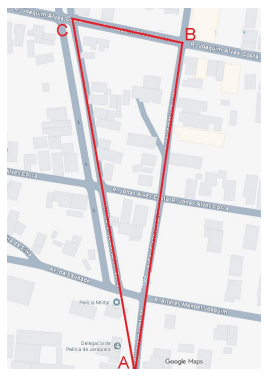
Com base nessas informações e considerando que os segmentos AB e BC formam um ângulo reto, determine o comprimento aproximado da reta AC. Assinale a alternativa correta:
Com base nessas informações e considerando que os segmentos AB e BC formam um ângulo reto, determine o comprimento aproximado da reta AC. Assinale a alternativa correta:
Provas
Questão presente nas seguintes provas
Sara comprou um pacote de biscoitos de nata
contendo 15 unidades, com peso total de 0,120
kg. O preço do produto é cobrado por quilo, ao
valor de R$ 89,50 por kg.
Com base nessas informações, qual é o valor pago por cada biscoito de nata? Assinale a alternativa correta.
Com base nessas informações, qual é o valor pago por cada biscoito de nata? Assinale a alternativa correta.
Provas
Questão presente nas seguintes provas
Considere o sistema de equações do primeiro grau abaixo:
\(\begin{cases} 2x - y = 7 \\ 3x + y = 13 \end{cases}\)
Assinale a alternativa que apresenta os valores corretos de x e y, respectivamente, que resolvem o sistema acima.
Provas
Questão presente nas seguintes provas
A soma de dois números é 324. Se a razão entre
esses números é α: b = 1: 3, quais são os valores
dos números?
Assinale a alternativa que apresenta os valores de α e b, mantendo a proporção a:b = 1:3, cuja soma é 324.
Assinale a alternativa que apresenta os valores de α e b, mantendo a proporção a:b = 1:3, cuja soma é 324.
Provas
Questão presente nas seguintes provas
Durante um processo seletivo, Thiago realizou
quatro provas, cada uma valendo peso 2. As
notas obtidas foram:
• Prova 1: 6,0
• Prova 2: 8,0
• Prova 3: 7,0
• Prova 4: 9,0
Sabendo que todas as provas possuem o mesmo peso, qual foi a média ponderada final do Thiago?
Assinale a alternativa correta.
• Prova 1: 6,0
• Prova 2: 8,0
• Prova 3: 7,0
• Prova 4: 9,0
Sabendo que todas as provas possuem o mesmo peso, qual foi a média ponderada final do Thiago?
Assinale a alternativa correta.
Provas
Questão presente nas seguintes provas
Assinale a alternativa que apresenta a palavra destacada totalmente de acordo com as normas de
concordância da redação técnica oficial.
Provas
Questão presente nas seguintes provas
Cadernos
Caderno Container