Foram encontradas 50 questões.
How technology is reinventing Education
Stanford Graduate School of Education Dean Dan Schwartz and other education scholars weigh in on what’s next
for some of the technology trends taking center stage in the classroom.
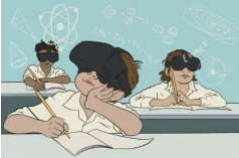
Image credit: Claire Scully
1. New advances in technology are upending education, from the recent debut of new artificial intelligence (AI)
chatbots like ChatGPT to the growing accessibility of virtual-reality tools that expand the boundaries of the
classroom. For educators, at the heart of it all is the hope that every learner gets an equal chance to develop
the skills they need to succeed. But that promise is not without its pitfalls.
2. “Technology is a game-changer for education – it offers the prospect of universal access to high-quality
learning experiences, and it creates fundamentally new ways of teaching,” said Dan Schwartz, dean of Stanford
Graduate School of Education (GSE), who is also a professor of educational technology at the GSE and faculty
director of the Stanford Accelerator for Learning. “But there are a lot of ways we teach that aren’t great, and a
big fear with AI in particular is that we just get more efficient at teaching badly. This is a moment to pay
attention, to do things differently.”
3. For K-12 schools, this year also marks the end of the Elementary and Secondary School Emergency Relief
(ESSER) funding program, which has provided pandemic recovery funds that many districts used to invest in
educational software and systems. With these funds running out in September 2024, schools are trying to
determine their best use of technology as they face the prospect of diminishing resources.
4. Here, Schwartz and other Stanford education scholars weigh in on some of the technology trends taking center
stage in the classroom this year.
SPECTOR, C. How technology is reinventing education | Stanford Report. Disponível em: <https://news.stanford.edu/stories/2024/02/technology-in-education>.
Provas
Questão presente nas seguintes provas

How technology is reinventing Education
Stanford Graduate School of Education Dean Dan Schwartz and other education scholars weigh in on what’s next
for some of the technology trends taking center stage in the classroom.
Image credit: Claire Scully
1. New advances in technology are upending education, from the recent debut of new artificial intelligence (AI)
chatbots like ChatGPT to the growing accessibility of virtual-reality tools that expand the boundaries of the
classroom. For educators, at the heart of it all is the hope that every learner gets an equal chance to develop
the skills they need to succeed. But that promise is not without its pitfalls.
2. “Technology is a game-changer for education – it offers the prospect of universal access to high-quality
learning experiences, and it creates fundamentally new ways of teaching,” said Dan Schwartz, dean of Stanford
Graduate School of Education (GSE), who is also a professor of educational technology at the GSE and faculty
director of the Stanford Accelerator for Learning. “But there are a lot of ways we teach that aren’t great, and a
big fear with AI in particular is that we just get more efficient at teaching badly. This is a moment to pay
attention, to do things differently.”
3. For K-12 schools, this year also marks the end of the Elementary and Secondary School Emergency Relief
(ESSER) funding program, which has provided pandemic recovery funds that many districts used to invest in
educational software and systems. With these funds running out in September 2024, schools are trying to
determine their best use of technology as they face the prospect of diminishing resources.
4. Here, Schwartz and other Stanford education scholars weigh in on some of the technology trends taking center
stage in the classroom this year.
SPECTOR, C. How technology is reinventing education | Stanford Report. Disponível em: <https://news.stanford.edu/stories/2024/02/technology-in-education>.
Provas
Questão presente nas seguintes provas
How technology is reinventing Education
Stanford Graduate School of Education Dean Dan Schwartz and other education scholars weigh in on what’s next
for some of the technology trends taking center stage in the classroom.
Image credit: Claire Scully
1. New advances in technology are upending education, from the recent debut of new artificial intelligence (AI)
chatbots like ChatGPT to the growing accessibility of virtual-reality tools that expand the boundaries of the
classroom. For educators, at the heart of it all is the hope that every learner gets an equal chance to develop
the skills they need to succeed. But that promise is not without its pitfalls.
2. “Technology is a game-changer for education – it offers the prospect of universal access to high-quality
learning experiences, and it creates fundamentally new ways of teaching,” said Dan Schwartz, dean of Stanford
Graduate School of Education (GSE), who is also a professor of educational technology at the GSE and faculty
director of the Stanford Accelerator for Learning. “But there are a lot of ways we teach that aren’t great, and a
big fear with AI in particular is that we just get more efficient at teaching badly. This is a moment to pay
attention, to do things differently.”
3. For K-12 schools, this year also marks the end of the Elementary and Secondary School Emergency Relief
(ESSER) funding program, which has provided pandemic recovery funds that many districts used to invest in
educational software and systems. With these funds running out in September 2024, schools are trying to
determine their best use of technology as they face the prospect of diminishing resources.
4. Here, Schwartz and other Stanford education scholars weigh in on some of the technology trends taking center
stage in the classroom this year.
SPECTOR, C. How technology is reinventing education | Stanford Report. Disponível em: <https://news.stanford.edu/stories/2024/02/technology-in-education>.
Provas
Questão presente nas seguintes provas
How technology is reinventing Education
Stanford Graduate School of Education Dean Dan Schwartz and other education scholars weigh in on what’s next
for some of the technology trends taking center stage in the classroom.
Image credit: Claire Scully
1. New advances in technology are upending education, from the recent debut of new artificial intelligence (AI)
chatbots like ChatGPT to the growing accessibility of virtual-reality tools that expand the boundaries of the
classroom. For educators, at the heart of it all is the hope that every learner gets an equal chance to develop
the skills they need to succeed. But that promise is not without its pitfalls.
2. “Technology is a game-changer for education – it offers the prospect of universal access to high-quality
learning experiences, and it creates fundamentally new ways of teaching,” said Dan Schwartz, dean of Stanford
Graduate School of Education (GSE), who is also a professor of educational technology at the GSE and faculty
director of the Stanford Accelerator for Learning. “But there are a lot of ways we teach that aren’t great, and a
big fear with AI in particular is that we just get more efficient at teaching badly. This is a moment to pay
attention, to do things differently.”
3. For K-12 schools, this year also marks the end of the Elementary and Secondary School Emergency Relief
(ESSER) funding program, which has provided pandemic recovery funds that many districts used to invest in
educational software and systems. With these funds running out in September 2024, schools are trying to
determine their best use of technology as they face the prospect of diminishing resources.
4. Here, Schwartz and other Stanford education scholars weigh in on some of the technology trends taking center
stage in the classroom this year.
SPECTOR, C. How technology is reinventing education | Stanford Report. Disponível em: <https://news.stanford.edu/stories/2024/02/technology-in-education>.
Provas
Questão presente nas seguintes provas
How technology is reinventing Education
Stanford Graduate School of Education Dean Dan Schwartz and other education scholars weigh in on what’s next
for some of the technology trends taking center stage in the classroom.
Image credit: Claire Scully
1. New advances in technology are upending education, from the recent debut of new artificial intelligence (AI)
chatbots like ChatGPT to the growing accessibility of virtual-reality tools that expand the boundaries of the
classroom. For educators, at the heart of it all is the hope that every learner gets an equal chance to develop
the skills they need to succeed. But that promise is not without its pitfalls.
2. “Technology is a game-changer for education – it offers the prospect of universal access to high-quality
learning experiences, and it creates fundamentally new ways of teaching,” said Dan Schwartz, dean of Stanford
Graduate School of Education (GSE), who is also a professor of educational technology at the GSE and faculty
director of the Stanford Accelerator for Learning. “But there are a lot of ways we teach that aren’t great, and a
big fear with AI in particular is that we just get more efficient at teaching badly. This is a moment to pay
attention, to do things differently.”
3. For K-12 schools, this year also marks the end of the Elementary and Secondary School Emergency Relief
(ESSER) funding program, which has provided pandemic recovery funds that many districts used to invest in
educational software and systems. With these funds running out in September 2024, schools are trying to
determine their best use of technology as they face the prospect of diminishing resources.
4. Here, Schwartz and other Stanford education scholars weigh in on some of the technology trends taking center
stage in the classroom this year.
SPECTOR, C. How technology is reinventing education | Stanford Report. Disponível em: <https://news.stanford.edu/stories/2024/02/technology-in-education>.
Provas
Questão presente nas seguintes provas
De acordo com o art. 7º, da Lei 17.246/2002,
que dispõe sobre o plano de carreira e remuneração
dos servidores do grupo magistério da rede
municipal de ensino do município de Santarém,
fazem parte das incumbências do docente:
I. Participar da elaboração do Programa Dinheiro Direto na Escola – PDDE.
II. Garantir a aprendizagem dos alunos.
III. Estabelecer estratégias de recuperação para os alunos de menor rendimento.
IV. Colaborar com as atividades da escola em articulação com as famílias e a comunidade.
Dentre os itens acima, estão corretos:
I. Participar da elaboração do Programa Dinheiro Direto na Escola – PDDE.
II. Garantir a aprendizagem dos alunos.
III. Estabelecer estratégias de recuperação para os alunos de menor rendimento.
IV. Colaborar com as atividades da escola em articulação com as famílias e a comunidade.
Dentre os itens acima, estão corretos:
Provas
Questão presente nas seguintes provas
3782058
Ano: 2024
Disciplina: Direito da Criança e do Adolescente
Banca: IVIN
Orgão: Pref. Santarém-PA
Disciplina: Direito da Criança e do Adolescente
Banca: IVIN
Orgão: Pref. Santarém-PA
- ECAGeralDireitos Fundamentais (art. 7º ao 69)
- ECAEspecialDas Medidas Pertinentes aos Pais ou Responsável (Art. 129 e 130)
O Estatuto da Criança e do Adolescente
enumera em seu art. 22 uma série de deveres
atribuídos aos pais em relação aos filhos menores,
dentre os quais não consta:
Provas
Questão presente nas seguintes provas
Conforme o disposto no art. 11, da LDBEN (Lei
nº 9.394/1996), fazem parte das responsabilidades
educacionais dos municípios brasileiros adotar as
seguintes ações:
I. Exercer ação redistributiva em relação às suas escolas.
II. Autorizar, reconhecer, credenciar, supervisionar e avaliar, respectivamente, os cursos das instituições de educação superior e os estabelecimentos do seu sistema de ensino.
III. Assumir o transporte escolar dos alunos da rede municipal, permitindo aos respectivos professores, em trechos autorizados, o uso de assentos vagos nos veículos.
IV. Instituir, na forma da lei de que trata o art. 14, Conselhos Escolares e Fóruns dos Conselhos Escolares.
Está correto o que se afirma apenas em:
I. Exercer ação redistributiva em relação às suas escolas.
II. Autorizar, reconhecer, credenciar, supervisionar e avaliar, respectivamente, os cursos das instituições de educação superior e os estabelecimentos do seu sistema de ensino.
III. Assumir o transporte escolar dos alunos da rede municipal, permitindo aos respectivos professores, em trechos autorizados, o uso de assentos vagos nos veículos.
IV. Instituir, na forma da lei de que trata o art. 14, Conselhos Escolares e Fóruns dos Conselhos Escolares.
Está correto o que se afirma apenas em:
Provas
Questão presente nas seguintes provas
3782056
Ano: 2024
Disciplina: Direito Educacional e Tecnológico
Banca: IVIN
Orgão: Pref. Santarém-PA
Disciplina: Direito Educacional e Tecnológico
Banca: IVIN
Orgão: Pref. Santarém-PA
Analisando o que a Carta Magna determina em
termos de educação em seus diversos dispositivos
ao longo do texto constitucional, conclui-se que a
única alternativa correta, dentre as apresentadas
abaixo, é a que se encontra na letra:
Provas
Questão presente nas seguintes provas
De acordo com as disposições do Anexo III da
Lei Municipal nº 14.899/94 do Município de
Santarém-PA, o cargo de Auxiliar Técnico em
Radiologia é classificado na Carreira de:
Provas
Questão presente nas seguintes provas
Cadernos
Caderno Container