Foram encontradas 210 questões.
A moral e a ética não são fatos ou institutos jurídicos. Direito é uma coisa, moral é outra. Todo ser humano informado sabe disso. O comportamento das pessoas em grupo, tornando suas ações conhecidas e avaliadas, segundo critérios éticos do mesmo grupo quanto ao caráter, às condutas ou às intenções manifestadas e assim por diante, só repercutem no direito se extrapolarem os limites deste. A manifestação ofensiva a respeito de outrem confunde os dois elementos no plano individual.
(Walter Ceneviva, Moralidade como Fato Jurídico, com adaptações)
Assinale a opção incorreta a respeito das estruturas lingüísticas do texto.
Provas

Os atos processuais, no processo administrativo, podem ser praticados somente por
Provas
Dados (tabela de fator de acumulação de capital de uma série de pagamentos uniforme)

Provas
- Organização dos PoderesPoder LegislativoProcesso LegislativoLeis Complementares, Ordinárias e Delegadas
Assinale a opção correta.
Provas
Provas
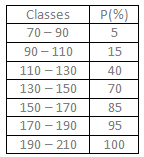
Considere a transformação Z = (X-140) / 10. Para o atributo Z encontrou-se
Provas
Assinale a opção correta.
Provas
Provas
The agencies use legions of highly trained analysts with access to top management. Their meticulous reports giving ratings for corporate bonds are designed to give an accurate picture of the bonds' riskiness and, ultimately, the probability of default. Lately, rating agencies have struggled to keep up; it seems a bond's rating tells you ever less about the price that investors are willing to pay. In 1997 two-thirds of debt rated triple-B by S&P was priced within 20 basis points (hundredths of a percentage point) of the average bond with the same rating. Since then, the range has widened. Last year credit spreads' standard deviation, a measure of dispersion, had risen more than sixfold.
In the case of the Enron company, the two main credit rating agencies
Provas
THE two credit-rating agencies that dominate the business come in for flak from all sides. Investors caught holding Enron's investment-grade bonds as their price sank to below that of junk say that Moody's and Standard & Poor's (S&P) are just too
slow to spot companies' declining financial health. Equally, say others, they are just too fast when they produce unjustifiably large changes in ratings. Stung by a precipitous downgrade, Tyco, once a high-flying American conglomerate, has had to seek an emergency and very costly refinancing, punishing investors.
The agencies use legions of highly trained analysts with access to top management. Their meticulous reports giving ratings for corporate bonds are designed to give an accurate picture of the bonds' riskiness and, ultimately, the probability of default. Lately, rating agencies have struggled to keep up; it seems a bond's rating tells you ever less about the price that investors are willing to pay. In 1997 two-thirds of debt rated triple-B by S&P was priced within 20 basis points (hundredths of a percentage point) of the average bond with the same rating. Since then, the range has widened. Last year credit spreads' standard deviation, a measure of dispersion, had risen more than sixfold.
Which of the following is not mentioned in the text?
Provas
Caderno Container