Foram encontradas 50 questões.
- Avaliação EducacionalModalidades de Avaliação
- Avaliação EducacionalFunções da Avaliação Escolar e a Análise dos Resultados

Formative Assessment as Part of the Learning Process
Formative assessment takes place during
the learning process and is used to identify what
learners already understand, where difficulties remain,
and what should happen next. Unlike summative
assessment, whose primary purpose is usually to
record or certify achievement at the end of a period,
formative assessment provides information that can
be used to improve ongoing teaching and learning.
In the English classroom, teachers may gather
evidence of learning through observation, questioning,
short written tasks, classroom discussions, drafts,
self-assessment, and peer assessment. However, an
activity becomes formative only when the information
it produces influences subsequent decisions. A quiz
that merely generates a score does not necessarily
support learning; the teacher and the learners need to
use its results to identify strengths, revise strategies,
and plan further action.
Effective formative feedback should be connected
to clear learning intentions and understandable
criteria. Rather than simply marking an answer as
right or wrong, feedback can indicate what has been
achieved, explain what still needs improvement, and
suggest a realistic next step. If learners understand
the criteria and participate in evaluating their own
work, they may become more capable of monitoring
and regulating their learning.
Formative assessment also requires teachers to
respond flexibly to evidence collected in the classroom.
If several learners misunderstand a grammatical
structure or cannot use it effectively in communication,
the teacher may need to modify the lesson, provide
another model, or design a new task. Assessment is
therefore not an interruption of teaching but part of
a continuing cycle in which evidence, feedback, and
pedagogical decisions shape one another.
Adaptado de: BRITISH COUNCIL. Formative assessment. TeachingEnglish, [s.d.]; OECD. Using formative assessment and feedback. In: Unlocking high-quality teaching. Paris: OECD Publishing, 2025. Acesso em: 3 ago. 2026.
Provas

- Avaliação Educacional
- Tecnologias Educacionais
- Mídias, Comunicação e Tecnologias na Educação
- Práticas Avaliativas: Sujeitos, Objetos e Métodos da Avaliação
- As Tecnologias da Comunicação e Informação nas Práticas Educativas
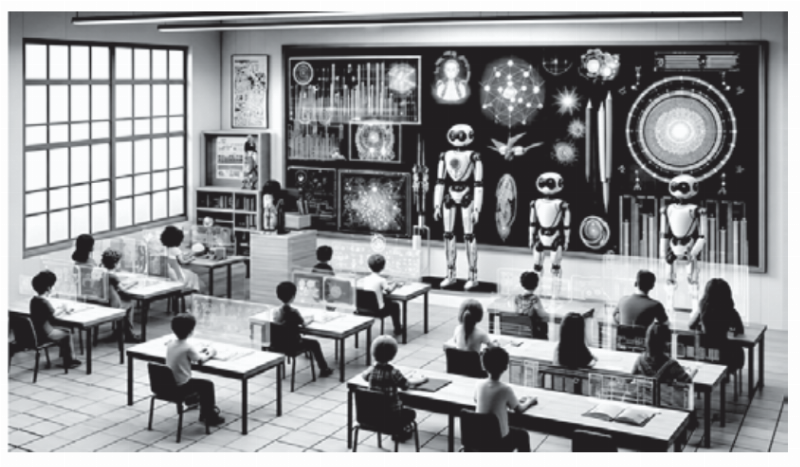
Generative AI and the Changing Role of English Teachers
Generative artificial intelligence can produce
texts, explanations, exercises, translations, and
feedback within seconds. In English language
education, these tools may expand opportunities
for learners to practise reading and writing, explore
different ways of expressing ideas, and receive
support beyond classroom hours. Their educational
value, however, does not result automatically from
their technical capacity.
AI-generated content may contain inaccurate
information, reproduce social or cultural biases, and
present invented references as if they were reliable.
It may also reflect linguistic patterns that are more
strongly represented in its training data, while giving
less visibility to other varieties, identities, and cultural
perspectives. For this reason, outputs produced by AI
need to be examined critically rather than accepted
as neutral or authoritative.
The use of AI also raises questions about privacy,
authorship, assessment, and learner autonomy. When
students submit automatically generated texts without
understanding or revising them, the final product
may conceal what they can actually communicate
in English. Assessment practices therefore need
to consider not only the submitted text but also the
decisions, revisions, explanations, and language-
learning processes that led to it.
In this context, the teacher’s role is not reduced
to selecting technological resources. Teachers need to
determine whether a tool is pedagogically appropriate,
protect students’ data, design meaningful activities,
and help learners question the information they
receive. A human-centred approach treats AI as a
resource under critical and pedagogical supervision,
not as a substitute for professional judgement or
human agency.
Adaptado de: MIAO, Fengchun; HOLMES, Wayne. Guidance for generative AI in education and research. Paris: UNESCO, 2023; MIAO, Fengchun; CUKUROVA, Mutlu. AI competency framework for teachers. Paris: UNESCO, 2024. Acesso em: 3 ago. 2026.
Provas

English as a Global Language: Implications for Teaching
English is currently the most widely spoken
language in the world and is expected to retain a
central role in international communication. However,
its global position does not necessarily imply the
disappearance or reduced importance of other
languages. English increasingly operates alongside
them, allowing multilingual speakers to draw on
different linguistic and cultural resources when
communicating across borders.
This changing context has important implications
for language education. For many learners, English
will be used more frequently with speakers from
different first-language backgrounds than with
people from traditionally English-speaking countries.
Consequently, successful communication cannot be
measured solely by how closely learners reproduce
the pronunciation, vocabulary, or cultural conventions
of an idealised native speaker.
A more contextualised understanding of
proficiency gives greater importance to intelligibility,
adaptability, intercultural awareness, and the ability
to negotiate meaning. This does not mean that
grammatical accuracy or established conventions
should be disregarded. Rather, teachers need to
help learners understand when particular forms are
expected while also preparing them to communicate
effectively across diverse contexts.
Technology may expand access to English
learning, but it may also widen the divide between
learners who have reliable digital resources and
those who do not. Teachers therefore remain central
to the learning process. Their role includes mediating
resources, responding to local needs, and helping
students develop the communicative flexibility
required in multilingual and multicultural settings.
Adaptado de: PATEL, Mina; SOLLY, Mike; COPELAND, Steve. The future of English: global perspectives. London: British Council, 2023. Acesso em: 3 ago. 2026.
Provas
- LegislaçãoDiretrizes Curriculares NacionaisDiretrizes Curriculares Nacionais para a Educação Básica
- Políticas Educacionais
- Organização e Estrutura dos Sistemas de Ensino no Brasil
BRASIL. Ministério da Educação. Diretrizes Curriculares Nacionais Gerais da Educação Básica. Brasília, DF: MEC, 2013. Adaptado.
Considere que um município institui uma política educacional com as seguintes diretrizes:
I. Ampliação do número de vagas na rede pública.
II. Adoção obrigatória de um único material didático para todas as escolas.
III. Centralização das decisões pedagógicas na Secretaria de Educação.
IV. Limitação da participação da comunidade escolar aos momentos formais de consulta, sem efetiva incidência nos processos decisórios.
V. Manutenção dos índices de frequência escolar.
A partir dessas informações, o confronto entre os princípios da organização da educação brasileira e a política educacional descrita evidencia uma contradição caracterizada por
Provas
- Avaliação EducacionalFunções da Avaliação Escolar e a Análise dos Resultados
- Avaliação EducacionalAvaliação e Indicadores de Qualidade na Educação
INSTITUTO NACIONAL DE ESTUDOS E PESQUISAS EDUCACIONAIS ANÍSIO TEIXEIRA. Censo Escolar da Educação Básica 2023: resumo técnico. Brasília, DF: Inep, 2024. Adaptado.
Considere que uma rede pública implantou um programa de acompanhamento pedagógico para reduzir a defasagem idade-série. Todas as escolas receberam os mesmos materiais, a mesma carga horária de reforço e orientações comuns para sua execução. Após dois anos, os resultados gerais melhoraram, mas os dados revelaram avanços menores entre estudantes do período noturno, de escolas rurais e de regiões com maior vulnerabilidade social.
A partir dos princípios de formulação, implementação e avaliação das políticas públicas educacionais, a reorientação adequada do programa consiste em
Provas
BRASIL. Ministério da Educação. Base Nacional Comum Curricular. Brasília: MEC, 2018. Adaptado.
A consideração da influência de fatores sociais, econômicos e culturais no desempenho escolar implica, no âmbito das políticas públicas educacionais, a adoção de uma diretriz que
Provas
- Tecnologias Educacionais
- Mídias, Comunicação e Tecnologias na Educação
- As Tecnologias da Comunicação e Informação nas Práticas Educativas
BUZATO, Marcelo El Khouri. Cultura digital e apropriação ascendente: apontamentos para uma educação 2.0. Educação em Revista, Belo Horizonte, v. 26, n. 3, p. 283-304, dez. 2010. Adaptado.
Com base nas informações contidas no texto e nos referenciais contemporâneos sobre inclusão digital, o uso da tecnologia deve ser
Provas
- Tecnologias Educacionais
- Mídias, Comunicação e Tecnologias na Educação
- As Tecnologias da Comunicação e Informação nas Práticas Educativas
BRASIL. Ministério da Educação. Base Nacional Comum Curricular. Brasília, DF: MEC, 2018. Adaptado.
Considere que uma escola adota um sistema digital que permite aos professores projetar conteúdos interativos, aplicar exercícios automatizados e acompanhar o desempenho dos estudantes em tempo real. Apesar disso, as aulas permanecem organizadas em torno da exposição do professor, com baixa participação discente e pouca problematização dos conteúdos trabalhados.
A partir da relação entre inovação tecnológica e inovação pedagógica, a situação descrita evidencia que o uso de recursos digitais
Provas
A experiência indica que a contribuição pedagógica de um Ambiente Virtual de Aprendizagem depende principalmente da
Provas
Caderno Container