Foram encontradas 4.234.683 questões.
Considere a charge a seguir:
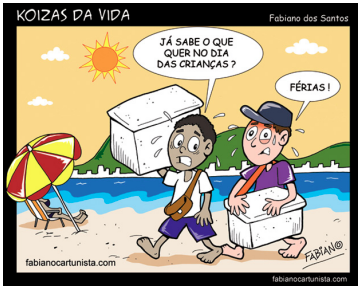
Acesso em: 15 jul. 2026. É correto afirmar que o texto:
Provas
Questão presente nas seguintes provas

Considere o quadro a seguir:
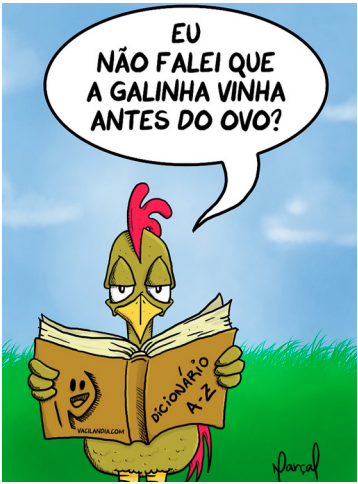
Assinale a alternativa correta em relação ao quadro.
Provas
Questão presente nas seguintes provas
A teacher uses the expressions "one orange," "two
orange fish," and "three green apples" during a sorting
game. She wants children to notice that the same word
can participate in different meaning relations depending
on context.
The word "orange" in the first and second expressions functions respectively as a ________ and a ________.
Select the alternative that CORRECTLY completes the sentence.
The word "orange" in the first and second expressions functions respectively as a ________ and a ________.
Select the alternative that CORRECTLY completes the sentence.
Provas
Questão presente nas seguintes provas
- Currículo (Teoria e Prática)Concepções de currículo
- Educação InfantilConcepções de Educação Infantil
- Currículo: planejamento, seleção e organização dos conteúdos
Before beginning a sequence about animals, children
mention pets, animals seen in books, farm animals, and
imaginary creatures from cartoons. The teacher intends
to use these contributions as part of the English-learning
process.
Analyze the statements below.
I.Children's previous experiences can provide conceptual references for understanding new English words.
II.The teacher may incorporate unplanned contributions when they create meaningful opportunities for interaction and language use.
III.Prior knowledge should be considered mainly after the target vocabulary has been presented, so that children's existing categories do not interfere with instruction.
IV.Children may demonstrate relevant knowledge through gestures, drawings, sounds, and oral contributions in different languages.
It is CORRECT what is stated in:
Provas
Questão presente nas seguintes provas
A teacher introduces ________ during a guessing game
by showing part of an animal picture and asking children
to predict what it is. The activity integrates
comprehension, hypothesis formation, and meaningful
vocabulary use.
Select the alternative that CORRECTLY completes the sentence.
Select the alternative that CORRECTLY completes the sentence.
Provas
Questão presente nas seguintes provas
- Avaliação EducacionalAvaliação Escolar e suas Implicações Pedagógicas
- Avaliação EducacionalFunções da Avaliação Escolar e a Análise dos Resultados
- Planejamento na EducaçãoNíveis e tipos de planejamentoPlanejamento Educacional
- Tipos de Planos de Ensino
- Elaboração do Planejamento de Ensino
A teacher plans three activities around the same story
and observes substantial variation in children's
responses. She is deciding whether to preserve the next
planned activity or modify it.
Considering planning and formative assessment, mark T, for true, and F, for false.
( ) Planning may be revised when evidence from children's participation indicates a need for different mediation.
( ) Changing a procedure necessarily means abandoning the original learning intention.
( ) Observation across more than one experience can provide stronger evidence than a single isolated response.
( ) Different forms of participation may inform subsequent planning without requiring children to be ranked.
After analysis, select the alternative that presents the CORRECT sequence of the items above, from top to bottom:
Provas
Questão presente nas seguintes provas
- Currículo (Teoria e Prática)Currículo e Diversidade
- Currículo: planejamento, seleção e organização dos conteúdos
Children are exploring houses and homes. The teacher
presents photographs and stories showing different living
arrangements and connects them with English words
such as "house," "home," "room," and "family."
Which procedure is appropriate?
Which procedure is appropriate?
Provas
Questão presente nas seguintes provas
- Avaliação EducacionalAvaliação Escolar e suas Implicações Pedagógicas
- Práticas Avaliativas: Sujeitos, Objetos e Métodos da Avaliação
A preschool team is reviewing a proposal that includes
English-language experiences within the institution's
curriculum. The team needs to ensure that the
organization of the activities and the procedures for
following children's development remain consistent with
the Diretrizes Curriculares Nacionais para a Educação
Infantil (DCNEI).
Considering the DCNEI, mark T, for true, and F, for false.
( ) The pedagogical practices of Early Childhood Education should be organized primarily around formal instruction and individual exercises, while interactions and play may be used only as complementary activities.
( ) The curriculum should provide experiences involving different forms of expression, including verbal, gestural, dramatic, musical, and visual languages.
( ) Assessment of children's development may be used for selection, promotion, or classification when the institution needs objective criteria for organizing subsequent groups.
( ) The monitoring of children's development should be based mainly on standardized tests and final results, making records of activities, play, and interactions unnecessary.
After analysis, select the alternative that presents the CORRECT sequence of the items above, from top to bottom.
Provas
Questão presente nas seguintes provas
- Educação InfantilConcepções de Educação Infantil
- Temas Educacionais PedagógicosTendências PedagógicasMulticulturalismo
- O Processo de Socialização
A pedagogical team is revising the principles underlying
an English-language project for preschool children. The
project includes collective decision-making,
environmental themes, artistic experimentation,
imaginative play, and opportunities for children to express
different cultural experiences.
Match the principles in Column I with the situations in Column II.
COLUMN I
1.Ethical principles. 2.Political principles. 3.Aesthetic principles.
COLUMN II
( ) Children participate in decisions concerning the organization of a collective activity and learn to consider the rights of others.
( ) Children explore sound, movement, drawing, and invented narratives through creative and playful experiences.
( ) Children discuss the care of shared materials and the environment while recognizing different cultural practices represented in the group.
Select the alternative that presents the CORRECT association, from top to bottom.
Provas
Questão presente nas seguintes provas
- Currículo (Teoria e Prática)
- Planejamento na EducaçãoNíveis e tipos de planejamentoPlanejamento Educacional
- Elaboração do Planejamento de Ensino
- Currículo: planejamento, seleção e organização dos conteúdos
An institution decides to include regular English experiences in its Early Childhood Education program.
The pedagogical team distinguishes decisions that
belong to broader institutional planning from those
developed in individual teaching situations.
Match the planning levels in Column I with the descriptions in Column II.
COLUMN I
1.Education-system guidelines. 2.Political-pedagogical project. 3.Teacher planning. 4.Specific activity organization.
COLUMN II
( ) Defines immediate procedures, materials, grouping, and mediation for a particular experience.
( ) Expresses collectively established institutional principles, purposes, and educational directions.
( ) Translates curricular intentions into organized sequences and teaching decisions for a specific group.
( ) Provides broader normative and organizational references for educational institutions.
Select the alternative that presents the CORRECT association, from top to bottom.
Provas
Questão presente nas seguintes provas
Cadernos
Caderno Container