Foram encontradas 360 questões.
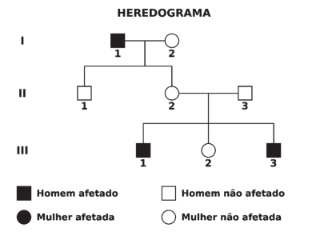
Em uma família, a característica representada no heredograma aparece com maior frequência entre os homens. Também se observa que homens afetados não transmitem diretamente a característica aos filhos do sexo masculino, embora o alelo possa reaparecer em gerações posteriores por intermédio das filhas.
Esse padrão de transmissão é explicado pelo fato de que
Provas

ALBERTS, Bruce et al. Biologia molecular da célula. 6. ed. Porto Alegre: Artmed, 2017. Adaptado.
Em uma investigação sobre expressão gênica, foram analisadas células humanas e bacterianas. Nas bactérias, ribossomos foram observados traduzindo moléculas de RNA mensageiro que ainda estavam sendo sintetizadas. Nas células humanas, a tradução ocorreu somente depois que o RNA foi processado e transportado para o citoplasma.
A diferença observada entre os dois tipos celulares decorre do fato de que
Provas
- Biologia CelularCitologiaVisão geral da célulaEstrutura e fisiologia da Membrana Plasmática
- Moléculas, células e tecidos
• na solução I, a concentração de solutos era maior que a do interior celular;
• na solução II, a concentração era equivalente à do interior celular;
• na solução III, a concentração era menor que a do interior celular.
Após determinado período, os estudantes observaram retração das células na solução I, manutenção do volume na solução II e aumento do volume na solução III. Ao discutirem os resultados, eles apresentaram diferentes explicações para o fenômeno observado.
Na sistematização dos conhecimentos construídos durante a atividade, a explicação que o professor deve validar é a de que
Provas
ALBERTS, Bruce et al. Biologia molecular da célula. 6. ed. Porto Alegre: Artmed, 2017. p. 1–3. Adaptado.
Ao comparar células bacterianas e células animais, um estudante afirmou que todas possuem o mesmo padrão básico de organização interna, diferenciando-se apenas pelo tamanho e pela quantidade de estruturas.
A correção dessa afirmação exige reconhecer que
Provas
Disciplina: Segurança e Saúde no Trabalho (SST)
Banca: FLEM
Orgão: Pref. Riachão Jacuípe-BA
- NRsNR 18: Condições e Meio Ambiente de Trabalho na Indústria da Construção
- Saúde e Segurança no Ambiente de TrabalhoSegurança do Trabalho e Prevenção de Infortúnios
Após a fiscalização das obras de requalificação de uma praça municipal, foi elaborado o seguinte registro esquemático da frente de trabalho:
| Setor | Condição verificada |
|---|---|
| 1 | Tapume contínuo separando parte da obra da área aberta ao público |
| 2 | Desvio de pedestres conduzido para a faixa utilizada pelos caminhões |
| 3 | Pilhas de blocos armazenadas junto à passagem provisória |
| 4 | Escavação sinalizada, mas isolada apenas por fita plástica |
| 5 | Portão utilizado simultaneamente para entrada de veículos e trabalhadores |
Situação elaborada com base na NR 18 — Segurança e Saúde no Trabalho na Indústria da Construção.
No período da vistoria, a praça permanecia parcialmente aberta. A empresa informou que os caminhões entravam em horários programados e que um funcionário orientava verbalmente os pedestres quando havia movimentação de veículos.
Considerando a interação entre a obra e a circulação no entorno, a análise técnica da situação deve
Provas
Disciplina: Literatura Brasileira e Estrangeira
Banca: FLEM
Orgão: Pref. Riachão Jacuípe-BA

Motivation as a Dynamic Process in Language Learning
Motivation has long been recognised as an
important element in second-language learning.
Nevertheless, researchers have increasingly
questioned the idea that learners are either motivated
or unmotivated as if motivation were a permanent
personal trait. Studies conducted in different
educational contexts have shown that motivation may
change across lessons, tasks, stages of education,
and experiences of success or failure.
Self-determination theory distinguishes between
controlled and more autonomous forms of motivation. A
learner may initially study English because of external
pressure, an examination, or the expectation of
future employment. Such motives are not necessarily
ineffective. They may gradually become more
internalised if learners understand the value of the
activity, perceive that they are making progress, and
connect language learning with personally meaningful
goals.
Autonomous motivation is supported when
learners experience a sense of competence, a degree
of meaningful choice, and constructive relationships
with teachers and classmates. Choice, however,
should not be confused with the absence of guidance.
Asking learners to choose among purposeful tasks,
texts, or modes of participation can strengthen agency,
whereas offering options without clear goals may
produce uncertainty rather than engagement.
Teachers also influence motivation through the
way they respond to difficulty. A teacher may say,
“I have noticed that some of you give up when you
cannot understand every word in these recordings.” If
learners interpret temporary difficulty as evidence that
they lack ability, they may withdraw from participation.
If, instead, they are taught how to listen selectively, use
context, notice stressed words, recognise changes in
intonation, and become familiar with different accents,
difficulty can become evidence of what still needs to
be learned.
Support should help learners persist with
demanding tasks without taking over the decisions
that belong to them. Excessive control may produce
short-term compliance while weakening long-term
engagement. By contrast, structured guidance,
achievable challenge, informative feedback, and
opportunities to revise work can help learners develop
both competence and ownership of their learning.
Motivationally responsive teaching may also
involve literature. Short stories, poems, dramatic
scenes, and spoken-word performances can connect
language with imagination, identity, history, and
social experience. Allowing learners some choice
among texts may increase personal relevance, but
meaningful literary learning still requires attention to
language, genre, authorship, historical context, and
interpretation. Motivation is therefore not created by
entertainment alone; it develops when learners can
see value in demanding work and believe that they
are capable of progressing through it.
Adaptado de: NOELS, Kimberly A.; VARGAS LASCANO, Dayuma I.; SAUMURE, Kristie. The development of self-determination across the language course: trajectories of motivational change and the dynamic interplay of psychological needs, orientations, and engagement. Studies in Second Language Acquisition, v. 41, n. 4, p. 821-851, 20
Considerando a concepção de motivação desenvolvida no texto, os princípios de autonomia com suporte pedagógico, a organização didática mais consistente deve
Provas
Disciplina: Literatura Brasileira e Estrangeira
Banca: FLEM
Orgão: Pref. Riachão Jacuípe-BA

O haicai é uma forma poética breve, caracterizada pela concisão e pela sugestão de imagens.
Na articulação entre o haicai e a imagem, o verso “o tempo passa devagar” contribui para representar
Provas
Disciplina: Inglês (Língua Inglesa)
Banca: FLEM
Orgão: Pref. Riachão Jacuípe-BA
Motivation as a Dynamic Process in Language Learning
Motivation has long been recognised as an
important element in second-language learning.
Nevertheless, researchers have increasingly
questioned the idea that learners are either motivated
or unmotivated as if motivation were a permanent
personal trait. Studies conducted in different
educational contexts have shown that motivation may
change across lessons, tasks, stages of education,
and experiences of success or failure.
Self-determination theory distinguishes between
controlled and more autonomous forms of motivation. A
learner may initially study English because of external
pressure, an examination, or the expectation of
future employment. Such motives are not necessarily
ineffective. They may gradually become more
internalised if learners understand the value of the
activity, perceive that they are making progress, and
connect language learning with personally meaningful
goals.
Autonomous motivation is supported when
learners experience a sense of competence, a degree
of meaningful choice, and constructive relationships
with teachers and classmates. Choice, however,
should not be confused with the absence of guidance.
Asking learners to choose among purposeful tasks,
texts, or modes of participation can strengthen agency,
whereas offering options without clear goals may
produce uncertainty rather than engagement.
Teachers also influence motivation through the
way they respond to difficulty. A teacher may say,
“I have noticed that some of you give up when you
cannot understand every word in these recordings.” If
learners interpret temporary difficulty as evidence that
they lack ability, they may withdraw from participation.
If, instead, they are taught how to listen selectively, use
context, notice stressed words, recognise changes in
intonation, and become familiar with different accents,
difficulty can become evidence of what still needs to
be learned.
Support should help learners persist with
demanding tasks without taking over the decisions
that belong to them. Excessive control may produce
short-term compliance while weakening long-term
engagement. By contrast, structured guidance,
achievable challenge, informative feedback, and
opportunities to revise work can help learners develop
both competence and ownership of their learning.
Motivationally responsive teaching may also
involve literature. Short stories, poems, dramatic
scenes, and spoken-word performances can connect
language with imagination, identity, history, and
social experience. Allowing learners some choice
among texts may increase personal relevance, but
meaningful literary learning still requires attention to
language, genre, authorship, historical context, and
interpretation. Motivation is therefore not created by
entertainment alone; it develops when learners can
see value in demanding work and believe that they
are capable of progressing through it.
Adaptado de: NOELS, Kimberly A.; VARGAS LASCANO, Dayuma I.; SAUMURE, Kristie. The development of self-determination across the language course: trajectories of motivational change and the dynamic interplay of psychological needs, orientations, and engagement. Studies in Second Language Acquisition, v. 41, n. 4, p. 821-851, 20
Considerando o quarto parágrafo do texto e os conteúdos relativos à compreensão oral, a intervenção mais adequada consiste em
Provas
Disciplina: Inglês (Língua Inglesa)
Banca: FLEM
Orgão: Pref. Riachão Jacuípe-BA
Motivation as a Dynamic Process in Language Learning
Motivation has long been recognised as an
important element in second-language learning.
Nevertheless, researchers have increasingly
questioned the idea that learners are either motivated
or unmotivated as if motivation were a permanent
personal trait. Studies conducted in different
educational contexts have shown that motivation may
change across lessons, tasks, stages of education,
and experiences of success or failure.
Self-determination theory distinguishes between
controlled and more autonomous forms of motivation. A
learner may initially study English because of external
pressure, an examination, or the expectation of
future employment. Such motives are not necessarily
ineffective. They may gradually become more
internalised if learners understand the value of the
activity, perceive that they are making progress, and
connect language learning with personally meaningful
goals.
Autonomous motivation is supported when
learners experience a sense of competence, a degree
of meaningful choice, and constructive relationships
with teachers and classmates. Choice, however,
should not be confused with the absence of guidance.
Asking learners to choose among purposeful tasks,
texts, or modes of participation can strengthen agency,
whereas offering options without clear goals may
produce uncertainty rather than engagement.
Teachers also influence motivation through the
way they respond to difficulty. A teacher may say,
“I have noticed that some of you give up when you
cannot understand every word in these recordings.” If
learners interpret temporary difficulty as evidence that
they lack ability, they may withdraw from participation.
If, instead, they are taught how to listen selectively, use
context, notice stressed words, recognise changes in
intonation, and become familiar with different accents,
difficulty can become evidence of what still needs to
be learned.
Support should help learners persist with
demanding tasks without taking over the decisions
that belong to them. Excessive control may produce
short-term compliance while weakening long-term
engagement. By contrast, structured guidance,
achievable challenge, informative feedback, and
opportunities to revise work can help learners develop
both competence and ownership of their learning.
Motivationally responsive teaching may also
involve literature. Short stories, poems, dramatic
scenes, and spoken-word performances can connect
language with imagination, identity, history, and
social experience. Allowing learners some choice
among texts may increase personal relevance, but
meaningful literary learning still requires attention to
language, genre, authorship, historical context, and
interpretation. Motivation is therefore not created by
entertainment alone; it develops when learners can
see value in demanding work and believe that they
are capable of progressing through it.
Adaptado de: NOELS, Kimberly A.; VARGAS LASCANO, Dayuma I.; SAUMURE, Kristie. The development of self-determination across the language course: trajectories of motivational change and the dynamic interplay of psychological needs, orientations, and engagement. Studies in Second Language Acquisition, v. 41, n. 4, p. 821-851, 20
Provas
Disciplina: Inglês (Língua Inglesa)
Banca: FLEM
Orgão: Pref. Riachão Jacuípe-BA
- Gramática - Língua InglesaDiscurso direto e indireto | Reported speech
- Gramática - Língua InglesaVerbos | VerbsPassado simples | Simple past
- Gramática - Língua InglesaVerbos | VerbsPassado perfeito | Past perfect
Motivation as a Dynamic Process in Language Learning
Motivation has long been recognised as an
important element in second-language learning.
Nevertheless, researchers have increasingly
questioned the idea that learners are either motivated
or unmotivated as if motivation were a permanent
personal trait. Studies conducted in different
educational contexts have shown that motivation may
change across lessons, tasks, stages of education,
and experiences of success or failure.
Self-determination theory distinguishes between
controlled and more autonomous forms of motivation. A
learner may initially study English because of external
pressure, an examination, or the expectation of
future employment. Such motives are not necessarily
ineffective. They may gradually become more
internalised if learners understand the value of the
activity, perceive that they are making progress, and
connect language learning with personally meaningful
goals.
Autonomous motivation is supported when
learners experience a sense of competence, a degree
of meaningful choice, and constructive relationships
with teachers and classmates. Choice, however,
should not be confused with the absence of guidance.
Asking learners to choose among purposeful tasks,
texts, or modes of participation can strengthen agency,
whereas offering options without clear goals may
produce uncertainty rather than engagement.
Teachers also influence motivation through the
way they respond to difficulty. A teacher may say,
“I have noticed that some of you give up when you
cannot understand every word in these recordings.” If
learners interpret temporary difficulty as evidence that
they lack ability, they may withdraw from participation.
If, instead, they are taught how to listen selectively, use
context, notice stressed words, recognise changes in
intonation, and become familiar with different accents,
difficulty can become evidence of what still needs to
be learned.
Support should help learners persist with
demanding tasks without taking over the decisions
that belong to them. Excessive control may produce
short-term compliance while weakening long-term
engagement. By contrast, structured guidance,
achievable challenge, informative feedback, and
opportunities to revise work can help learners develop
both competence and ownership of their learning.
Motivationally responsive teaching may also
involve literature. Short stories, poems, dramatic
scenes, and spoken-word performances can connect
language with imagination, identity, history, and
social experience. Allowing learners some choice
among texts may increase personal relevance, but
meaningful literary learning still requires attention to
language, genre, authorship, historical context, and
interpretation. Motivation is therefore not created by
entertainment alone; it develops when learners can
see value in demanding work and believe that they
are capable of progressing through it.
Adaptado de: NOELS, Kimberly A.; VARGAS LASCANO, Dayuma I.; SAUMURE, Kristie. The development of self-determination across the language course: trajectories of motivational change and the dynamic interplay of psychological needs, orientations, and engagement. Studies in Second Language Acquisition, v. 41, n. 4, p. 821-851, 20
Ao relatar posteriormente esse episódio em uma narrativa situada integralmente no passado, empregando a sequência convencional de tempos do discurso indireto e realizando as alterações referenciais necessárias, a professora deveria registrar:
Provas
Caderno Container